Dublin in 2 days is a walk through a city that takes its writers seriously, with two closures to plan around this autumn. Ireland holds the Presidency of the Council of the European Union until the end of 2026, and the official sites say that the Dublin Castle campus is closed to the public until January 2027 and the Chester Beatty library is closed until the end of December 2026. The itinerary below works without either: Trinity College and Georgian Dublin on day one, then Kilmainham Gaol, the Liberties and the medieval cathedrals on day two.
Quick facts
- Country and region: Ireland, province of Leinster (County Dublin).
- Main airport: Dublin Airport (DUB), north of the city, reached by bus, taxi and coach.
- Main stations: Dublin Connolly and Dublin Heuston, with Pearse station on the coastal DART line.
- Getting around: on foot in the centre, with Luas trams, buses and DART trains for longer hops.
- Currency: euro (EUR).
- Language: English and Irish.
- Time zone: Irish time, GMT in winter and IST in summer.
- Best months: May to September.
Best time to visit
Summer gives the longest light and the easiest walking, but it is also the busiest season at Trinity College and Kilmainham, where timed or pre-booked entry is the norm. May, June and September balance daylight and crowds. Autumn brings theatre and gallery programmes: Visit Dublin lists the Hilma af Klint exhibition at the National Gallery of Ireland from 15 October 2026 to 7 February 2027, and the winter festival season follows. Rain is possible in every month, so a light waterproof matters more than the date. Because Ireland's EU presidency is shutting some venues until early 2027, check each site's current status before fixing a date.
Getting there and around
Dublin Airport lists bus, taxi and coach services to the city, and sells bus tickets online; check the current route list before you land. By train, Irish Rail serves Connolly and Heuston, and the DART runs along Dublin Bay to Howth and Dalkey. Within the city, the TFI Leap Card is the simplest way to pay on trams, buses and the DART, and the 90-minute fare covers transfers; its site says Leap fares are up to 30 per cent cheaper than cash single tickets.
Most of what you will see is walkable. Trinity College to Merrion Square is roughly ten minutes on foot, and Trinity to Dublin Castle and Temple Bar is about the same. Kilmainham Gaol lies a few kilometres west of the centre, and you reach it by Luas Red Line or bus; allow around 30 minutes from the centre.
Where to stay
The area around St Stephen's Green and Merrion Square puts Georgian Dublin, the National Gallery and Trinity College within walking range, and is quiet in the evening. North of the Liffey near O'Connell Street and Connolly station is the practical base for trains and airport buses, and it is a short walk across the river to Temple Bar. The streets around Camden Street and Portobello, south of the Green, offer lively evenings away from the most tourist-heavy blocks, with a good bus link to Kilmainham. Choose your base by the evening you want.
Day 1: Trinity, Georgian Dublin and the Liffey
Morning: The Book of Kells and the Long Room
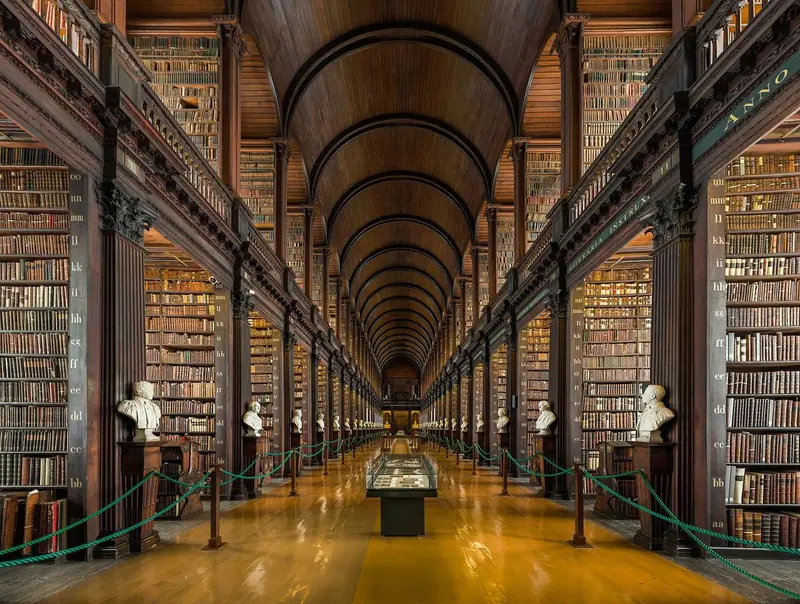
Reserve a timed slot at the Book of Kells Experience. Trinity's own page says online booking is strongly recommended and entry is timed. You see the Book of Kells, a manuscript about 1,200 years old whose pages on view are turned several times a year for conservation, and the Long Room of the Old Library, known as Ireland's front room. The Red Pavilion beside it holds digital exhibitions. The Long Room now also holds the Gaia installation, which Trinity promotes alongside the books. After your slot, walk the cobbled Front Square and the courts beyond it, then head south-east towards the Georgian streets.
Afternoon: Merrion Square and the National Gallery
Walk ten minutes to Merrion Square, where the Georgian terraces and coloured doors make the best photograph of the day. The National Gallery of Ireland stands on Merrion Square West; its website lists opening hours that vary by day, with late opening on Thursday, and the Hilma af Klint exhibition runs from mid-October. We recommend about ninety minutes inside, then St Stephen's Green for a short rest on the lawns. From the Green, Grafton Street runs back towards Trinity if you want a second pass at the shops before the evening.
Evening: The Liffey and Temple Bar
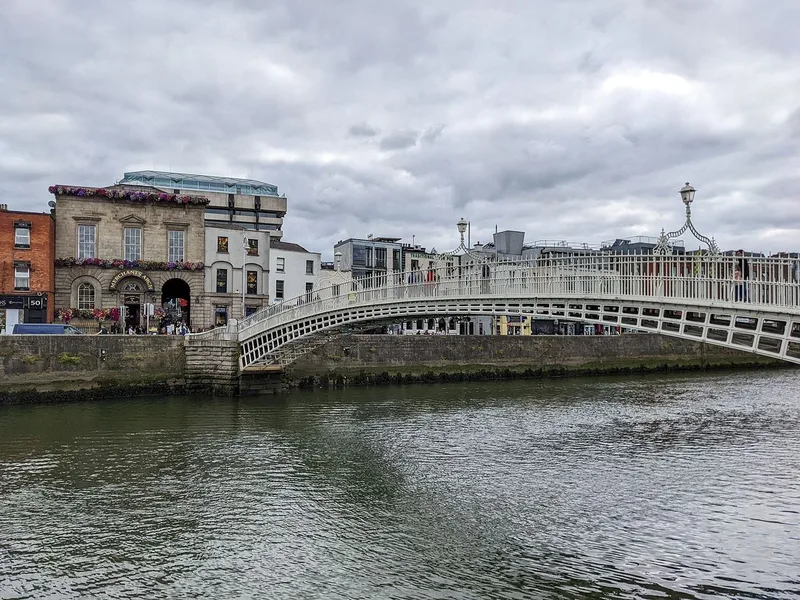
Cross the river at the Ha'penny Bridge, the cast-iron footbridge that links the south bank to the lanes north of the Liffey.
Temple Bar is the best-known pub quarter and is crowded on weekend nights. Visit Dublin lists live music and theatre across the city, so choose a pub with a session you like rather than the loudest door, and check the Abbey Theatre and Gate Theatre programmes for a seated alternative.
Day 2: Kilmainham, the Liberties and the cathedrals
Morning: Kilmainham Gaol
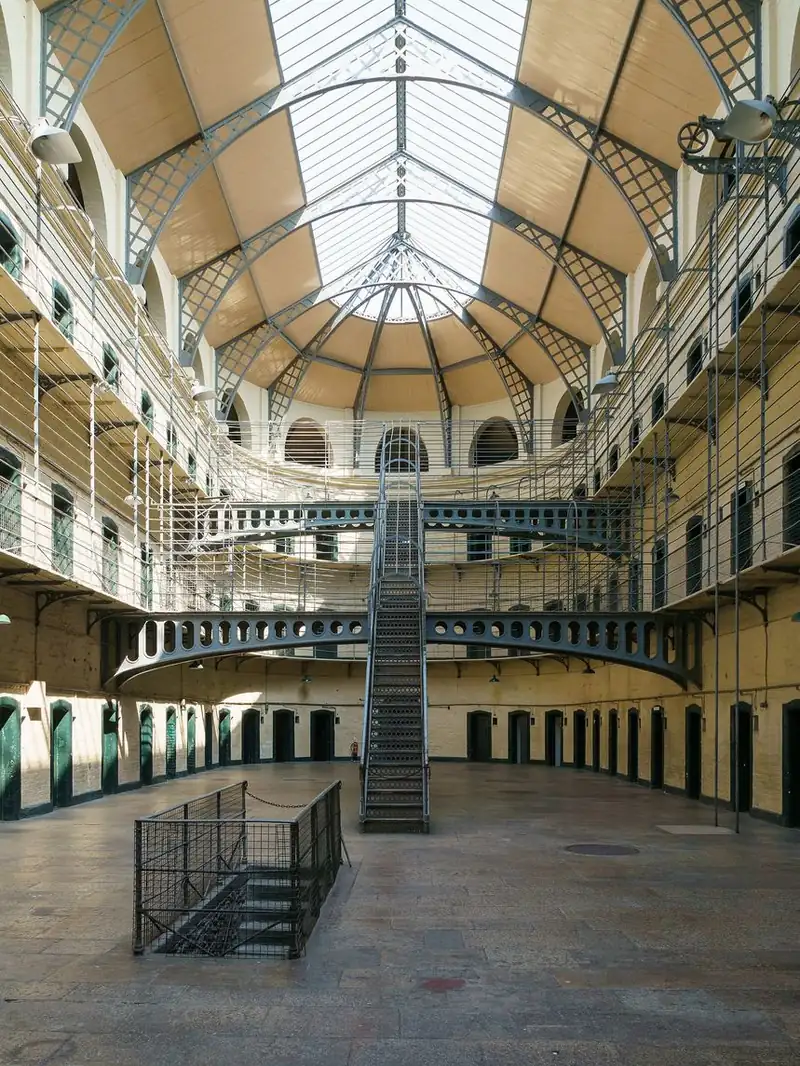
Book Kilmainham Gaol in advance. Access is by guided tour only, and a select number of tickets are released 28 days ahead from midnight Irish time; extra tickets and cancellations appear from 9:15 am on the day. Allow about 90 minutes, an hour for the tour and the rest for the museum. The gaol opened in 1796 as the County Gaol, held prisoners from the 1798 rebellion to the Civil War, and 14 leaders of the 1916 Easter Rising were executed by firing squad in the Stonebreaker's Yard. Temporary exhibitions are on, including a free display of secret photographs taken inside in 1921.
Afternoon: Guinness Storehouse and St Patrick's Cathedral
From the gaol, take a bus or walk about two kilometres to the Guinness Storehouse at St James's Gate. Spend an hour there if the story of the brewery appeals, or skip it if you are short of time. Then continue through the Liberties to St Patrick's Cathedral, which publishes its daily services and welcomes visitors. The quarter between the two is among the oldest working parts of Dublin and rewards slow walking.
Evening: Literary Dublin
UNESCO's City of Literature page names the writers of the city: James Joyce, Samuel Beckett, George Bernard Shaw, Bram Stoker and Oscar Wilde, and notes that the city is home to four Nobel Prize laureates for Literature. Dublin also hosts the Dublin Theatre Festival, which UNESCO describes as the oldest of its kind in the world. Check what is on at the Abbey or Gate theatres, or settle for a quiet pub and a book of Joyce stories bought that day.
If it rains, on a budget, with kids
If it rains
The National Gallery of Ireland, the Book of Kells Experience and Kilmainham Gaol are all indoors. St Patrick's Cathedral can fill an hour. The National Museum of Ireland is another dry option; check its official site for opening.
On a budget
Walking is free: Trinity's Front Square, Merrion Square, St Stephen's Green and the Liffey quays cost nothing. Kilmainham's temporary exhibition on 1921 photography is free to see. Leap Card fares are cheaper than cash tickets. Spend your money on the two timed anchors, the Book of Kells and Kilmainham, and book both early.
With kids
Children enjoy the Long Room's tall shelves and Kilmainham's galleried halls, though the gaol is a sober visit and suits older children better. Dublin Zoo and the Phoenix Park are options for younger ones; check their official sites. Pack snacks for the long walks between sights.
Day trip or a third day
- Howth: about 30 minutes by DART from Dublin Connolly, a fishing harbour with a cliff path. Check Irish Rail for times.
- Belfast: roughly two hours by train, with shipbuilding heritage and murals. See Belfast in 2 days.
- Galway: around two and a half hours by train or bus, on the west coast. See Galway in 2 days.
Practical tips
Book the Book of Kells Experience and Kilmainham Gaol first; they set the day structure. Dublin Castle and the Chester Beatty are closed to the public at the time of writing, so do not plan around them. Pay for transport with a Leap Card or contactless card to avoid exact change. Temple Bar is lively but is not the only pub area. Kilmainham is a historic building with some accessibility challenges, so wheelchair users and visitors who need special assistance should email the site before booking, as its page advises.
Frequently asked questions
Can I visit Dublin Castle in autumn 2026?
No. The official site says the Dublin Castle campus is closed to the public until January 2027, because the castle is the main State venue for events during Ireland's EU Presidency. Plan around the closure and check the site for updates before you travel.
How far ahead should I book Kilmainham Gaol?
As early as possible. Entry is by guided tour only, and some tickets are released 28 days ahead from midnight Irish time. If your preferred date is full, the site says extra tickets and cancellations may appear from 9:15 am on the day. Allow about 90 minutes for the visit.
Is the Book of Kells on display all year?
Yes, though the pages on view change several times a year for conservation, so the double page you see will differ by date. Trinity says online booking is strongly recommended and entry is timed, so reserve a slot rather than relying on walk-up tickets.
What makes Dublin a UNESCO City of Literature?
UNESCO points to four Nobel laureates, the writers who shaped the city, the Dublin Theatre Festival and a major international prize for a single novel. It also notes that three bridges and many streets are named after writers, and that the airport displays writers' images and quotations.
More city guides
- Belfast in 2 days: shipbuilding heritage and the Cathedral Quarter, two hours north by train.
- Galway in 2 days: a small west-coast city of music and sea air.
- Liverpool in 2 days: across the Irish Sea, docks and cathedrals.
- Manchester in 2 days: industrial heritage and free museums.
- Edinburgh in 2 days: castle ridge and volcano.