Munich in 2 days splits neatly into a stone city and a green one. Day one stays inside the old town around Marienplatz and the Residenz; day two moves out to the museum quarter and the English Garden. The plan is written for visitors arriving by train or plane who want Bavaria's capital (München in German) without a car, and who like parks and beer gardens as much as palaces. The concrete reason to go is the contrast: a royal palace complex and a 376-hectare park lie within a short walk of each other.
Quick facts
- Country and region: Germany, in the Free State of Bavaria.
- Main airport: Munich Airport (MUC), about 40 minutes from the centre by S-Bahn.
- Main station: München Hauptbahnhof, west of the old town.
- Getting around: S-Bahn, U-Bahn, trams and buses of the MVV network; the old town is a walking zone.
- Currency: euro (EUR).
- Language: German, with Bavarian dialect in everyday speech.
- Time zone: Central European Time (UTC+1), with summer time.
- Best months: May to June and September to October.
Best time to visit
Beer gardens decide the season. From May to September the Chinese Tower and the park lawns are at their best, and daylight lasts well into the evening. September brings the Oktoberfest on the Theresienwiese: the 2026 festival ended on 4 October, and the official site lists 18 September to 3 October for 2027. Check the Oktoberfest page for hours and dates, and expect hotels to be full and pricey around it. Winter is cold, but the palace rooms and the Advent markets work well, and on clear days the Alps show on the southern horizon.
Getting there and around
The airport sits well outside the city, so plan about 40 minutes. According to Munich Airport, the S1 and S8 S-Bahn lines run to the central station, alternating so that a train leaves every ten minutes or so; the Lufthansa Express Bus takes about 45 minutes. Both offerings change with construction work, so check the journey planner on the day.
By rail, München Hauptbahnhof receives Deutsche Bahn ICE trains from Berlin, Nuremberg and Frankfurt, and Austrian Railways Railjet services from Salzburg and Vienna. The old town is compact. From the station, Karlsplatz and the pedestrian street lead to Marienplatz in roughly 15 minutes on foot, and the Residenz is another ten minutes beyond. For the English Garden, take an S-Bahn or U-Bahn to Marienplatz or Odeonsplatz and walk on. The MVV journey planner covers the whole network, including the S2 line used for the Dachau trip below.
Where to stay
Altstadt keeps everything on day one at your doorstep. Rooms there are small and priced accordingly, but the pedestrian streets and the Marienplatz stations make arrivals simple.
Maxvorstadt lies north of the centre and holds the museum quarter, the university and plenty of cafés. It suits visitors who put museums first and still want a ten-minute walk to the Residenz.
Schwabing and the streets near the English Garden are quieter and greener. They are the choice for a longer stay with morning runs in the park, with U-Bahn lines linking you to Odeonsplatz.
Day 1: Altstadt, from Marienplatz to the Residenz
Morning: Marienplatz and the churches
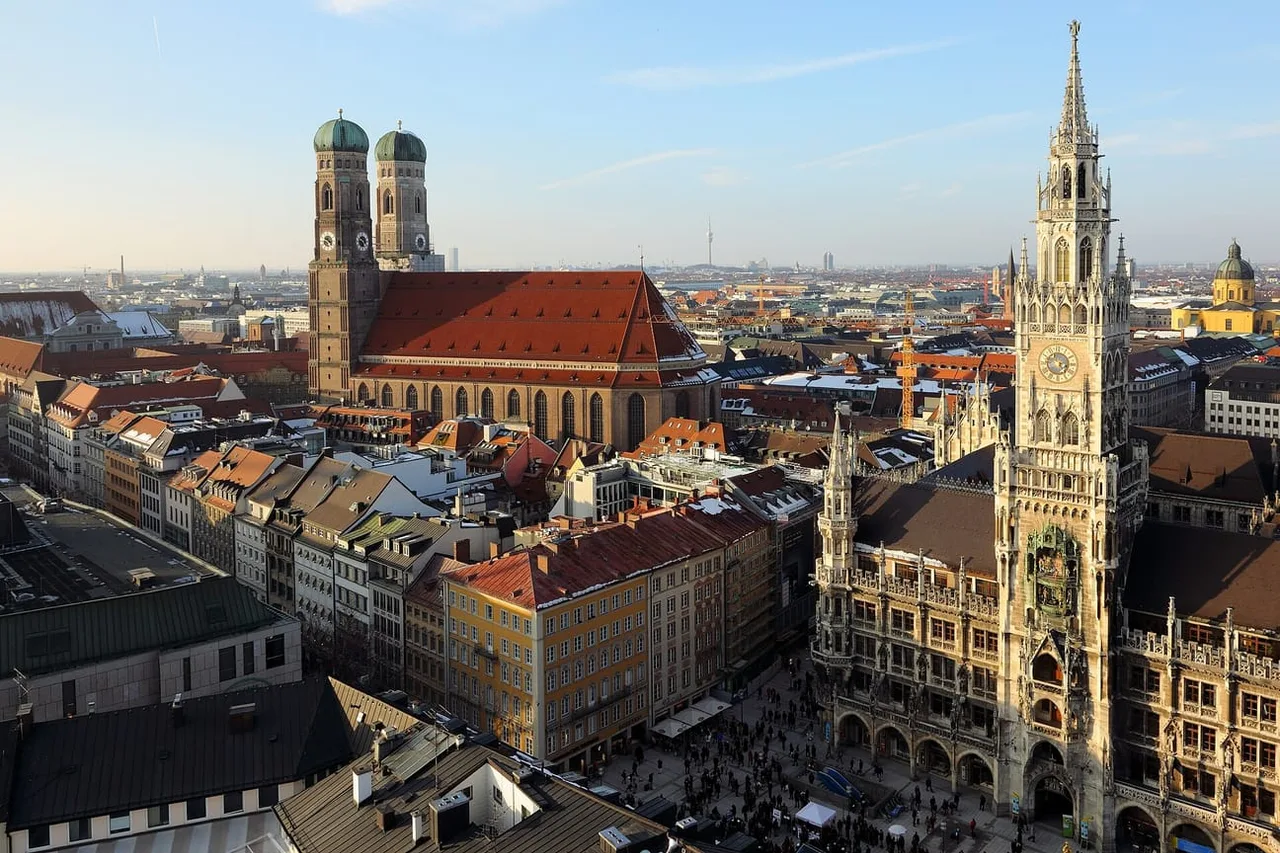
Begin at Marienplatz, which munich.travel describes as the centre of the city since its foundation in 1158. The neo-Gothic Neues Rathaus was built between 1867 and 1909 by Georg von Hauberrisser, and its Glockenspiel tells two stories from city history: the wedding of Duke Wilhelm V and the Schäffler dance. Check the daily schedule on muenchen.de before you plan to stand in front of it.
Walk to the Frauenkirche, whose twin towers rise around 100 metres. The church known as Alter Peter has a viewing platform, and so does the town hall tower; pick one. The Viktualienmarkt, a food market with stalls and a beer garden, is a short stroll south. Its regular stalls are closed on Sundays, according to muenchen.de.
Afternoon: the Residenz
The Residenz is the largest city palace in Germany, per the muenchen.de guide, and it holds the Residenzmuseum, the Treasury (Schatzkammer) and the Cuvilliés-Theater. Plan two hours for the museum and Treasury with the free audio guide. The Bavarian Palace Administration lists opening hours and the few closing days, which include 1 January and 24, 25 and 31 December. Behind the palace, the Hofgarten has arcades and a pavilion that is pleasant when the interiors tire you.
Evening: Odeonsplatz and dinner
Finish at Odeonsplatz, framed by the Theatinerkirche, then walk down Maximilianstraße or return to the lanes near Marienplatz. The Hofbräuhaus is on the standard list of sights; go for the hall, and eat elsewhere if you want a quieter meal. Beer halls are loud, and the best tables fill before seven.
Day 2: Museums and the English Garden
Morning: the Kunstareal
Take the U-Bahn to the Kunstareal, the museum district in Maxvorstadt. The Pinakotheken form its core; choose one of them rather than all three: the Alte Pinakothek for old masters, the Neue for the nineteenth century, the Pinakothek der Moderne for design and modern art. Each museum has its own opening days and some close on Mondays, so check the individual pages. Take a coffee in the area, then walk through Maxvorstadt back towards Odeonsplatz past the university quarter. Keep the visit to about two and a half hours so that the afternoon is not rushed, and eat lunch near Odeonsplatz or at the Hofgarten before heading into the park. If you would rather see Bavarian craft and royal history in one stop, the Residenz can take a second visit with the Treasury, which the first day only touched.
Afternoon: the English Garden
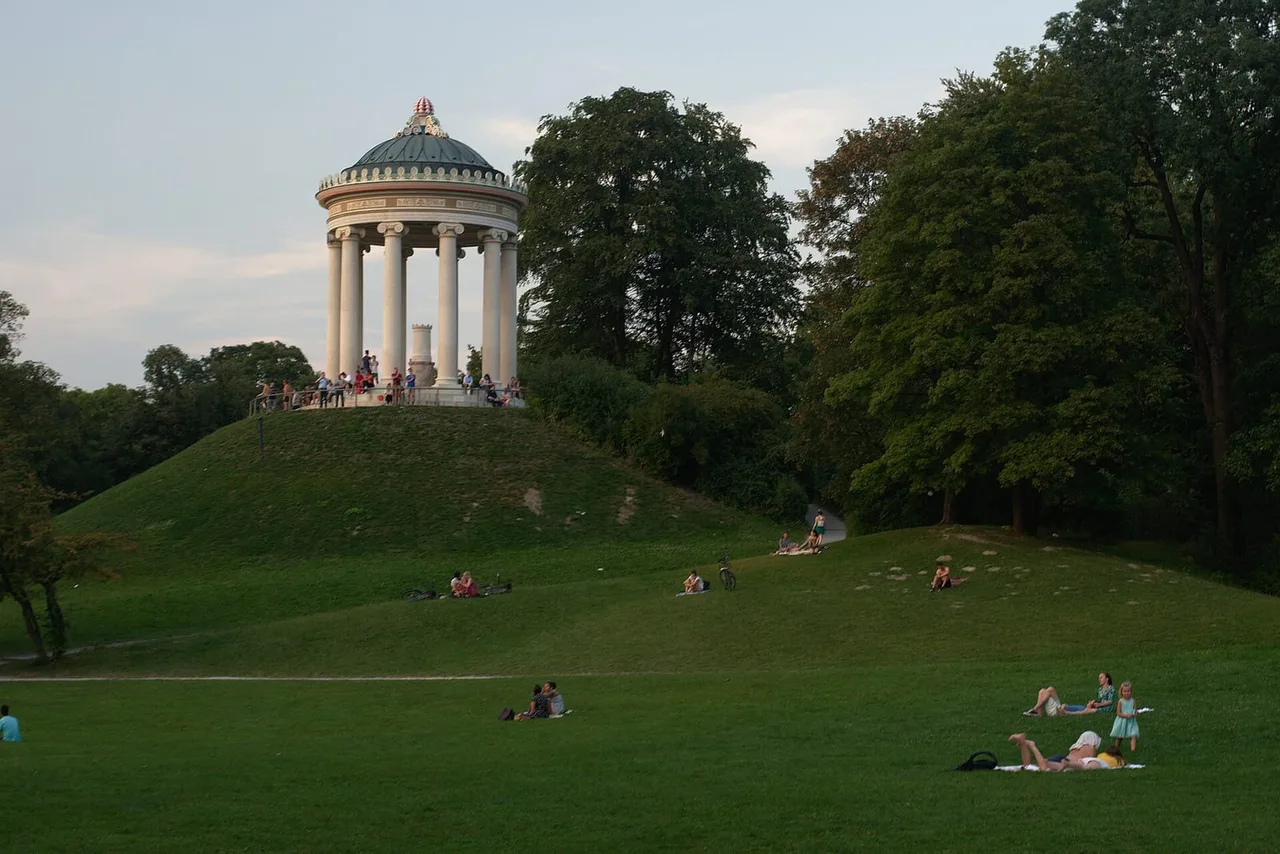
The Bavarian Palace Administration, which runs the park, explains that Elector Karl Theodor ordered it laid out in 1789 for the whole population. It covers about 376 hectares and reaches five and a half kilometres. Walk in from the Hofgarten side to the Eisbach wave, where surfers wait their turn on a standing river wave, then climb the Monopteros, a temple on an artificial hill designed by Leo von Klenze in 1837. Allow about 30 minutes between the two, mostly on paths. The Chinese Tower, a wooden pagoda-style building from 1790, is a further walk north past the Kleinhesseloher Lake, where the park feels least like a city. The park has more than 100 bridges and footbridges, so you can improvise loops, and the stream network stays close to the paths throughout.
Evening: the Chinese Tower
The beer garden at the Chinese Tower holds some 7,000 seats, according to the park's own figures. Order at the counters, find a table and stay until the light goes. Outside the warm months, ask at the tower what is open, because beer garden service depends on the weather.
If it rains, on a budget, with kids
If it rains
The Residenz and the Pinakotheken can fill a wet day, as muenchen.de itself suggests for the Residenz. The Deutsches Museum, with its science and technology halls, is another full indoor half day.
On a budget
Squares, church exteriors, the Hofgarten and the English Garden are free. Observation towers and museums charge admission, so choose one tower and one museum per day. The MVV day tickets save money if you ride more than three times; compare them with single tickets on the MVV site.
With kids
The Eisbach wave, the park meadows and the Kleinhesseloher Lake give children room. In the old town, the Glockenspiel and the Viktualienmarkt stalls are short stops. Nymphenburg Palace and its park suit a quiet afternoon.
Day trip or a third day
Dachau Memorial
About 25 minutes by S2 from the central station, then bus 726 from Dachau station. The Dachau Concentration Camp Memorial Site documents the first of the Nazi camps and asks for a quiet, respectful visit with several hours set aside. See the memorial's directions page.
Nuremberg
About one hour by ICE. Nuremberg in 2 days covers the imperial castle, the rebuilt old town and the documentation centre.
Salzburg
Around two hours by Railjet. Salzburg in 2 days pairs Mozart's birthplace with the fortress above the old town.
Practical tips
Book Residenz tickets directly from the Bavarian Palace Administration; its Cuvilliés-Theater has a separate ticket desk. Oktoberfest tents are free to enter but seats fill, so go early on weekdays and check the festival site for reservation rules. Church interiors may close during services.
Cyclists and pedestrians share the English Garden paths, so keep to your side. On the accessibility side, the Residenz has a dedicated page for visitors with reduced mobility, and the MVV marks step-free stations on its network map.
Frequently asked questions
When is the next Oktoberfest?
The official Oktoberfest site gives 18 September to 3 October 2027 on the Theresienwiese. The festival taps its first keg at noon on the first Saturday. Dates are announced yearly, so confirm them before you book a room, because beds in September go early.
How long should I give the Residenz?
Allow about two hours for the museum and Treasury with the audio guide, which muenchen.de lists as the recommended stay. Add time for the Cuvilliés-Theater, which needs its own ticket and entrance, and for a walk in the Hofgarten afterwards.
How do I get to the English Garden from Marienplatz?
Walk from Marienplatz past the Residenz and the Hofgarten, about 30 minutes to the Eisbach and the Monopteros. If you prefer transport, ride the U-Bahn to Odeonsplatz or Universität and continue on foot. The park paths are flat, so the walk suits most visitors.
Is the Dachau visit suitable for a short stay?
Yes, but give it a half day. The S2 takes about 25 minutes and the bus adds a short ride, and the memorial site is large and emotionally heavy. Many visitors prefer not to combine it with a beer hall evening.
More city guides
- Nuremberg in 2 days: imperial castle and a rebuilt old town, about an hour north by ICE.
- Salzburg in 2 days: Mozart's city on the way to Vienna.
- Innsbruck in 2 days: a mountain city a short train ride south.
- Vienna in 2 days: imperial palaces and coffeehouses, further east by Railjet.
- Prague in 2 days: a castle hill and Old Town to the north-east.