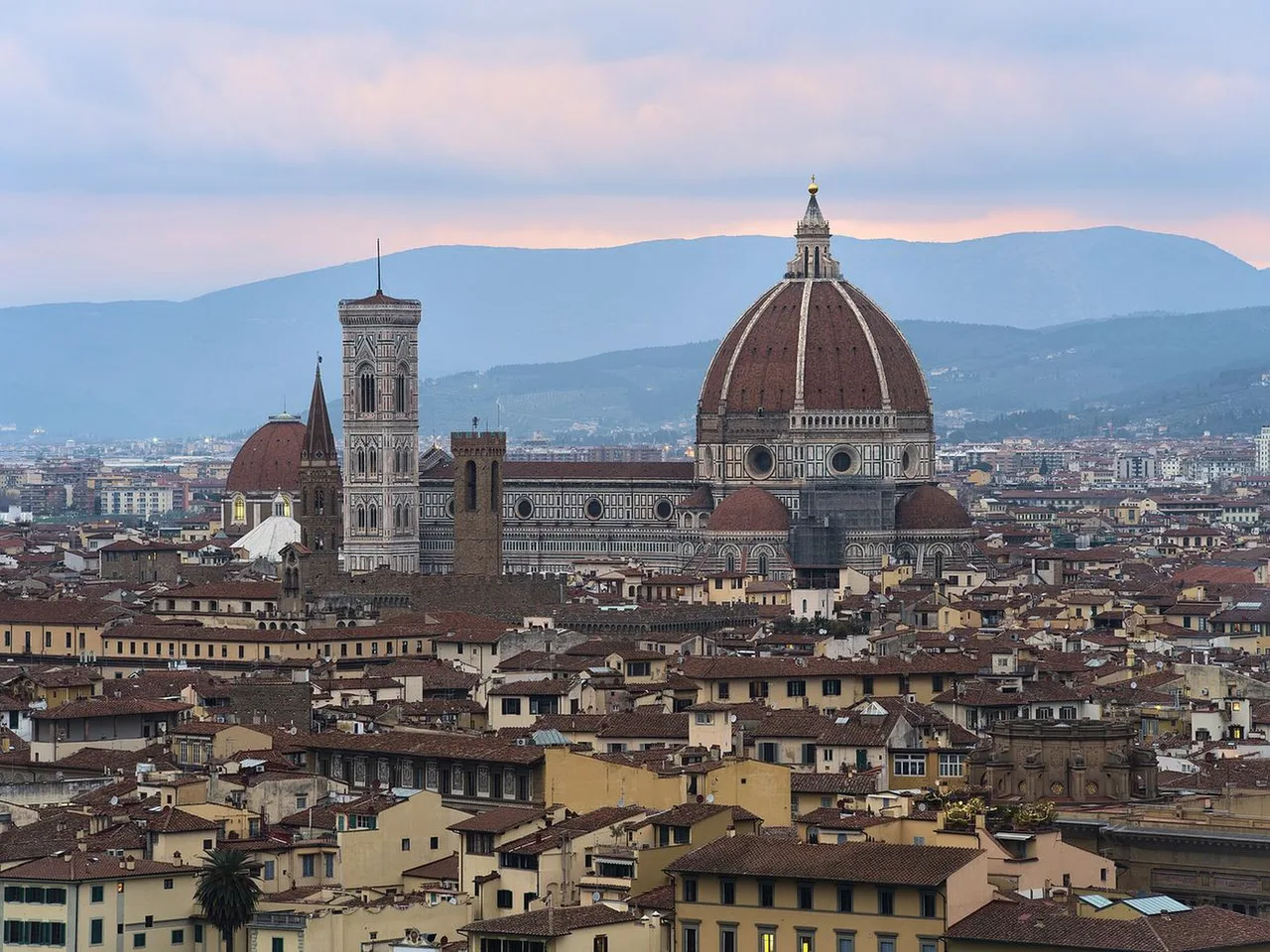
Florence in 2 days is enough for the Renaissance core if you book the big museums and keep the second day for the south bank of the Arno. This plan suits first-time visitors who like to walk and prefer fewer stops done properly. Florence (Firenze in Italian) has a historic centre of about 505 hectares inside the lines of its 14th-century walls, according to UNESCO, so almost everything sits within 20 minutes on foot. Day one covers the Accademia, the cathedral square and the Uffizi. Day two crosses the river for Palazzo Pitti, Santo Spirito and the hill walk to San Miniato.
Quick facts
- Country and region: Italy, in Tuscany.
- Main airport: Florence Amerigo Vespucci (FLR), about 5 km from the centre; Pisa Galileo Galilei (PSA) is the larger alternative.
- Main station: Firenze Santa Maria Novella.
- Getting around: on foot in the centre, tram T2 from the airport, buses for the hills.
- Currency: euro (EUR).
- Language: Italian.
- Time zone: Central European Time (UTC+1), shifting to UTC+2 in summer.
- Best months: April to June and September to October.
Best time to visit
Late April to early June and September to October bring mild days that suit walking between the museums and up to the hill viewpoints. July and August are hot in a city of stone and narrow streets, so plan indoor sights for the afternoon and start outdoors early. Winter is calmer and the main museums have shorter waits, though daylight ends early.
Florence's tourism portal posts a monthly programme, which for October 2026 includes an Artemisia Gentileschi exhibition and the Festival of Saint Luca. Check the FeelFlorence events page for dates before you build the trip around one.
Getting there and around
From Florence Airport the tram T2 runs to the centre, about 20 minutes according to the operator Gest, which sells tickets in an app, at stop machines and by contactless card on board. Pisa is the bigger airport for long-haul flights, and Trenitalia runs the Pisa Airlink train and bus link to Pisa station.
Santa Maria Novella is the main station and sits at the western edge of the centre. Trenitalia and Italo run fast trains from here, so Rome is roughly an hour and a half away and Bologna about 40 minutes by high-speed train. Confirm the times in the operator's app.
Inside the centre, distances are short. The Duomo is about 600 m from the Accademia and about 700 m from the Uffizi, and the Uffizi to Ponte Vecchio is a few minutes along the river. Palazzo Pitti is a further 500 m south of the bridge. The hill to Piazzale Michelangelo is a longer climb, so a bus saves the legs.
Where to stay
The area between Santa Maria Novella and San Lorenzo is the practical base. You step off the train and drop your bag, and the Duomo and Accademia are an easy walk. It is busy and less residential.
Santa Croce and Sant'Ambrogio, east of the Duomo, feel more local and keep you close to the Santa Croce church and the Arno embankment. Evenings are livelier, and the Uffizi is about 10 minutes away on foot.
The Oltrarno, on the south bank, is the quieter choice. UNESCO notes that traditional crafts and shops still define the historic centre, and the Oltrarno streets near Santo Spirito are where workshops are easiest to find. You trade a longer walk to the Duomo for a calmer night.
Day 1: The Duomo, David and the Uffizi
Morning: Accademia and the cathedral square
Be at the Galleria dell'Accademia for the opening and see Michelangelo's David first. The gallery's visit page recommends reserving, because walk-up waits can be long, and notes that it is closed every Monday. Then walk to the Piazza del Duomo, where the cathedral of Santa Maria del Fiore is free to enter, while the dome, Giotto's Bell Tower, the Baptistery, the cathedral museum and the Santa Reparata remains need a Pass from the official Opera di Santa Maria del Fiore ticket shop. The Brunelleschi Pass is valid for three calendar days, but a time slot for the dome climb is mandatory. If you have time before lunch, San Lorenzo, a short walk west, holds the Medici funerary chapel and the sacristy that UNESCO names; check the church's page for its hours.
Afternoon: Piazza della Signoria and the Uffizi
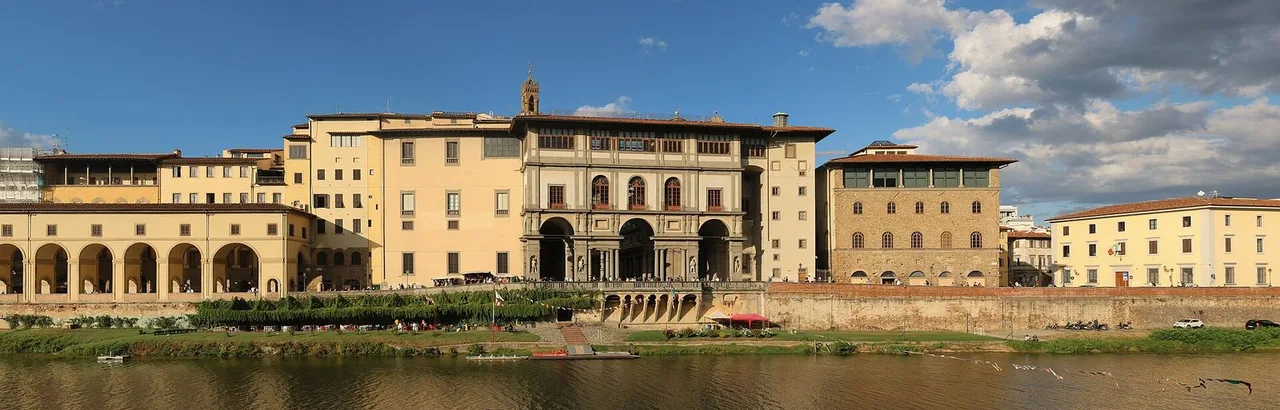
Lunch can be a schiacciata sandwich near the San Lorenzo market stalls. Then walk down Via dei Calzaiuoli, passing Or San Michele, the guild church that UNESCO names as a monument of Florence's trades. The street opens onto Piazza della Signoria, dominated by Palazzo Vecchio, with the Loggia dei Lanzi at its edge. The Uffizi is next door. The building was constructed between 1560 and 1580 to a design by Giorgio Vasari, and its collection runs from Giotto to Caravaggio. Reserve a time slot, and note that the gallery is open Tuesday to Sunday and closed on Mondays.
Evening: the Arno and Ponte Vecchio
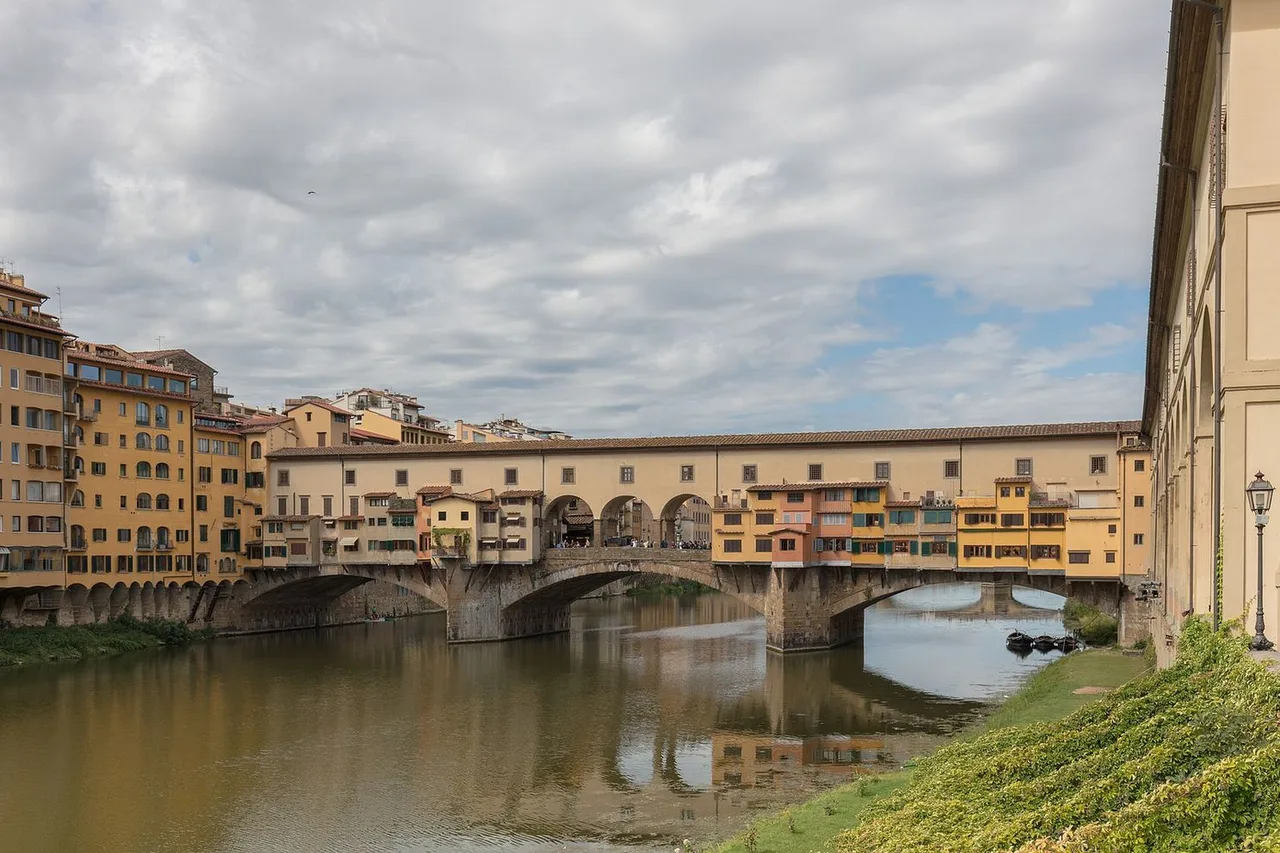
Walk the few minutes to Ponte Vecchio, the 14th-century bridge lined with shops that UNESCO cites as an example of the medieval merchant city. If the light is still good, walk east to Santa Croce, whose Bardi Chapel with Giotto's Stories of Saint Francis has been restored and is visible again. Otherwise cross to the Oltrarno bank for dinner. A good local order is bistecca alla fiorentina, ribollita (bread and vegetable soup) and, at a street stall, a lampredotto sandwich.
Day 2: The Oltrarno and the hills
Morning: Palazzo Pitti and the Boboli Gardens
Cross the river to Palazzo Pitti, which UNESCO lists with the Boboli Gardens among the buildings that Florence's bankers and princes put up. The Uffizi Galleries manage both, and its site lists a multi-day Passepartout that covers the Uffizi, Pitti and Boboli together; its news page says Pitti has opened a new visitor entrance to the right of the main facade. Allow half a day for the palace rooms and the gardens, which climb the hill behind. Start in the palace while it is cool, then take the garden paths uphill for views back across the roofs. Go early, because the garden has little shade on a hot day.
Afternoon: Santo Spirito and San Miniato
Walk to Piazza Santo Spirito for lunch at a trattoria table in the square and a look at the basilica, designed by Brunelleschi. The side streets around it still hold the small workshops that UNESCO says keep the historic centre's craft tradition going, so browse the doorways rather than rush. The Brancacci Chapel in the nearby church of Santa Maria del Carmine holds Masaccio's frescoes, so check the civic museums page before you go. Then climb through the lanes past the Fort of San Giorgio del Belvedere, one of the surviving defences UNESCO describes, to San Miniato al Monte, a Romanesque church on the hill that UNESCO also names. The abbey's own site gives visiting hours and services, which affect when you can go inside.
Evening: Piazzale Michelangelo
Time the end of the walk for sunset on Piazzale Michelangelo, which is a short stroll below San Miniato, where the view takes in the Arno, the Duomo and Palazzo Vecchio. Walk down on the river side to the Ponte alle Grazie, and eat in the Oltrarno or take a bus back toward the station. The hill walk takes about 25 minutes from Santo Spirito, and the stairs are steady rather than steep.
If it rains, on a budget, with kids
If it rains
The Uffizi and Accademia are the natural indoor options, and the Pitti rooms offer a second museum day. Santa Croce is also indoors, and the Bardi Chapel with Giotto's frescoes is open again after a restoration, according to the Opera di Santa Croce. The Boboli Gardens and Piazzale Michelangelo are poor choices in a storm.
On a budget
The cathedral is free to enter, and the Piazza della Signoria, Ponte Vecchio and Piazzale Michelangelo cost nothing. The Accademia lists free days, including every first Sunday of the month in 2026, though booking is not available then and the queue can be long. Check the Accademia page for the 2026 free-day list before you plan around them.
With kids
The Boboli Gardens give children room to run after the palace rooms, and the climb up the Duomo suits older children who like stairs. Ponte Vecchio is short and quick. The Uffizi offers a baby pit-stop and free cloakroom.
Day trip or a third day
Siena, about 90 minutes by bus or train
Siena is a compact Gothic hill town with a shell-shaped square. Buses and regional trains run from Florence; check the current timetable before you go.
Pisa, about an hour by train
Regional trains from Santa Maria Novella reach Pisa Centrale in roughly an hour, and Trenitalia sells the tickets. The Leaning Tower and cathedral square fill a half day.
Bologna, about 40 minutes by high-speed train
Bologna makes an easy third day with arcades and food markets. High-speed trains leave from Santa Maria Novella.
Practical tips
- Reserve the Accademia, the Uffizi and the dome time slot ahead, using only the official shops.
- The Uffizi and the Accademia are both closed on Mondays, so schedule other sights that day.
- Cover shoulders and knees in churches, including the cathedral.
- The historic centre is mostly pedestrian; large bags are a nuisance on cobbles.
- Accessibility: the Uffizi has an access ramp on via della Ninna and lifts. See each museum's page for details.
Frequently asked questions
Does the David need a separate booking?
Yes, plan one. The Galleria dell'Accademia recommends a reservation, because without one the wait can be long, and it charges a booking fee. It is closed on Mondays. On free days, including every first Sunday of the month in 2026, the booking service is off and visitors queue at the gate.
Can the dome be climbed without a Pass?
No. Entry to the cathedral itself is free, but the dome, the Bell Tower, the Baptistery, the museum and Santa Reparata sit behind the Brunelleschi, Giotto or Ghiberti Passes. The official shop states that the dome climb needs a chosen date and time slot.
Which day of the week should be avoided?
Monday. Both the Uffizi and the Accademia are closed then, and so is much of the city's museum offer. Put a Monday on walks, the cathedral, Boboli and the hill viewpoints, and keep Tuesday to Sunday for the two big galleries.
How does the airport connect to the centre?
Tram T2 connects the airport with the centre in about 20 minutes. Buy tickets in the Gest app, at stop machines or by tapping a contactless card on board. Flights into Pisa continue by the Pisa Airlink train and bus link with Trenitalia.
More city guides
- Bologna in 2 days: arcades and a food market, 40 minutes by fast train.
- Siena in 2 days: a Tuscan hill town for a slower pace.
- Rome in 2 days: the ancient capital, on the same fast rail line.
- Venice in 2 days: lagoon streets and canals.
- Milan in 2 days: the Duomo roof and The Last Supper.