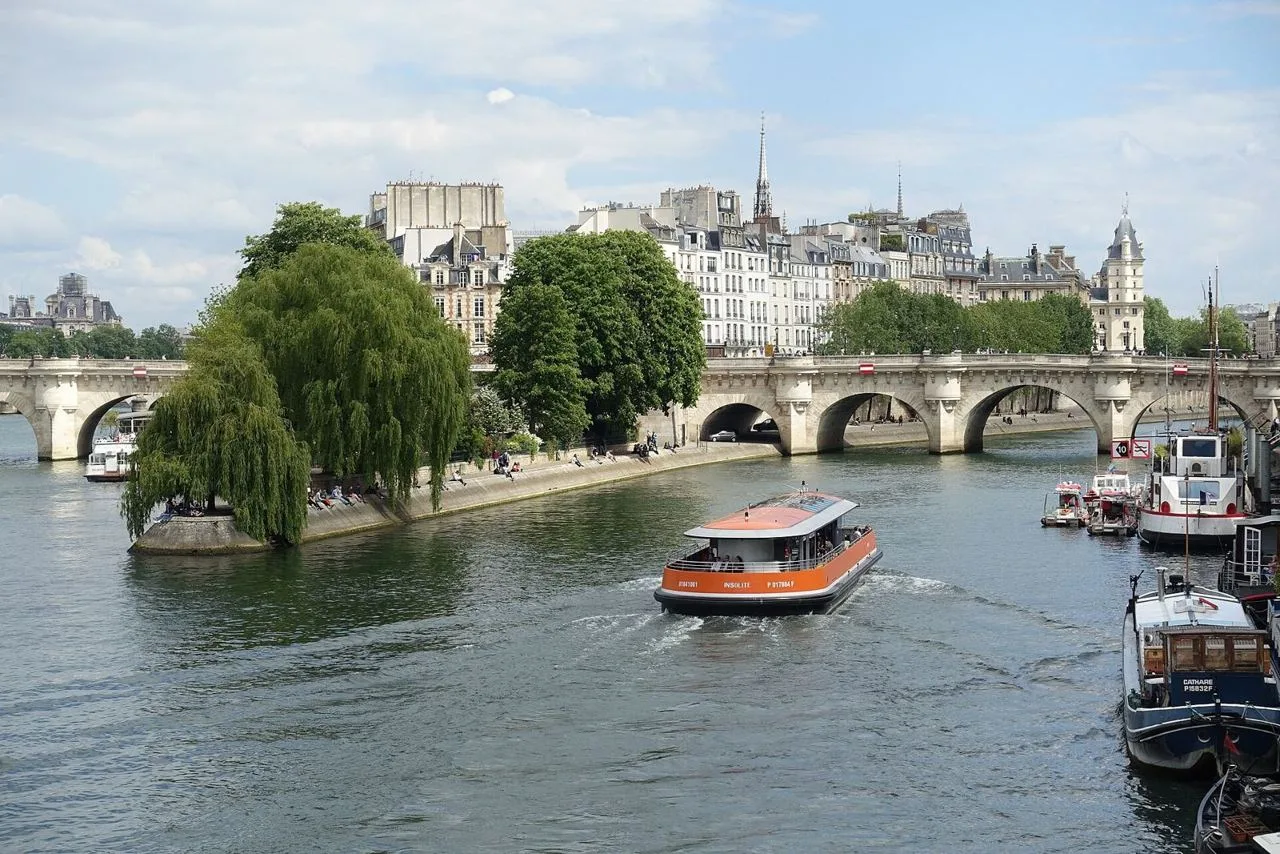
Paris in 2 days works best as a walk down the Seine rather than a dash between ticket queues. This plan suits first-time visitors who are fine on foot and willing to book three or four entries ahead. Day one covers the Île de la Cité, the Sainte-Chapelle, Notre-Dame, the Marais and an evening at the Louvre. Day two follows the Left Bank to the Musée d'Orsay, the Invalides and the Eiffel Tower. UNESCO protects the Seine banks from the Pont de Sully to the Pont d'Iéna, so most of the route runs through listed riverside Paris, with quiet streets between the big names.
Quick facts
- Country and region: France, in the Île-de-France region.
- Main airport: Paris-Charles de Gaulle (CDG), about 25 km north-east of the centre; Orly (ORY) is the second airport.
- Main station: Gare du Nord, for Eurostar, Belgium, the Netherlands and the RER B.
- Getting around: walk the riverbank, and use the metro and RER for longer hops.
- Currency: euro (EUR).
- Language: French.
- Time zone: Central European Time, one hour ahead of UTC, two hours ahead in summer.
- Best months: April to June and September to October.
Best time to visit
April to June and September to October give long daylight, mild walking weather and a fuller set of opening hours than midsummer heat. Hours follow the seasons: the Notre-Dame towers and the Sainte-Chapelle both stay open later from 1 April to 30 September. Heat can disrupt plans. Winter is quieter, and the first Sunday of the month from November to March brings free entry to the Sainte-Chapelle. Check the Paris tourist office agenda for exhibitions and events, and expect crowds around the Eiffel Tower on 14 July, when the fireworks are staged there.
Getting there and around
Paris-Charles de Gaulle lies about 25 km north-east of the centre. The RER B is the simplest rail link: the tourist office gives 35 to 50 minutes to central stations, with trains every 10 to 20 minutes, stopping at Gare du Nord, Châtelet-Les Halles and Saint-Michel-Notre-Dame. The Roissybus ended on 1 March 2026, so read the tourist office airport guide before you travel.
By rail, Gare du Nord handles Eurostar services from London and trains to Belgium and the Netherlands, which makes Brussels a natural neighbour. Gare de Lyon serves the south-east, and the tourist office station guide puts the TGV to Lyon at 2 hours.
In the centre, the river is the guide. The Sainte-Chapelle and Notre-Dame are a few minutes apart, the Île Saint-Louis is next door, and Orsay to the Invalides and the Invalides to the Eiffel Tower are each roughly 1.5 km. For longer hops the metro has 16 lines and runs from about 6 am to 0.45 am, later on Fridays and Saturdays. A Navigo Easy pass loaded with Metro-Train-RER tickets, or a Paris Visite pass, covers it; see the tourist office transport guide.
Where to stay
The Marais and the Île Saint-Louis, in the 3rd and 4th arrondissements, suit a first visit built around day one. The Carnavalet museum and the Place des Vosges are close, and metro lines 1, 5, 7 and 8 serve stops around the museum.
Saint-Michel and the Latin Quarter put you beside the Sainte-Chapelle and Notre-Dame. The RER B and C both stop at Saint-Michel, which helps with the airport on arrival day.
The streets around Gare du Nord and the Canal Saint-Martin, in the 10th arrondissement, work for short trips by Eurostar. The station has metro lines 2, 4 and 5 and RER B, D and E. It sits farther from the sights, so plan on one metro ride each morning.
Day 1: The islands, the Marais and the Louvre at night
Morning: Sainte-Chapelle, Notre-Dame and the Île Saint-Louis
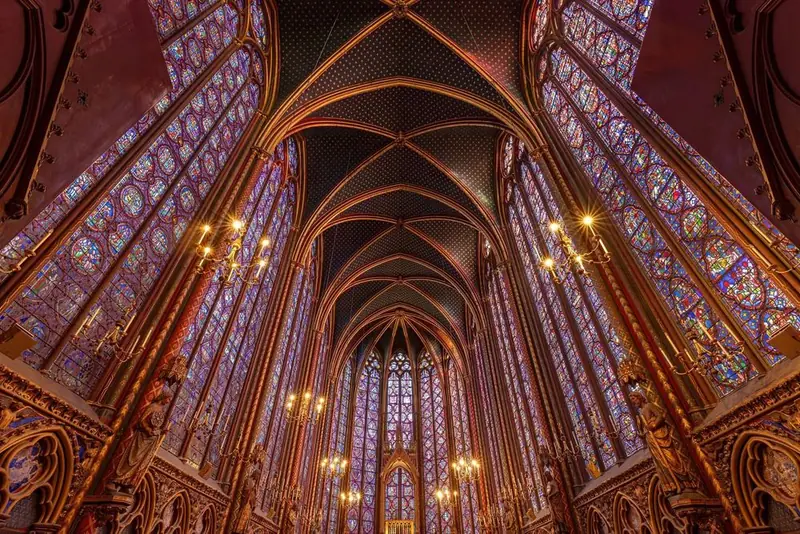
Start at the Sainte-Chapelle when it opens. Louis IX had it built in the mid 13th century to house the Crown of Thorns, and the Centre des monuments nationaux describes its fifteen stained-glass windows and rose window as walls of light. The chapel sits inside the Palais de Justice perimeter, so expect security checks and allow up to 30 minutes of waiting on busy days, as the Paris Museum Pass page notes. The visit itself takes about 45 minutes.
Walk the few minutes to Notre-Dame, which reopened on 8 December 2024 after the 2019 fire. Entry to the ground floor is free, with or without a reservation, and an optional free slot booked online helps avoid queues, according to the tourist office. Restoration continues and the forecourt redesign is due to finish in 2027. The towers are a separate timed visit run by the national monuments centre, with 424 steps and online booking only.
Cross the Pont Saint-Louis to the Île Saint-Louis and follow Rue Saint-Louis en l'Île between 17th-century façades. Berthillon, the family ice-cream maker here since 1954, is the usual stop.
Afternoon: Place des Vosges and the Marais
Head east along the quays, about 1.5 km, to the Marais. The Place des Vosges, called Place Royale until the late 18th century, is one of the oldest monumental squares in Paris, with red-brick façades above arcades. Two museums sit in nearby mansions. The Musée Carnavalet covers the history of Paris; its permanent collections are free and need no booking, and it opens Tuesday to Sunday and closes on Monday. Victor Hugo's apartment on the square, where he lived from 1832 to 1848, is part of the same city museum network. Rue des Rosiers, the heart of the Jewish quarter, has shops and restaurants for lunch.
Evening: the Louvre after dark
The Louvre closes on Tuesdays and, according to its visit page, stays open until 9 pm on Wednesdays and Fridays. Aim day one at one of those evenings, book a time slot, and enter through the Pyramid; at peak times the Carrousel or Porte des Lions entrances may also work. Ride metro line 1 from Saint-Paul toward the palace. Pick one or two wings instead of the whole building, check the museum's list of closed rooms first, and remember that last entry is one hour before closing. On other evenings, walk the Pont Neuf to the Square du Vert-Galant at the tip of the island and wander Place Dauphine.
Day 2: Orsay, the Left Bank and the Eiffel Tower
Morning: Musée d'Orsay at opening
Reach the Musée d'Orsay for 9:30 am, Tuesday to Sunday. The museum closes on Mondays, and a time slot has been mandatory since 10 March 2026 while the reception areas are renovated, a rule the Paris Museum Pass page says runs until summer 2028. The building is a former railway station and shows art from 1848 to 1914, with Monet, Degas, Manet, Renoir, Van Gogh, Gauguin and Rodin. Thursday brings a late opening until 9:45 pm if you prefer a calmer evening visit. Allow two to three hours.
Afternoon: the quays and the Invalides
Turn upstream for a short stretch along Quai Voltaire and Quai Malaquais, which UNESCO singles out for their coherent 17th- and 18th-century buildings. Then walk west, about 1.5 km, to the Hôtel National des Invalides, home of the Musée de l'Armée and Napoleon's tomb, as the tourist office notes. Pass over the Pont Alexandre III, one of the structures from the Universal Exhibitions that UNESCO cites along the Seine. Continue to the Quai Branly, where the garden of the Musée du Quai Branly is free to enter and the Passerelle Debilly footbridge gives a view of the Eiffel Tower.
Evening: the Eiffel Tower and Trocadéro
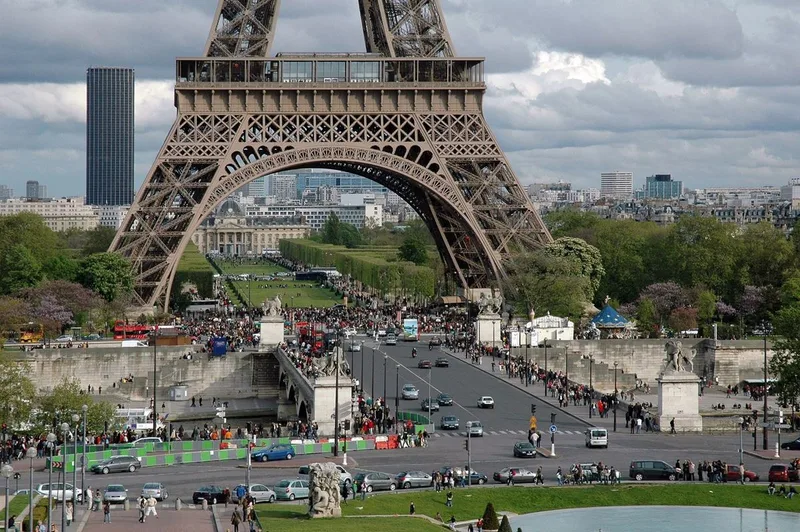
Gustave Eiffel built the tower for the 1889 World's Fair, and the summit stands at 276 m. You can climb 674 steps to the first two floors or take lifts, and the tourist office page says the tower opens every day of the year, day and evening, with the last lift 1 hour 15 minutes before closing. Book on the official Eiffel Tower site only. After dark the lights sparkle on the hour until 1 am. Finish across the Pont d'Iéna on the Trocadéro esplanade, a classic viewpoint for the tower.
If it rains, on a budget, with kids
If it rains
Move the indoor stops forward. The Louvre, the Orsay and the Carnavalet are all under a roof, and the Cité de l'architecture et du patrimoine at the Palais de Chaillot holds casts, drawings and photographs relating to Notre-Dame. The Musée de Cluny shows the Lady and the Unicorn tapestries, woven around 1500, according to the Paris Museum Pass site.
On a budget
The permanent collections of the City of Paris museums are free, except the Catacombs, the Archaeological Crypt and the Palais Galliera, as the city explains. The Notre-Dame nave, the Place des Vosges, the Canal Saint-Martin and the Quai Branly garden cost nothing. The Louvre is free for under 18s and for EEA residents under 26. A 2-day Paris Museum Pass is advertised as paying off from the fourth visit.
With kids
Eiffel Tower children under 4 enter free, and young visitors receive the Tom and Elia trail booklet. The Trocadéro gardens have play areas and the Warsaw Fountain, and the Champ de Mars has a puppet theatre and a playground. Under 18s enter the Louvre free.
Day trip or a third day
Versailles, a half-day plus the palace
The Palace and Park of Versailles are a UNESCO World Heritage site. The palace opens at 9 am every day except Monday, and Versailles Château Rive Gauche station is a 10-minute walk from it, per the palace's practical page. The Paris Visite pass covers Versailles. Check the journey time in the transit planner and plan a full day.
Canal Saint-Martin, a slow third day
The canal runs 4.5 km, 2 km of it underground, and has linked the Port de l'Arsenal with La Villette since 1825. Nine locks, swing bridges and iron footbridges make this a good wander from Gare du Nord, and access is free at any hour.
Lyon, about 2 hours by TGV
Lyon leaves from Gare de Lyon and makes a clean change of pace with its old town and markets.
Practical tips
- Book the Louvre and the Musée d'Orsay by time slot, and check Sainte-Chapelle and Eiffel Tower slots on their own official sites.
- Buy only from official sites. The Paris Museum Pass site warns that imitation ticket sites sell fake tickets and inflated prices.
- Notre-Dame needs no ticket for the nave. Only the tower tour is paid and timed.
- Plan around closing days: Louvre on Tuesday, Orsay and Carnavalet on Monday, Versailles on Monday.
- Expect bag checks. The Carnavalet refuses suitcases and large bags.
- Accessibility details for the Sainte-Chapelle and the Eiffel Tower are on the tourist office pages, and the Louvre has an accessibility section on its visit page.
Frequently asked questions
Can I enter Notre-Dame without a reservation?
Yes. The tourist office states that individual visits are open with or without a reservation and are always free. A free online slot for up to four people shortens the queue. The towers differ: they need a paid, timed booking made online through the national monuments centre, and there is no entry without one.
Do I need to book the Musée d'Orsay in advance?
Yes. A time slot has been mandatory since 10 March 2026 during renovation of the reception areas, and the Paris Museum Pass site expects the rule to last until summer 2028. Pass holders enter by the quay entrance on the Seine side. The museum closes on Mondays and opens late on Thursdays.
Which evening suits the Louvre best?
Wednesday or Friday, when the museum stays open until 9 pm. It closes all day on Tuesday, and the other days end at 6 pm. Book a slot even if you qualify for free entry, since the museum recommends time-slot booking for everyone.
How do I get from Charles de Gaulle to the Île de la Cité?
Take the RER B to Saint-Michel-Notre-Dame, which the tourist office lists among the central stops. Trains run every 10 to 20 minutes and the trip to central Paris takes 35 to 50 minutes. From the station, the Sainte-Chapelle is a short walk across the Seine.
More city guides
- Brussels in 2 days: trains to Belgium leave from Gare du Nord.
- Antwerp in 2 days: a Flemish port city for the same Benelux rail trip.
- Bruges in 2 days: canals and a compact medieval centre.
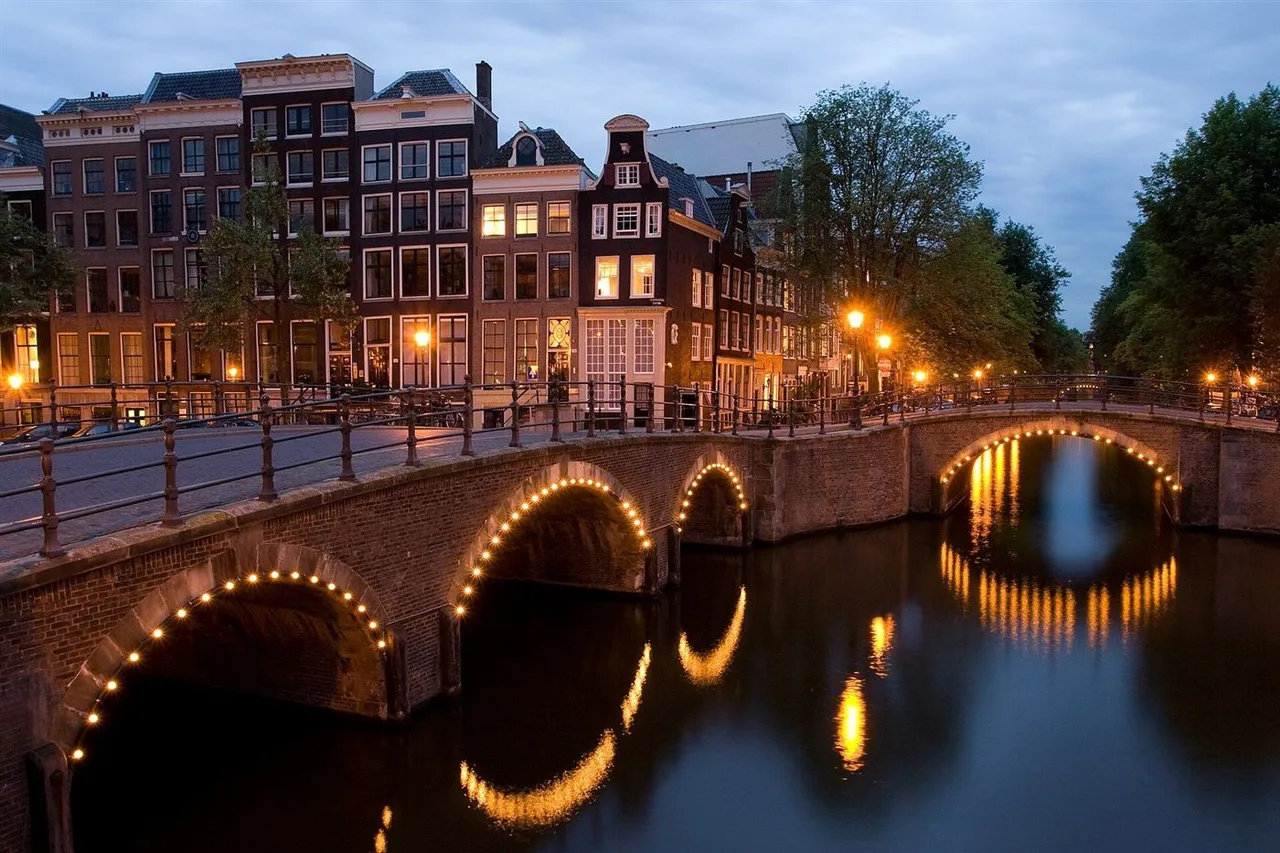
- Amsterdam in 2 days: the Netherlands, also served from Gare du Nord.
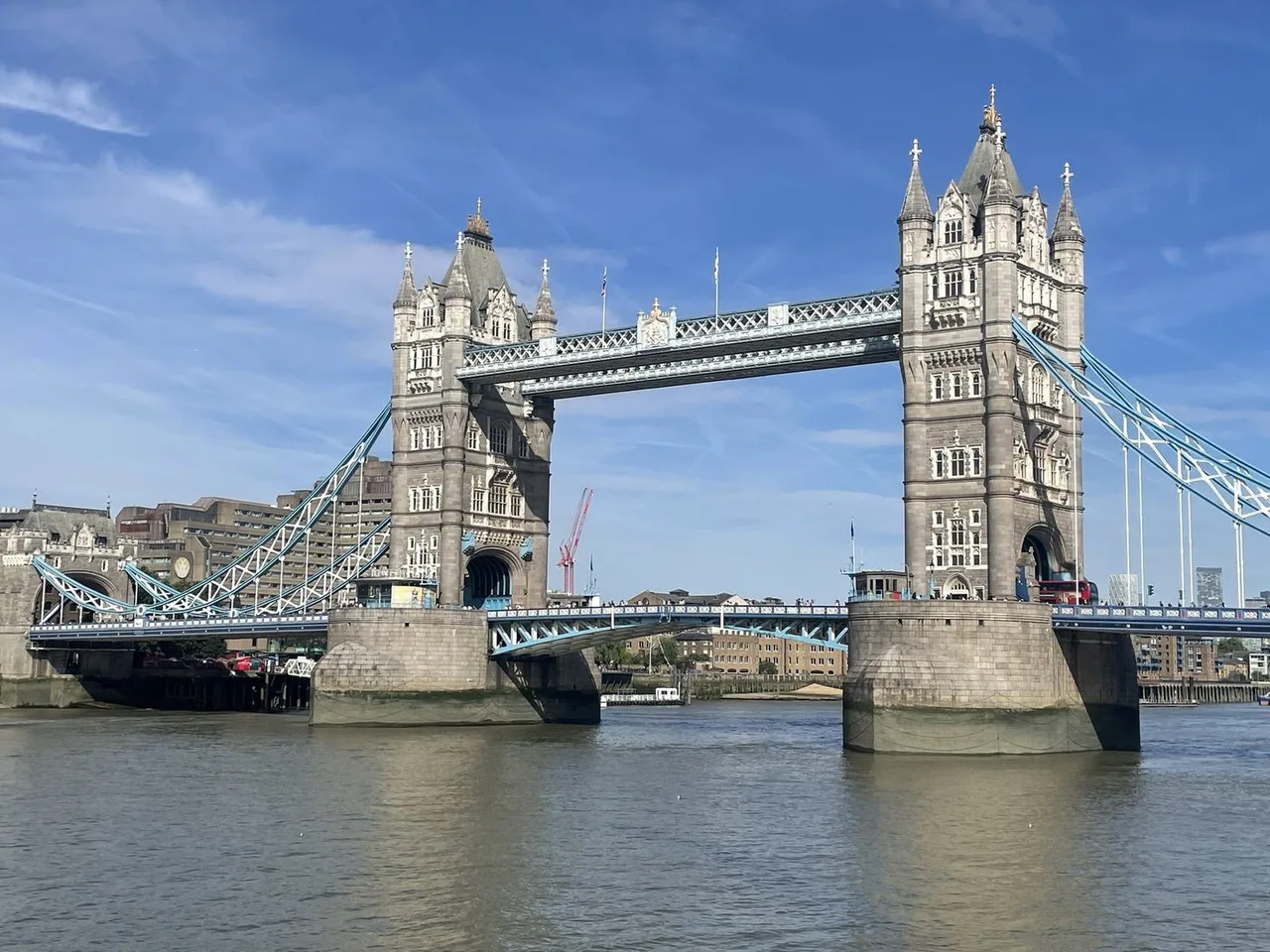
- London in 2 days: the Eurostar partner city.