
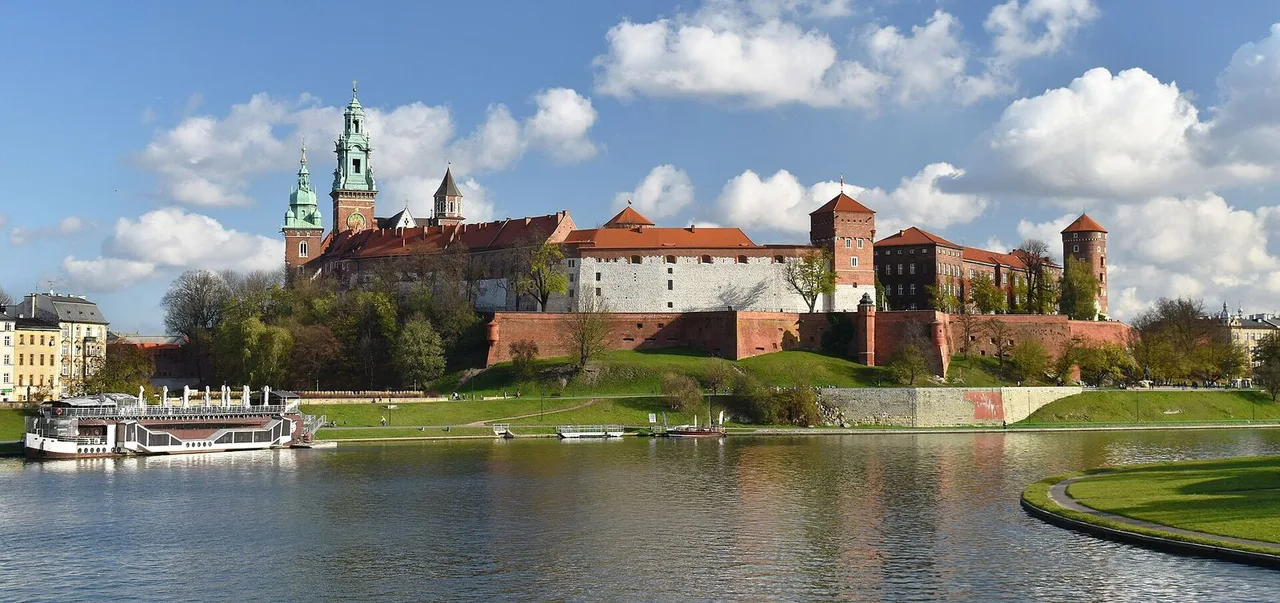
Krakow in 2 days works best as a walk down the Royal Road from the Main Market Square to Wawel Hill, followed by a second day in Kazimierz and across the Vistula. The plan suits first-time visitors who like compact old towns, rail travellers arriving from Warsaw, Prague or Vienna, and anyone who wants twentieth-century history handled with care. The Polish spelling is Kraków, and UNESCO describes the historic centre as three linked ensembles: the medieval city, Wawel Hill and Kazimierz. The reason to go is density. One square holds a Renaissance cloth hall, two church towers and a museum under the paving, and the castle is a short walk away.
Quick facts
- Country and region: Poland, Lesser Poland (Małopolska), on the Vistula in the south of the country.
- Main airport: Kraków John Paul II International Airport (KRK) at Balice, west of the centre, with rail and bus links.
- Main station: Kraków Główny, a ten-minute walk from the Main Market Square.
- Getting around: the old town is walkable; trams and buses cover Kazimierz, Podgórze and the outskirts.
- Currency: Polish złoty (PLN).
- Language: Polish.
- Time zone: Central European Time (UTC+1), with summer time (UTC+2).
- Best months: May to June and September to October.
Best time to visit
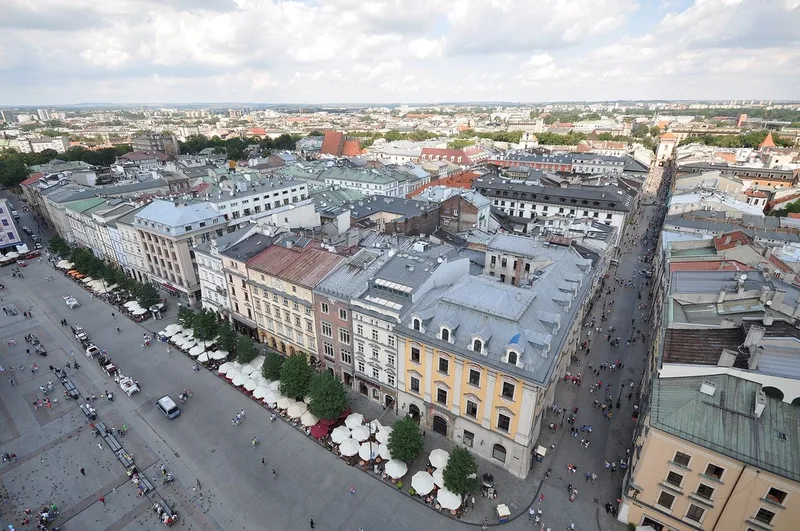
May and June bring long evenings and green banks along the Vistula, which suits the walking-heavy plan below. September and October are quieter and still mild. July and August are the busiest months, so book Wawel, Rynek Underground and Auschwitz passes early. Winter days are short, but the Main Square hosts the annual szopka (Christmas crib) festival, and the Lajkonik celebrations and Juwenalia student festival also use it. Dates change, so check the official Kraków Travel event calendar before fixing a date. Easter and Christmas affect opening: Wawel Cathedral closes on Good Friday, Holy Saturday, Easter Sunday, Christmas Eve and Christmas Day.
Getting there and around
From Kraków John Paul II International Airport, a rail link and buses reach the centre; the airport's own page lists the current options, and a taxi is the simplest choice with luggage. Trains arrive at Kraków Główny, from where the Planty park leads to the Main Square in about ten minutes on foot.
PKP Intercity runs the long-distance services. Through trains link the city with Katowice and, on international routes, with Prague via Ostrava and with Vienna. A Warsaw run is the usual choice for a combined trip; see Warsaw in 2 days and Prague in 2 days for the neighbours. Trains also run east to Przemyśl, where passengers change for Ukrainian services.
Inside the city, the Main Square to Wawel Castle is a straight walk down Grodzka Street of roughly fifteen minutes. Kazimierz is about twenty minutes on foot from the square, and the Podgórze bank is a similar distance beyond it. Trams and buses are run by the city transport authority; timetables and ticket rules are on the ZTP Kraków site.
Where to stay
The Old Town (Stare Miasto) puts the Main Square, St Mary's Basilica and the Planty within a few minutes of the door. It suits a short first visit, though lanes near the square stay lively late, so ask for a courtyard room. Kazimierz is the better base for dinners, bars and the synagogue streets, and it is a fifteen to twenty minute walk from Wawel. Podgórze, across the river, is calmer and puts Schindler's Factory and Ghetto Heroes Square close by; it works for a second stay or for travellers who prefer a residential feel.
Day 1: The Royal Road from the Main Square to Wawel
Morning: the Main Market Square
Begin at the north end of the Old Town near the Florian Gate and the Barbican, part of the medieval walls UNESCO lists among the surviving features of the chartered city of 1257. Walk down Floriańska Street into the Main Market Square, which dates to the thirteenth century and covers about 3.8 hectares; it is sometimes called one of the largest medieval town squares in Europe. The Cloth Hall (Sukiennice) stands at its centre, rebuilt in the Renaissance style after the fire of 1555. Its upper floor holds the Gallery of Nineteenth-Century Polish Art, a branch of the National Museum, where Jan Matejko's large canvases hang.
Then go to St Mary's Basilica for its Gothic interior and the carved altarpiece by Veit Stoss (Wit Stwosz). Every hour a trumpet signal, the hejnał, is played from the taller tower; it breaks off mid-melody by tradition. Allow an hour here, then glance at the Town Hall Tower and the small Church of St Adalbert.
Afternoon: beneath the square and up to Wawel
The Rynek Underground, a Museum of Krakow branch reached from the Cloth Hall side, shows the medieval trading town below today's paving. Book a timed entry on the Museum of Krakow site. Lunch can wait for the side streets around Grodzka.
Follow Grodzka Street south, a walk of roughly fifteen minutes, to Wawel Hill. The cathedral is a separate institution from the castle. One cathedral ticket covers the nave, the Sigismund Bell tower, the Royal Tombs, the Cathedral Museum and the Archdiocesan Museum, and an audio-guided tour of the cathedral and bell tower takes around forty minutes; see the Wawel Cathedral visitor page. Royal Castle exhibitions sell their own timed tickets through the Wawel Royal Castle website.
Evening: the river and the Planty
Walk down to the Vistula bank below the hill, where boats moor and the castle walls catch the last light. Return through the Planty, the green ring around the Old Town, and eat in the lanes behind the Main Square.
Day 2: Kazimierz, Podgórze and the river
Morning: Kazimierz
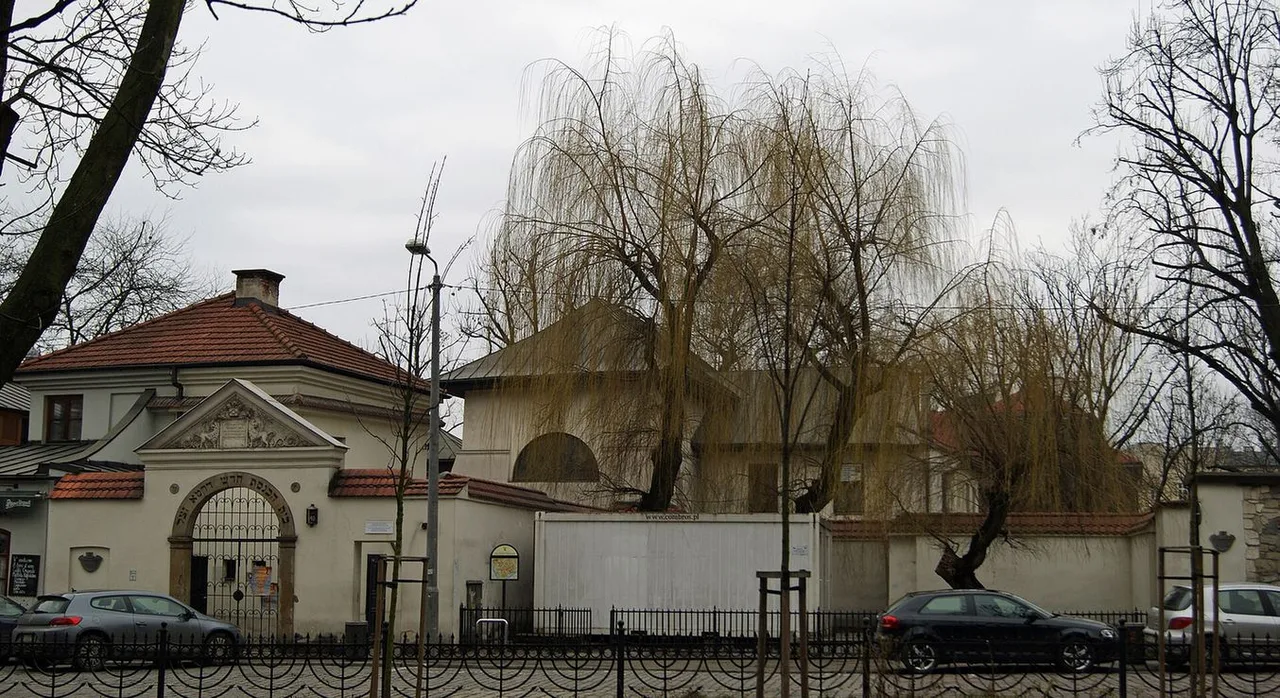
Kazimierz, a separate town until it was absorbed by Kraków, was shaped by both Catholic and Jewish communities, according to UNESCO. Start on Szeroka Street, where the Old Synagogue at number 24 and the Remuh Synagogue at number 40 face each other across a quiet square; the Remuh also has an old cemetery behind its walls. Both are worth entering if open, so check the Museum of Krakow and synagogue pages for current hours. UNESCO counts Kazimierz as one of the three ensembles of the historic centre, next to the medieval city and Wawel, so this morning covers a full third of the listed area. These are places of worship and memory, and photography rules vary.
Then wander the streets around Józefa and Miodowa, and look for obwarzanek, the ring-shaped bread sold from city carts, as a mid-morning snack.
Afternoon: across the river to Podgórze
Cross the Vistula on the pedestrian Father Bernatek footbridge, about twenty minutes from Szeroka Street. Stop in the middle for a view of both banks; the Podgórze side is quieter, and its cafes serve locals as much as visitors. On the far bank, Ghetto Heroes Square marks the site of the wartime ghetto, and Oskar Schindler's Factory, a Museum of Krakow branch, presents an exhibition on the city under the German occupation of 1939 to 1945. Book a timed ticket and allow two hours; the content is serious, and many visitors want a quiet pause afterwards.
Evening: a slower finish
Return across the footbridge for dinner in Kazimierz, where many restaurants serve Polish dishes such as pierogi and żurek. If energy remains, cross the Main Square once more after dark, when the Cloth Hall is lit and the crowds have thinned. From Kazimierz it is a flat twenty-minute walk back to the Old Town, and the route stays busy and well lit into the evening.
If it rains, on a budget, with kids
If it rains
Spend the wet hours indoors: the Gallery of Nineteenth-Century Polish Art in the Cloth Hall, Rynek Underground, the Wawel Cathedral museums and the Schindler Factory exhibition together fill a full day.
On a budget
The best of Kraków costs nothing: the Planty ring, the Vistula banks, St Mary's hourly trumpet call and the exterior of the Cloth Hall. Exhibitions on Wawel Hill need tickets, so check the castle site for what can be seen without one. Check the Museum of Krakow site for free-entry days.
With kids
The Wawel dragon legend, the Sigismund Bell and the hejnał at the top of the hour give children a story to follow. The riverside paths below Wawel are traffic-free, and the Planty has playgrounds on its green edge.
Day trip or a third day
- Auschwitz-Birkenau Memorial: about 70 km west of Kraków, so plan roughly 2 hours each way by bus or train and most of a day on site. See Practical tips.
- Wieliczka Salt Mine: a short suburban trip south-east of the city, about 40 minutes. UNESCO lists the Wieliczka and Bochnia Royal Salt Mines, worked from the thirteenth century to the late twentieth, with an underground tourist route since the early nineteenth century. Check the UNESCO page and the mine's own site for booking.
- Lviv: a long rail trip via Przemyśl and the Ukrainian network, not a day trip. Read Lviv in 2 days and your government's travel advice first.
Practical tips
Reserve the Auschwitz entry pass: admission is free, but entry is only possible with a personalised pass booked at the official reservation site, no passes are issued at the gate, and the Memorial advises arriving at least 30 minutes before the start. The standard guided tour of both parts lasts about three and a half hours. Bags above 35 by 25 by 15 centimetres are not admitted, and dress should suit a memorial; see the Auschwitz Memorial visiting page.
Wawel Cathedral closes on certain religious days and the Cathedral Museum is closed on Sundays. Timed tickets for Rynek Underground and Schindler's Factory sell out in high season. Cobblestones and steep steps on Wawel and in the towers make access difficult for wheelchair users; confirm access details with each museum before travelling.
Frequently asked questions
Can one ticket cover Wawel Cathedral and the Royal Castle?
No. The cathedral ticket covers the nave, the Sigismund Bell, the Royal Tombs and two museums, but the Royal Castle sells its own tickets at its office or online. Plan them as separate stops on the hill.
Do I need to book Auschwitz-Birkenau in advance?
Yes. Entry to the Memorial is free but needs a personalised, limited entry pass that can only be reserved online, and there is no ticket sale at the entrance. Guide fees apply to guided tours.
Is the Main Market Square the largest medieval square in Europe?
It is often described as one of the largest. It covers roughly 3.8 hectares and dates to the thirteenth century, but "largest" depends on how squares are measured, so the careful wording is "one of the largest".
Can I reach Lviv by train from Kraków?
Services run to Przemyśl in Poland, where Ukrainian trains continue to Lviv and onwards. Timetables change, and travel advice for western Ukraine is cautious, so read your government's guidance and the Ukrzaliznytsia timetable before planning.
More city guides
- Warsaw in 2 days: the Polish capital, a few hours north by fast train.
- Wroclaw in 2 days: another Polish old town, west along the Intercity line.
- Prague in 2 days: Central European rail neighbour via Ostrava.
- Vienna in 2 days: imperial capital on the Kraków line south.
- Lviv in 2 days: the nearest Ukrainian city, reached through Przemyśl.
.jpg)
