
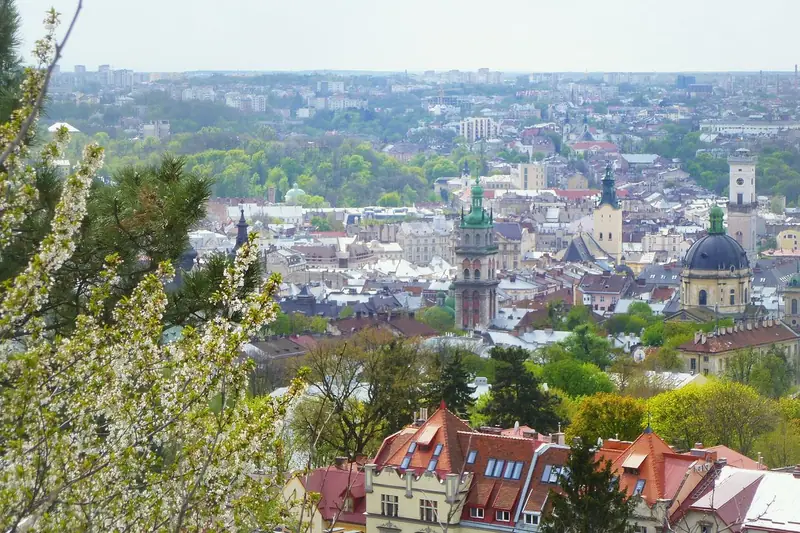
Lviv in 2 days takes you through one of the best-preserved historic centres in Ukraine, from the market square to the castle hill and the hillside cemetery. The plan suits readers who enjoy architecture, coffee houses and a city shaped by Ukrainian, Armenian, Polish, Jewish and Habsburg influences; treat it as preparation for when conditions allow (see the notice above). In Ukrainian the city is Львів. What makes it worth the trip is the street plan: UNESCO notes that the medieval layout of squares, churches and parcels survived despite fires in 1527 and 1571, so a short walk crosses Gothic, Renaissance, Baroque and later layers.
Quick facts
- Country and region: Ukraine, Lviv Oblast, in the west of the country.
- Main airport: Lviv Danylo Halytskyi International Airport (LWO); civil flights ended when the airspace closed in February 2022.
- Main station: Lviv railway station, a short tram ride from the old centre.
- Getting around: a compact, walkable old town, with trams for the longer hops.
- Money: the Ukrainian hryvnia (UAH).
- Language: Ukrainian.
- Time zone: UTC+2 in winter and UTC+3 in summer.
- Best months: May to June, then September to October.
Best time to visit
Spring and autumn suit a walking plan best: May and June bring leaf cover to the High Castle hill, and September and October give mild days for the cemetery. According to the city's tourism office, around 100 cultural, music, religious and food festivals take place in Lviv every year, so a programme usually exists, although dates vary and wartime conditions can change them; consult the official lviv.travel calendar. Winter is cold, and outages of power, heating and water are possible. Before choosing any month, read your government's guidance: at the verification date the UK advice put Lviv Oblast in its "all but essential travel" category.
Getting there and around
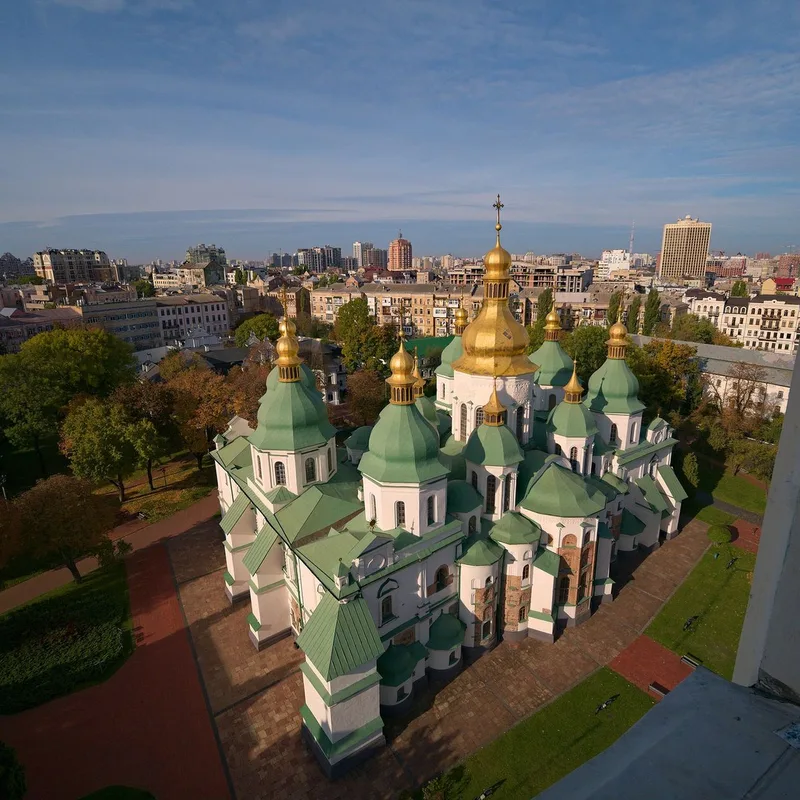
With the airspace closed, Lviv's airport is out of use, and the realistic way in is by train or road from Poland. Trains on the Przemyśl line, operated by Ukrzaliznytsia, connect Lviv with the Polish border town, where Polish Intercity services continue to Kraków; read Krakow in 2 days if you are planning a stop on the Polish side. A train from the capital takes roughly 6 hours, and Kyiv in 2 days describes that end of the line.
In Lviv, walking suits the old town. Rynok Square to the Opera House is about ten minutes on foot, and the High Castle park is a fifteen-minute walk from the square according to the city tourism office. Trams run to the station and to Lychakiv. Rules on curfews and alerts shift with the security situation, so ask your host on arrival.
Where to stay
The historic centre around Rynok Square is the obvious base, with most sights within a ten-minute walk, though it is loud on weekend nights. The streets near the Opera House and Svobody Avenue are more orderly and still central, and they put the Potocki Palace and the Art Gallery within reach. A quieter option is the area near the High Castle park and Pidzamche, the oldest part of the city, which offers steps and views at the price of a longer walk back from dinner. Ask any host where the nearest shelter is before you unpack.
Day 1: Rynok Square and the old centre
Morning: Rynok Square
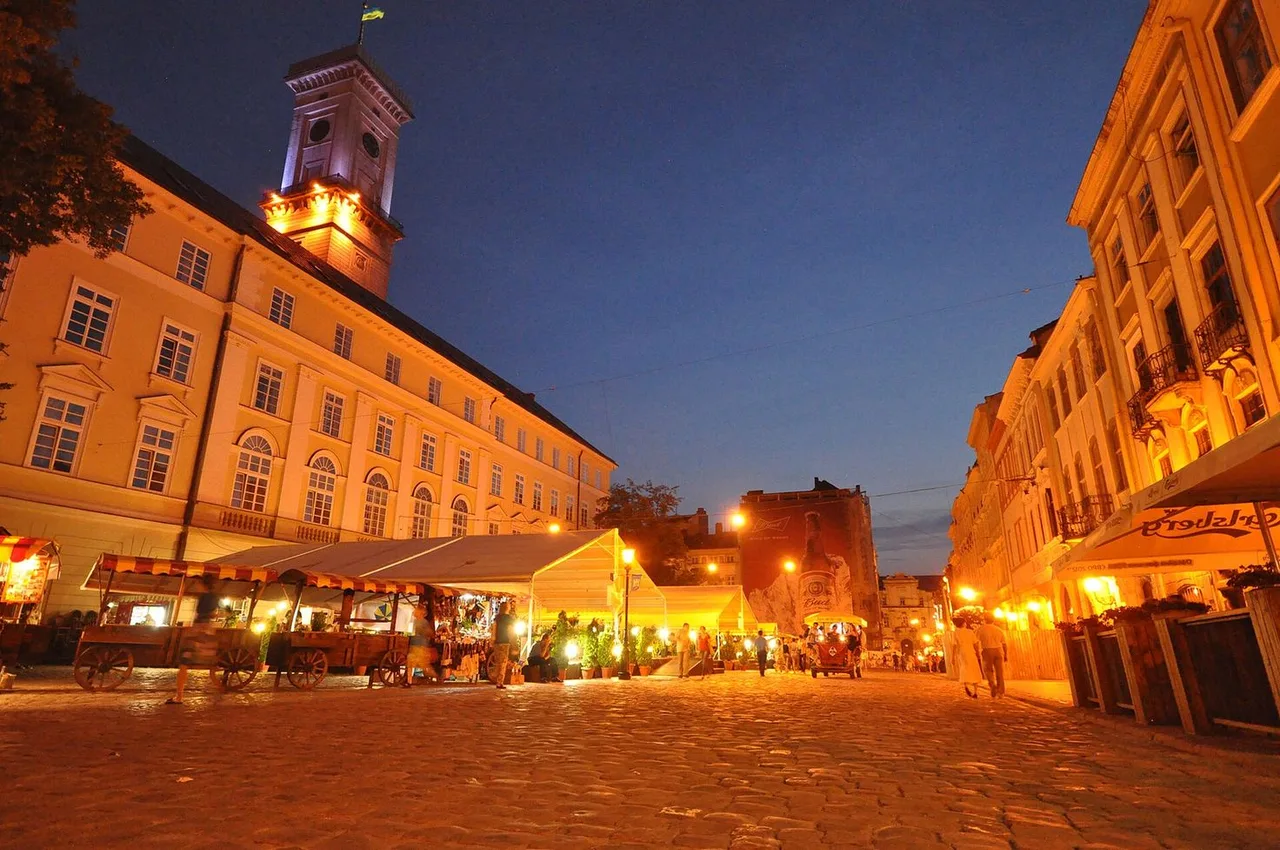
Start at Rynok Square, the commercial centre of the city for about five hundred years. Forty-three houses surround it, and each one was limited to three windows in width under the Magdeburg-law tax, which explains the narrow facades. Walk the perimeter to find the Black Townhouse, Palazzo Bandinelli and the Kornyakt Palace from the Renaissance, then the Baroque Lubomyrski Palace and the Ubaldini and Kiliyashchynska houses. At number 29, a house in the plainer "government" style marks the entrance to the Andreolli Passage. Four fountains with statues of Adonis, Diana, Neptune and Amphitrite stand at the corners of the Town Hall.
The Town Hall tower is 65 metres high and offers views of St George's Cathedral and the Opera House. Climbing requires same-day registration at the Tourist Information Centre, and hours are listed on the Town Hall tower page, so check them first.
Afternoon: the Armenian quarter and the churches
Walk to Virmenska (Armenian) Street, the centre of one of the oldest communities in the city. Nearby, the Boim Chapel is a late Renaissance monument that the tourism office says has no analogue in Ukraine, and the Dominican Church, now the Greek Catholic Church of the Holy Eucharist, is a late Baroque landmark with original sculpture. Add the Bernardine Monastery, a fortified complex from the 1600s and 1630s, and the Kornyakt courtyard of 1580, once the palace of the richest merchant in the city's history. These stops lie close together, roughly ten minutes apart on foot, so allow a slow three hours.
Evening: coffee, food and a late walk
The city is known for coffee, craft beer and local food, according to the tourism office. Take a table in a coffee house near the square, then walk back past the lit Town Hall. Respect any curfew or alert rules in force.
Day 2: The castle hill, the cemetery and the Opera
Morning: High Castle and St George's hill
Walk up to the High Castle park (Uzhhorodska and Knyazha Streets), the highest point of the city. UNESCO describes the Vysokyi Zamok and the surrounding Pidzamche area as the oldest part of Lviv, with a settlement dating to the 5th century. The viewing platform shows the whole old town, and the park holds a wall fragment, the lion moved from the Town Hall more than a century ago and a 192-metre TV tower lit in colours at night. Locals meet the sunrise here. Then go on to St Yuri's Hill, the second component of the World Heritage property, where the Baroque ensemble of St George's Cathedral was the heart of the Halychyna Church Metropolis. It is a longer walk, so use a tram or taxi if energy is low.
Afternoon: Lychakiv Cemetery
Lychakiv Cemetery covers 42 hectares and holds more than 400,000 burials, and the tourism office calls it an open-air museum. Many tombs carry sculpture of real artistic value, and a local guide can explain the stories behind them. It is a quiet place of remembrance, so keep voices low and respect any recent graves.
Evening: the Opera House
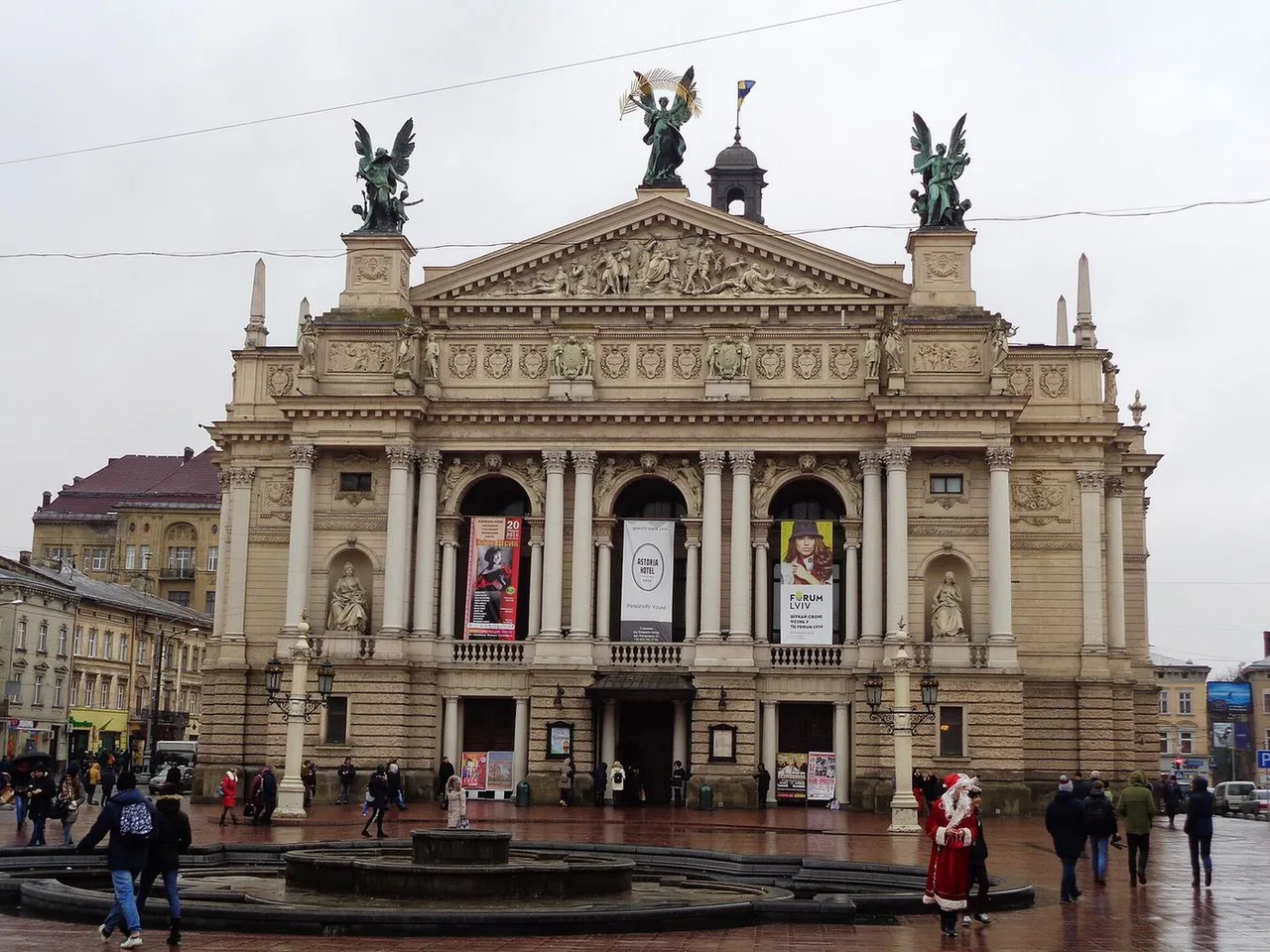
The Lviv Opera House, a Neo-Renaissance building completed at the start of the twentieth century, is worth seeing at night even if you do not attend a performance. If the programme allows, book a seat through the theatre's official site. Afterwards, walk the short distance back to Rynok Square along streets that stay lit.
If it rains, on a budget, with kids
If it rains
The Potocki Palace, a late nineteenth-century residence in French Neo-Renaissance style on Kopernyka Street, sits next to the Lviv Art Gallery, which shows rotating exhibitions. Church interiors around the Armenian quarter also fill an hour, and the coffee houses are the traditional place to wait out rain.
On a budget
Walking Rynok Square, the Armenian quarter and the High Castle park costs nothing, and the Lviv City Card, promoted by the tourism office as a way to make visits more affordable, bundles entries; check what it covers on the official site. The Town Hall climb is priced, so decide whether the view is worth it.
With kids
The Folk Architecture and Life Museum in Shevchenkivskyi Hai is one of the largest open-air museums in Europe, with more than 100 buildings recreated, a lake and a small zoo. The High Castle hill, with its lion statue and wide lawns, is easy to explore with children.
Day trip or a third day
- Third day in Lviv: use the open-air museum and the Potocki Palace, a short city ride from the centre. This is the realistic option while travel beyond the city is limited.
- Kyiv: a rail trip of roughly 6 hours to the capital, whose monuments are in Kyiv in 2 days; the Foreign Office applies a stricter category to that region.
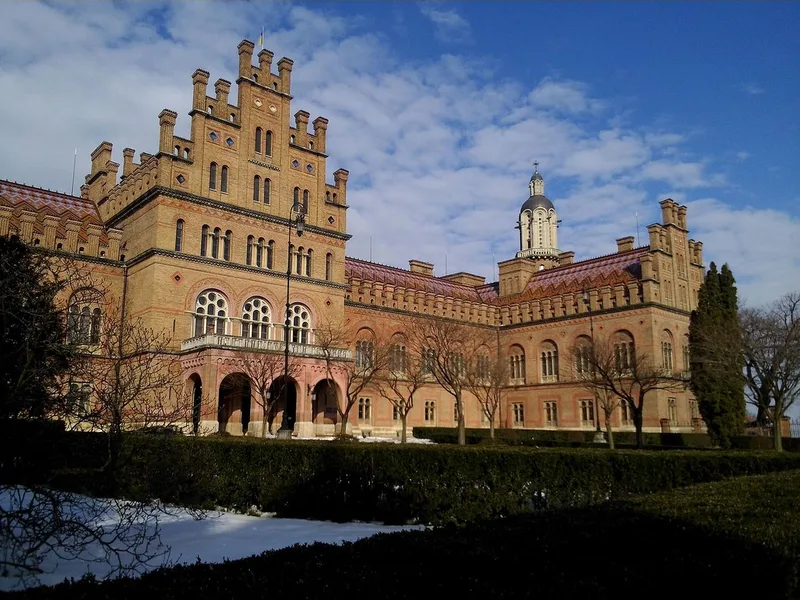
- Chernivtsi: a long run on the western rail network to a UNESCO university complex, described in Chernivtsi in 2 days; check Ukrzaliznytsia timetables first.
Practical tips
Register for the Town Hall tower on the day, since access is by pass. Many churches and the cemetery expect modest dress, and the steep cobbled lanes and steps of the old town are hard going for wheelchair users. The Armenian cathedral and the monasteries keep their own hours, and Opera tickets are sold through the theatre's own channels. On safety, the government advice quoted on the Foreign Office page is to learn shelter locations beforehand and go to shelter at once when an alert sounds. That page also warns that insurance can be invalidated if you travel against the advice.
Frequently asked questions
Why are the houses on Rynok Square so narrow?
According to the tourism office, no house could be wider than three windows under the "English tax" of Magdeburg law. The rule gave shopkeepers equal frontage and burghers a measure of equality, and it explains the tall, slim facades that still face the square today.
Is Lviv's historic centre on the UNESCO danger list?
Yes. The World Heritage Committee inscribed "L'viv, the Ensemble of the Historic Centre" on the List of World Heritage in Danger in September 2023 because of the war, having first listed it in 1998. The listing recognises a risk of attack and shockwaves, and opens the door to extra protection.
Which communities shaped the old city?
UNESCO points to the Armenian, Orthodox and Catholic communities and the surviving mosque and synagogue as evidence of separate yet connected groups. Their buildings stand side by side around Virmenska Street and the castle district, which is why Lviv is listed for its mix of eastern European, Italian and German traditions.
Do I need to book the Town Hall tower?
You cannot book far ahead. The tourism office says access is only on the day of the visit, after registering at the Tourist Information Centre and obtaining a pass, and the ticket office is on the fourth floor. Check the current hours before you plan the climb.
More city guides
- Chernivtsi in 2 days: the university town with the UNESCO Residence.
- Kyiv in 2 days: the capital's cathedral hills.
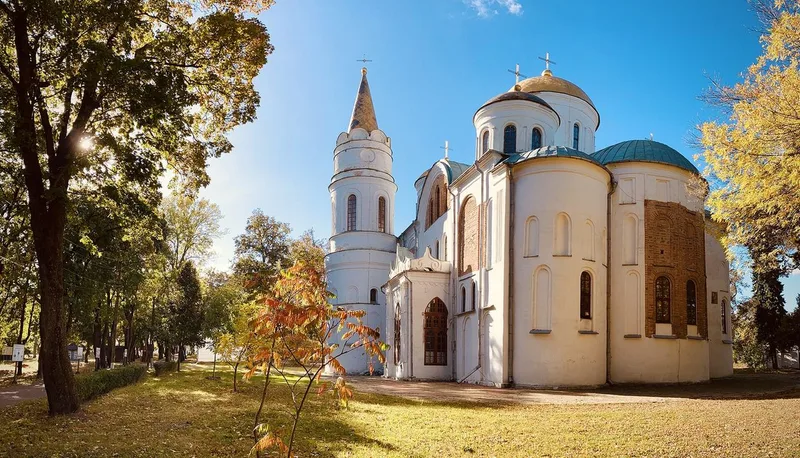
- Chernihiv in 2 days: a northern city of eleventh-century churches.
- Krakow in 2 days: the nearest large city on the Polish side.
- Warsaw in 2 days: the Polish capital, reached by train from Przemyśl.
_-_Rynok_Square_(8673885207).jpg)
