
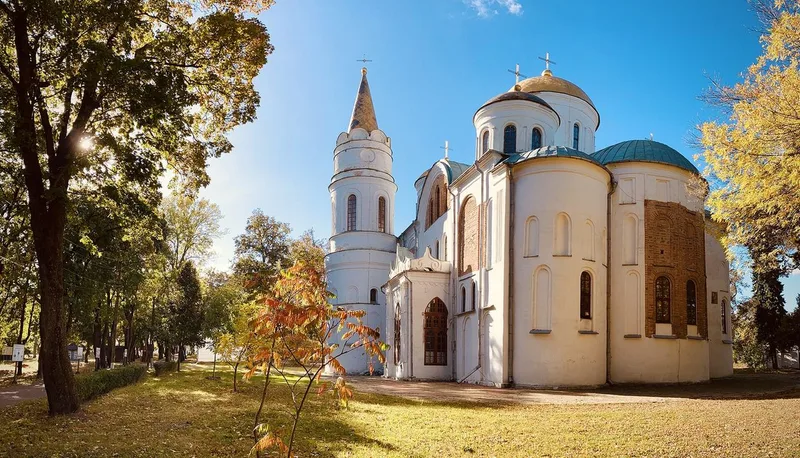
Chernihiv in 2 days fits a compact walk through one of the oldest cities in Ukraine, from the princely citadel on the Desna to the cave monasteries on the Boldyni Hills. The plan is for readers drawn to medieval churches and Cossack-era buildings, and for use once conditions allow, as the notice above explains. Locals write the name Чернігів. The main draw is the Transfiguration Cathedral: most researchers regard it as the oldest surviving monument of Rus architecture, begun by Prince Mstislav, who was buried there in 1036. The sites sit close enough to cover on foot in two days, with one longer walk to the hills.
Quick facts
- Country and region: Ukraine, Chernihiv Oblast in the north, on the Desna river about 140 km from Kyiv.
- Main airport: the city has no airport service; Kyiv's Boryspil (KBP) is the nearest major one, and it is shut to civil traffic.
- Main station: Chernihiv railway station.
- Getting around: walk the historic core; the Boldyni Hills, about 2 km out, call for a taxi, a bus or a longer walk.
- Money: the Ukrainian hryvnia (UAH).
- Language: Ukrainian.
- Time zone: Eastern European Time, which shifts from UTC+2 to UTC+3 for summer.
- Best months: May, June, September and October.
Best time to visit
Spring and early autumn suit the outdoor plan. May and June green the rampart park and the Desna floodplain, and the trees of the Dytynets turn gold in October. Winters are long and cold, and the UK Foreign Office lists blackouts, heating and water problems among the winter risks. More important than any season is the current advice: for the Chernihiv region the Foreign Office gives its strongest warning, and conditions can change faster than a guide can be updated.
Getting there and around
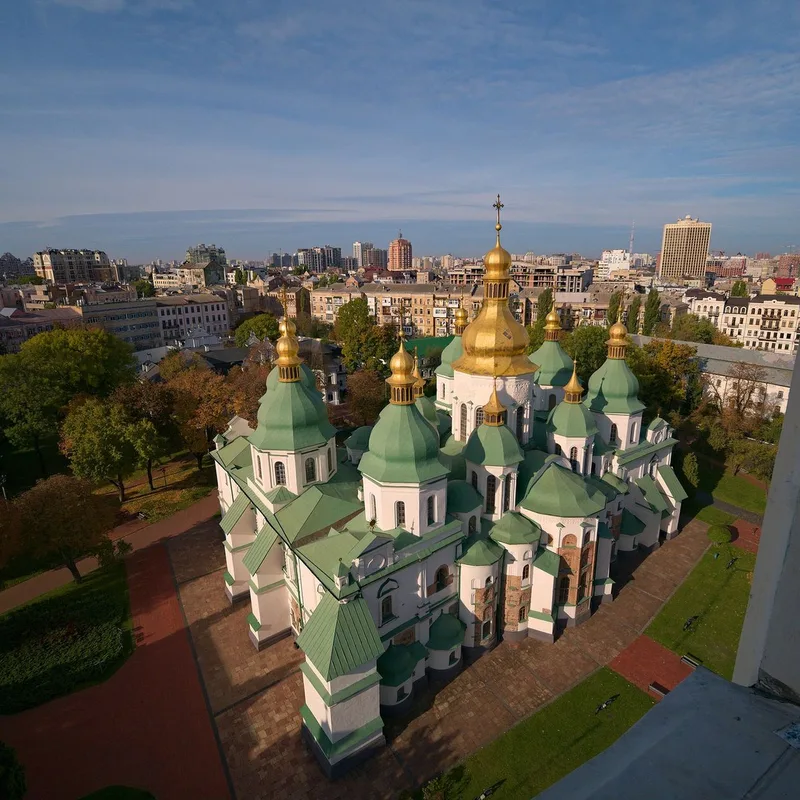
With Ukrainian skies closed to ordinary flights, there is no air access, and most visitors come from Kyiv, about 140 km to the south. The trip by road or rail depends on the security situation and on the condition of roads and bridges, so check Ukrzaliznytsia and local operators before travelling. Kyiv in 2 days describes the starting point.
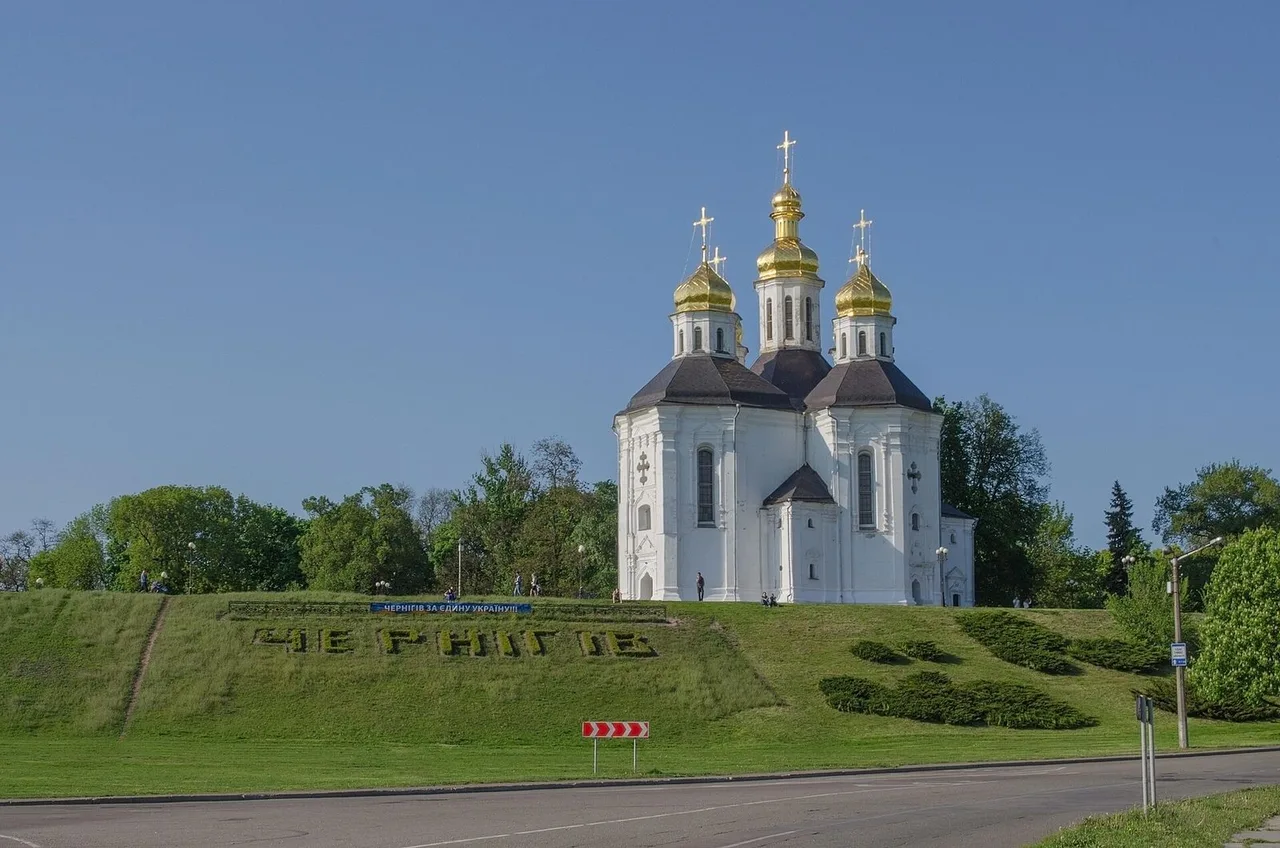
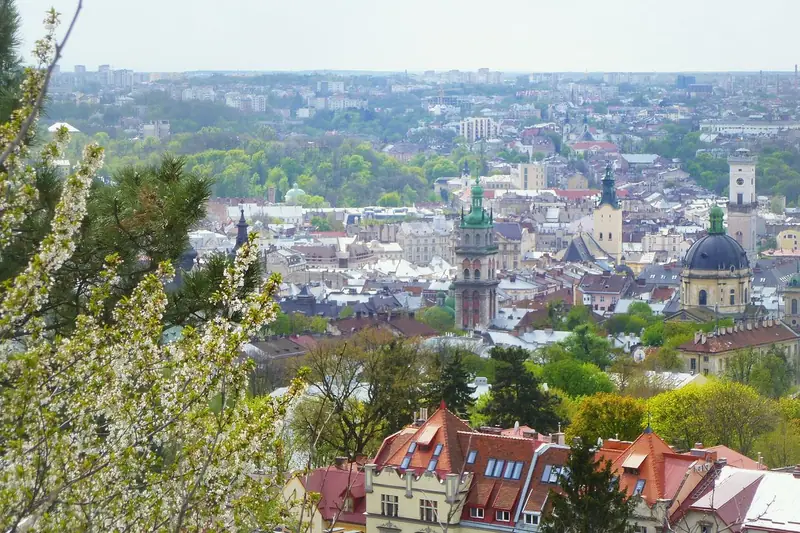
Arriving by road, the first landmark is Saint Catherine's Church on a hill at the city's entrance, a few steps from the historic Dytynets. In town, walking works for the centre. The Boldyni Hills lie roughly 2 km from the Dytynets, a short drive or a long stroll, so save energy for the climb. The city council's official portal is the place for local notices, and Lviv in 2 days covers the best-known western city if you are planning a longer Ukrainian itinerary.
Where to stay
Stay near the Dytynets, also called the Val, if the cathedrals are your focus: the main sights are a few minutes away on foot, and the rampart park is on the doorstep. Krasna Square, the administrative heart of the city, has the Drama Theatre and the Pyatnytska Church, and it makes a good base for evenings out. Myru Avenue, the main avenue, is more residential and has the longer walk to the Boldyni Hills. Ask your host about the nearest shelter on arrival.
Day 1: Dytynets and the princely core
Morning: the Dytynets
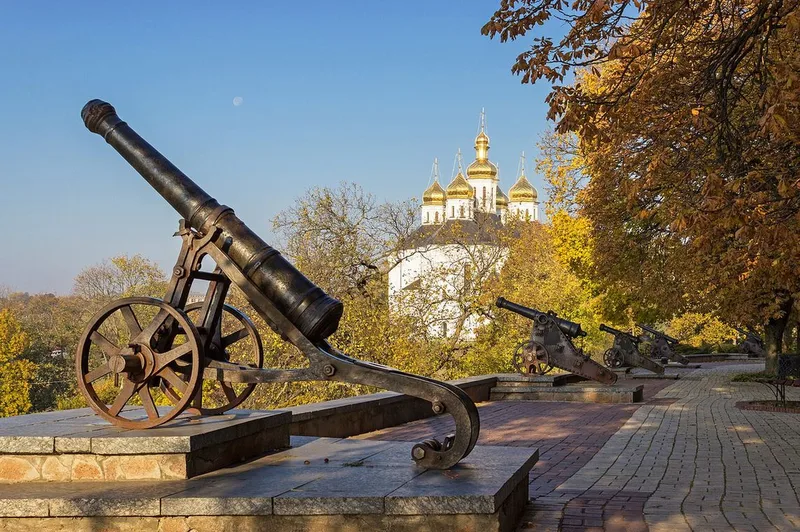
The Dytynets, known today as the Val, was the fortified princely centre of the city. The Transfiguration Cathedral stands here: a three-nave, five-domed church measuring about 33 by 22 by 29 metres and built in the opus mixtum technique, which alternates sandstone and brick. The Medieval Black Sea Project notes that work began under Prince Mstislav, who was buried there in 1036 while construction was unfinished. Beside it is the Boris and Gleb Cathedral, a twelfth-century church that served as a princely tomb. Nearby are the Chernihiv Collegium, an eighteenth-century building now used for exhibitions of icons and historic objects, and Mazepa's House, a residence from the seventeenth century. Cast-iron cannons of the seventeenth to nineteenth centuries line the rampart.
Afternoon: Catherine's Church and Krasna Square
Walk to Saint Catherine's Church, which was built at the turn of the seventeenth and eighteenth centuries in honour of the Cossacks who took the Turkish fortress of Azov in 1696. Its white walls and gilded domes stand on a hill, and the iconostasis carries Cossack coats of arms carved in wood. Continue to Krasna Square, where the Drama Theatre dominates the open space. UNESCO notes that the theatre suffered a direct hit from a missile in 2023, so access to parts of the building may be restricted. Behind it, look for the small Pyatnytska Church of the twelfth century, a masterpiece of Kyivan Rus architecture.
Evening: the centre
Finish with a walk through the centre and eat early. Check curfew and alert rules and plan the walk back to your lodging before dark.
Day 2: Yeletskyi Monastery and the Boldyni Hills
Morning: Yeletskyi Dormition Monastery
The Yeletskyi Dormition Monastery was founded in 1060 by Prince Svyatoslav Yaroslavich at the place where an icon of the Mother of God was said to have appeared on a fir tree. It is regarded as the oldest monastery in Chernihiv and in the whole left-bank part of Ukraine. The twelfth-century Dormition Cathedral keeps the largest volume of medieval frescoes in the city. Across the road rises the Black Grave, the largest burial mound in Chernihiv. Dress modestly, because this is an active women's monastery. Allow time to walk the whole precinct rather than the cathedral alone.
Afternoon: the cave monasteries and Trinity Cathedral
Walk or ride on to the Boldyni Hills, where Antony's Caves and the eleventh-century Illinsky Church form a complex founded by the monk Anthony of the Caves. Nearby, on the neighbouring hill, stands the Trinity Cathedral complex of the seventeenth and eighteenth centuries, with a high bell tower, the refectory of the Vedenska Church and the monks' cells. From the bell tower and the upper terrace you can view the city's monasteries and the floodplain of the Desna. Descending into Antony's Caves, where monks once lived underground, is the most atmospheric part of the day, though the passages can be narrow and low. Check opening times first.
Evening: back to the centre
Return to the centre and walk the Val at the end of the day. The Cossack-era fortress there was destroyed in 1799, so the walls are earthworks, but the park is open and the views toward the Desna are broad.
If it rains, on a budget, with kids
If it rains
Move indoors to the Chernihiv Collegium exhibitions, the frescoed Dormition Cathedral of the Yeletskyi Monastery and the Trinity Cathedral complex.
On a budget
Costs stay low: the Val and its cannons, the rampart park, Krasna Square and the Boldyni Hills outdoors cost nothing. A self-guided circuit of the three zones costs only the entry fees to museums and caves.
With kids
The cast-iron cannons on the rampart, the wide lawns of the Val and the hill walks suit younger visitors, but the caves and monasteries call for quiet behaviour. Short outings work best, with a shelter location noted first.
Day trip or a third day
- Kyiv: 140 km to the south, reachable when roads and rail are open. Pair this plan with Kyiv in 2 days for the Saint Sophia mosaics and the Lavra.
- A slower third day in Chernihiv: revisit the Dytynets interiors that were closed or crowded, and spend the hours on the Boldyni Hills, whose caves and terraces reward a leisurely pace.
Practical tips
The safety advice on the government page comes down to three habits: know where the shelters are, go there at once when an alert is announced, and follow what local officials say. Opening times for cathedrals, museums and caves change, and some buildings are shut for repair or protection, so confirm with the reserve and the city before each day. Wear sturdy shoes for the cobbles and hill paths, dress modestly for churches and the monastery, and keep a charged phone and a power bank for outages.
Frequently asked questions
Is Chernihiv a UNESCO World Heritage site?
Not yet. It is on Ukraine's Tentative List, which UNESCO received in 1989, as the Historic Centre of Chernihiv, covering the ninth to thirteenth centuries and naming the Transfiguration and Boris and Gleb cathedrals. UNESCO has since supported a rehabilitation plan after wartime damage.
Why is the Transfiguration Cathedral considered so old?
Researchers cited by the Medieval Black Sea Project regard it as the oldest monument of Rus architecture. Prince Mstislav began it, and he was buried there in 1036 before construction finished. Kyiv's Saint Sophia dates from the same era, so the two cathedrals are often compared.
Why is Saint Catherine's Church linked to Azov?
The church was built at the turn of the seventeenth and eighteenth centuries to honour the Cossacks who took the Turkish fortress of Azov in 1696. It sits on a hill at the entrance to the city and is often the first monument visitors see.
Why is the Dytynets called the Val?
Val means rampart. The Dytynets was the fortified, princely part of the city, and in the Cossack period a fortress stood there. It was destroyed in 1799, but the earthworks and the old cannons that line them still give the name its meaning.
More city guides
- Kyiv in 2 days: the capital, about 140 km to the south.
- Lviv in 2 days: the western heritage city.
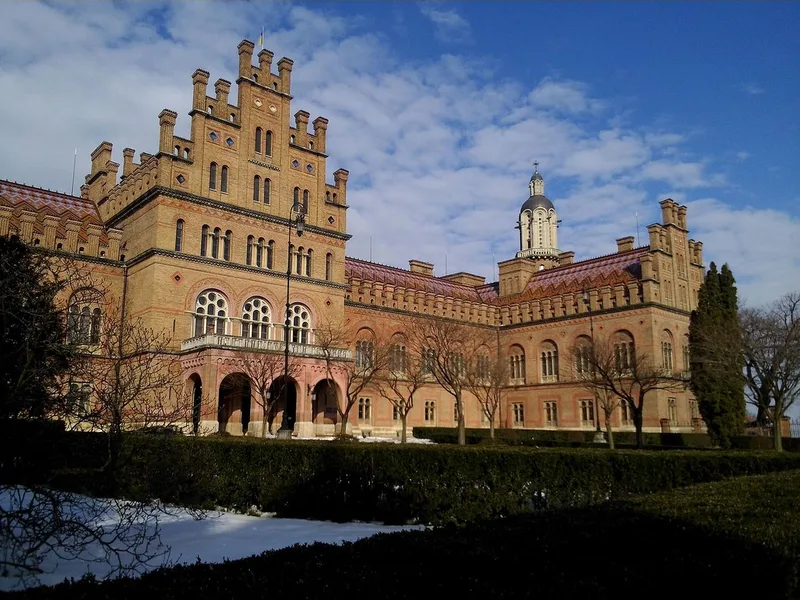
- Chernivtsi in 2 days: a university town with a UNESCO ensemble.
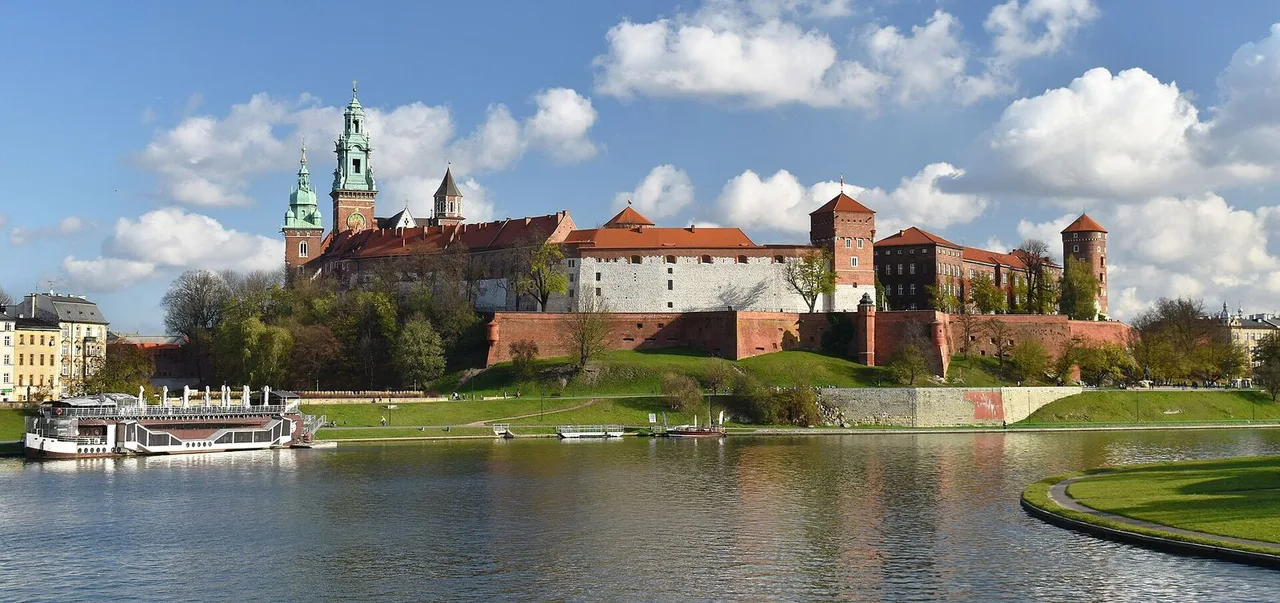
- Krakow in 2 days: the nearest large Polish city.
- Warsaw in 2 days: the Polish capital.

.JPG)