
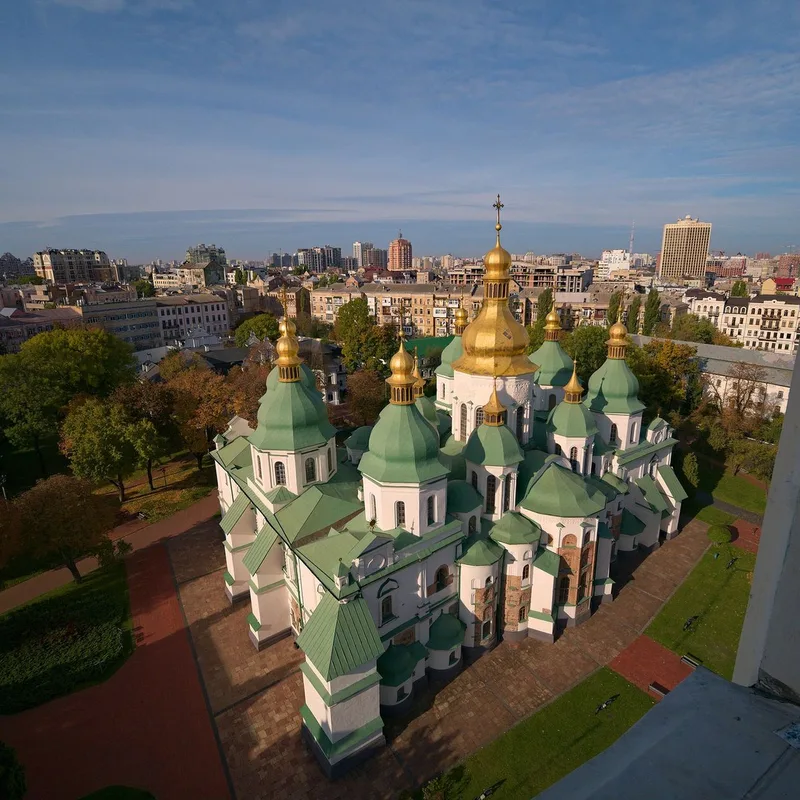
Kyiv in 2 days is a heritage walk across two hills on the right bank of the Dnipro: the early eleventh-century Saint Sophia Cathedral and the Upper Town on day one, the Andriyivskyi Descent and the Kyiv Pechersk Lavra on day two. This plan is written for readers who already know the conditions set out in the notice above, for people studying the city's monuments, and for anyone preparing a visit for the future. The Ukrainian name is Київ, and the reason to read this plan is the layering. Mosaics from the age of Yaroslav the Wise, Ukrainian Baroque bell towers and a Rastrelli church sit within a few kilometres, and two of the sites belong to a UNESCO listing that is currently in danger.
Quick facts
- Country and region: Ukraine, the capital, on both banks of the Dnipro; most sights are on the right bank.
- Main airport: Boryspil International Airport (KBP), east of the city; Ukrainian airspace has been closed to ordinary flights since February 2022.
- Main station: Kyiv-Pasazhyrskyi, the central railway station.
- Getting around: the historic core is walkable and hilly; the metro, trams and buses link the districts.
- Currency: Ukrainian hryvnia (UAH).
- Language: Ukrainian.
- Time zone: Eastern European Time (UTC+2), with summer time (UTC+3).
- Best months: May to June and September to October.
Best time to visit
Late spring and early autumn suit the long hill walks. May and June give green parks on Volodymyrska Hill and good light on the gilded domes; September and October bring mild days and fewer crowds. Winter can be severe: the UK Foreign Office warns that temperatures may drop below minus 20 °C and that attacks on the energy network can cause blackouts that affect heating and water. Summer evenings are long but warm. Events, concerts and museum free days are posted on the city's Visit Kyiv guide, which lists monthly free-entry days for Kyiv museums, so check the official calendar and your own government's advice before fixing dates.
Getting there and around
Ukraine's airspace remains closed, according to the UK Foreign Office advice, so Boryspil is not usable at present and the practical route in is overland. Ukrzaliznytsia, the national railway, runs international trains linking Kyiv with Warsaw, Przemyśl and Chełm in Poland; check current services and timetables on its site. For a stop on the Polish side, Krakow in 2 days describes the closest large city on that line. Border formalities and entry rules are on the Foreign Office entry requirements page.
Rail services and bridges can be disrupted at short notice, so allow extra time. In the city, the metro stations Zoloti Vorota and Maidan Nezalezhnosti serve the Upper Town, and Arsenalna serves the Lavra. Saint Sophia to the Golden Gate is roughly a ten-minute walk, and the Descent begins a few minutes from Saint Sophia. Local rules, including night curfew hours, change with the security situation, so check them on the day.
Where to stay
Old Kyiv, around Volodymyrska Street, puts Saint Sophia, the Golden Gate and the top of the Descent within easy walking distance, and it is the simplest base for this plan. Podil, the low riverside district at the foot of the Descent, is lively and flat and suits a second stay. Pechersk, around the Lavra and the government quarter, is quieter and works for travellers focused on the monastery. Whatever the district, choose accommodation with a shelter or safe space that you can reach quickly, and learn its location on arrival.
Day 1: Saint Sophia and the Upper Town
Morning: Saint Sophia Cathedral
Start at Sofiiska Square. Saint Sophia Cathedral was built in the reign of Yaroslav the Wise as the main church of the Kyivan Rus capital, and UNESCO describes its collection of eleventh-century mosaics and frescoes as unique in its integrity. The Pantocrator, the Virgin Orans, the Communion of the Apostles, the Deisis and the Annunciation are the masterpieces named in the listing. Around the cathedral stand monastic buildings from the seventeenth and eighteenth centuries in Ukrainian Baroque style, among them the bell tower, the Metropolitan's house, the refectory and the Zaborovsky gate. UNESCO reported that an attack on 10 June 2025 damaged the eastern façade, so check the site before you go. The complex is run as the National Conservation Area "St. Sophia of Kyiv".
Afternoon: Volodymyrska Street and the Golden Gate
Walk down Volodymyrska Street, one of the oldest streets in the city, toward the Golden Gate, a reconstructed defensive gate dating from 1017 to 1024. The gatehouse church, double ditches and the historical museum inside tell the story of the ceremonial entrance to Kyiv. In the square outside, find Termen's cast-iron fountain, the monument to Yaroslav the Wise and the bronze Panteleimon the Cat.
Afterwards, climb Volodymyrska Hill, a 10.6-hectare park above the Dnipro with the Kokoriv Gazebo of 1898 and the monument to Prince Volodymyr. A pedestrian and cycle bridge, often called the Glass Bridge, links the hill to European Square. The views across Podil and the river make a good late-afternoon rest.
Evening: Mariinsky Park or a theatre night
If the day has been long, finish with a stroll in Mariinsky Park, one of the city's recommended walking areas, or choose a performance at the Opera and Ballet Theatre, where the city guide lists the season. Plan your return before dark because of local alerts and curfew rules.
Day 2: The Descent and the Lavra
Morning: Andriyivskyi Descent and Saint Andrew's Church
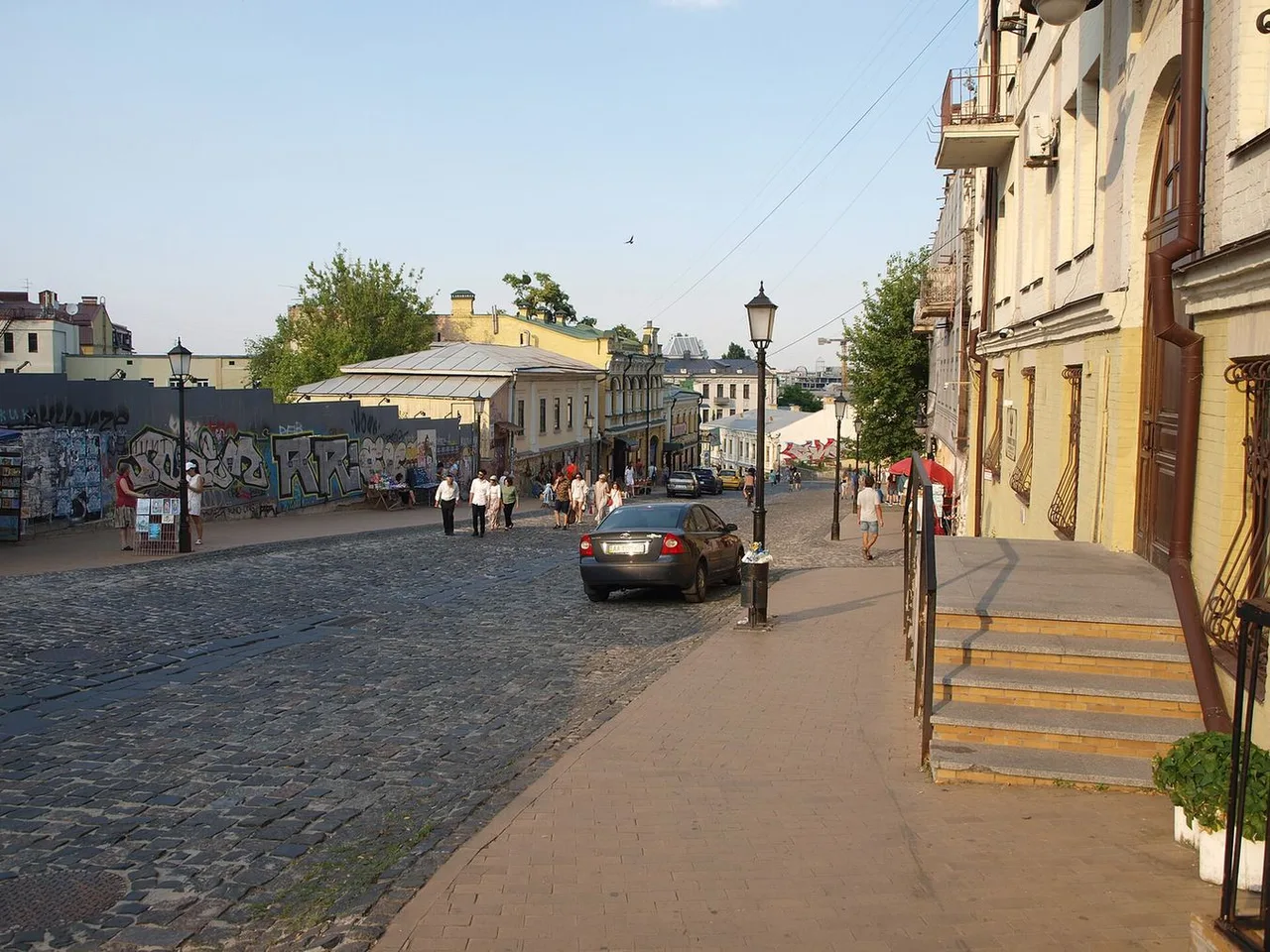
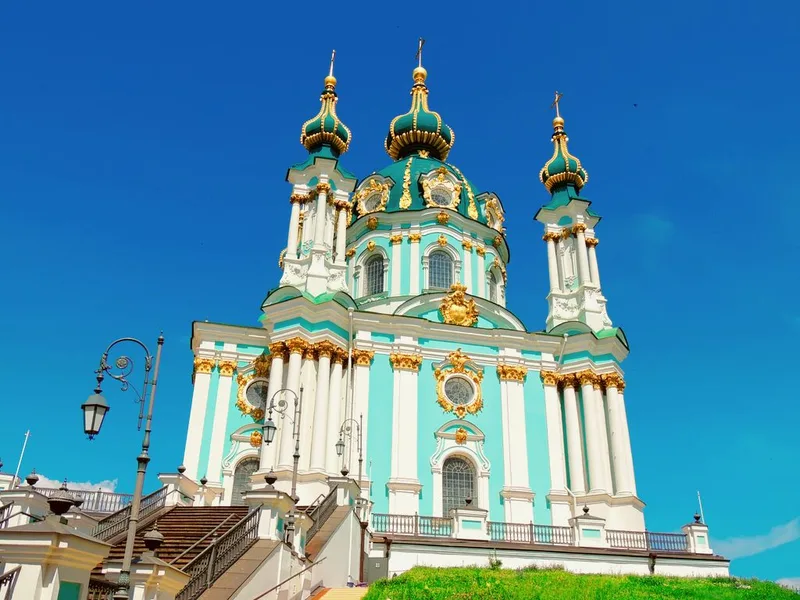
Begin at the top of the Andriyivskyi Descent, a cobbled street whose upper part existed in Kyivan Rus times and linked the Old Town with the artisans' quarter of Podil. The city calls it the Kyiv Montmartre, because artists often exhibit and sometimes perform here. Saint Andrew's Church stands above the street on its own hill. Built between 1747 and 1762 to a design by Bartolomeo Rastrelli, it is the only fully preserved interior of a sacred building created to his design, and the terrace around it has a wide view of the city. Along the way look for Richard's Castle and the Museum of One Street.
Afternoon: the Kyiv Pechersk Lavra
Take the metro or a taxi to Arsenalna and walk to the Lavra, founded in the eleventh century by Saint Anthony and Saint Theodosy on the plateau above the Dnipro. UNESCO lists the Dormition Cathedral, the Trinity Gate Church, the Great Bell Tower and the cave complexes, which stretch over 600 metres. The city guide reports that an attack in June 2026 damaged the Dormition Cathedral, and the Near Caves reopened in February 2026 and the Far Caves in July 2026, the latter on a trial schedule at the time of checking, so confirm access before travelling. Wear modest clothing and expect queues for the caves.
Evening: back to the river
Return to Podil for dinner, or walk the riverside of Trukhaniv Island if the weather suits. Metro, tram or a taxi get you home from Podil; the evening is best finished early.
If it rains, on a budget, with kids
If it rains
The city guide lists several indoor options: the National Museum of History of Ukraine, the Museum of Ukrainian Folk Decorative Art and the PinchukArtCentre, with the Mystetskyi Arsenal for larger exhibitions. Saint Sophia's interior also takes a good hour.
On a budget
Walking is free: the Descent, Volodymyrska Hill, the Golden Gate square and the exterior of Saint Andrew's Church. The city guide publishes monthly lists of free-entry days at museums, so check them for the month you travel.
With kids
Children enjoy the Panteleimon the Cat statue at the Golden Gate, the Glass Bridge, and the Hryshko Botanical Garden on the city guide's walking list. Keep days shorter and know where the nearest shelter is.
Day trip or a third day
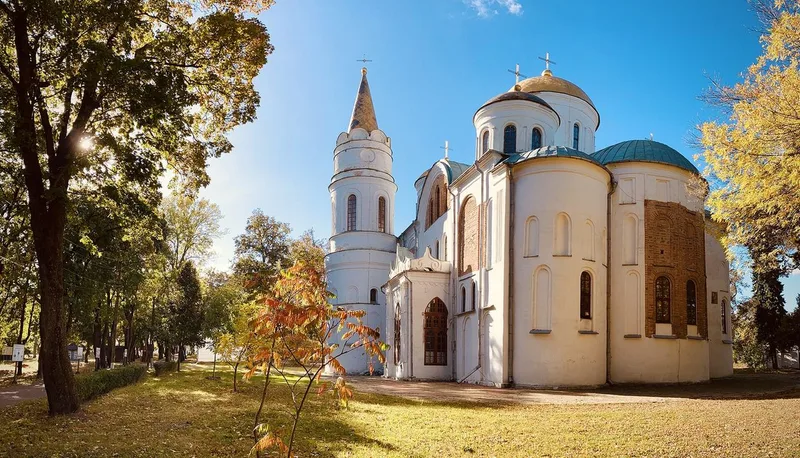
- Chernihiv: 140 km to the north; allow around 3 hours by road when conditions are normal. The city holds some of the oldest churches in Ukraine and has its own guide, Chernihiv in 2 days. Check the Foreign Office wording for that region first.
- Lviv: a train ride of around 6 hours to a western city with a UNESCO centre; Lviv in 2 days has the details, and the advice for the western regions differs from the capital's.
Practical tips
The Foreign Office asks travellers to monitor local media, identify shelter locations in advance, take shelter immediately when an air alert is announced and follow the instructions of the authorities. Plan for power cuts: carry a charged phone, a power bank and a paper map. Tickets for Saint Sophia and the Lavra are sold through their own sites, and opening times and ticket rules change, so check the official pages. Dress modestly for churches. Use the transport and entry guidance on the Foreign Office page, and other governments publish equivalent advice.
Frequently asked questions
Why do older guides spell the city Kiev?
That is the older English spelling, taken from a different transliteration. Kyiv follows the Ukrainian name and is what UNESCO and the city's visitor guide use. Search engines still match both, so older maps, tickets and guidebooks may show the former spelling.
Which parts of the Lavra can I enter at the moment?
Access changes. The Near Caves reopened in February 2026 and the Far Caves in July 2026 on a trial basis, while the city guide reports damage to the Dormition Cathedral from an attack in June 2026. Treat every site as subject to closure and check the reserve's official page before going.
What should I do during an air alert?
Follow the official advice: identify shelter locations in advance, move to shelter immediately when an alert is announced and stay until the authorities say it is over. The UK government warns that debris can cause harm far from the strike location, so do not wait for the sound of an impact.
Are Saint Sophia and the Lavra still on the UNESCO list?
Yes. They form one World Heritage property, inscribed in 1990, and the World Heritage Committee placed it on the List of World Heritage in Danger in September 2023 because of the threat from the war. The listing opens the door to extra protection and funding.
More city guides
- Chernihiv in 2 days: the northern city with eleventh-century churches.
- Lviv in 2 days: the western heritage city, reached by rail.
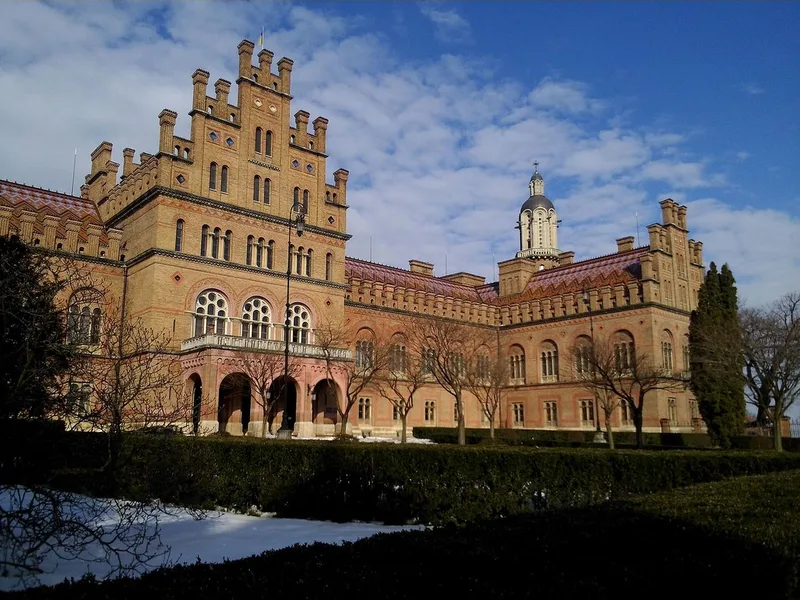
- Chernivtsi in 2 days: a university town in the southwest, with UNESCO status.
- Krakow in 2 days: the nearest large Polish city, linked by train through Przemyśl.
- Warsaw in 2 days: the Polish capital on the Kyiv rail line.
.jpg)
