
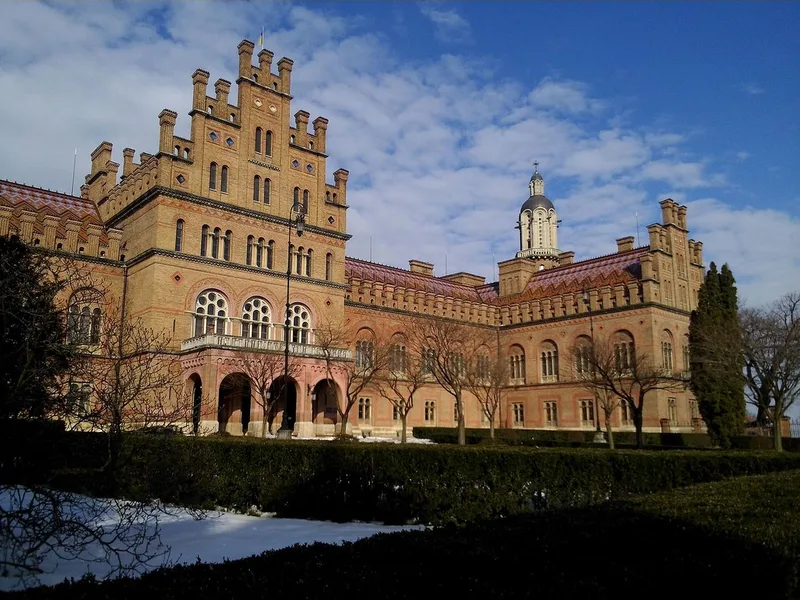
Chernivtsi in 2 days links a red-brick university campus that is a UNESCO World Heritage property with a pedestrian street of nineteenth-century facades, all in a former Habsburg provincial capital. Use the plan, as the notice above explains, once conditions allow; it suits readers who like architecture and layered local history. Its Ukrainian spelling is Чернівці. The headline sight is the Residence of Bukovinian and Dalmatian Metropolitans, designed by the Czech architect Josef Hlavka between 1864 and 1882, which mixes national, Byzantine, Gothic and Baroque elements and has housed the city's university since the 1950s.
Quick facts
- Country and region: Ukraine, Chernivtsi Oblast, in the historic region of Bukovina on the Prut river.
- Main airport: Chernivtsi International Airport (CWC), which no longer takes civil flights.
- Main station: Chernivtsi railway station, with Ukrzaliznytsia trains to other Ukrainian cities.
- Getting around: a compact centre on foot, with buses and taxis for the rest.
- Money: Ukrainian hryvnia (UAH).
- Language: Ukrainian.
- Time zone: same as Kyiv; clocks go from UTC+2 to UTC+3 in the warm months.
- Best months: from May to June and again from September to October.
Best time to visit
Spring and early autumn are the best seasons. In May and June the university park is green and the squares invite café stops; in September and October the red brick of the Residence glows in low light. Winter is cold and can bring power cuts, according to the UK Foreign Office. Events change from year to year, so check the city and university pages. The same advice lists Chernivtsi Oblast among the western regions where it warns against everything except essential trips, so read your government's guidance before fixing dates.
Getting there and around
With the sky closed to ordinary flights, the airport is idle; rail and road are the practical routes. Ukrzaliznytsia runs the domestic network that links the city with Lviv, Kyiv and other Ukrainian cities, and its site lists the current international connections. The main stops on that network are covered in Lviv in 2 days and Kyiv in 2 days; check the timetable on the day.
In the city, the key sights are packed into a twenty-minute walk. Central Square, Kobylianska Street and Teatralna Square form a short triangle, and the university campus is a longer but manageable walk or a short taxi ride away. Curfew hours and alert rules change, so ask at your lodging.
Where to stay
The area around Central Square and Olha Kobylianska Street is the obvious base, because the pedestrian street, the Town Hall and the cafes are all at the door; it is livelier in the evening. The streets near Teatralna Square, with the Drama Theatre and the Art Museum nearby, are calmer and still central. A stay near the university campus puts the Residence within a short walk and suits a visitor who wants an early start in the park, but it has fewer restaurants. Pick a place whose shelter is easy to reach, and note where it is on arrival.
Day 1: The Residence and Kobylianska Street
Morning: the Residence of Bukovinian and Dalmatian Metropolitans
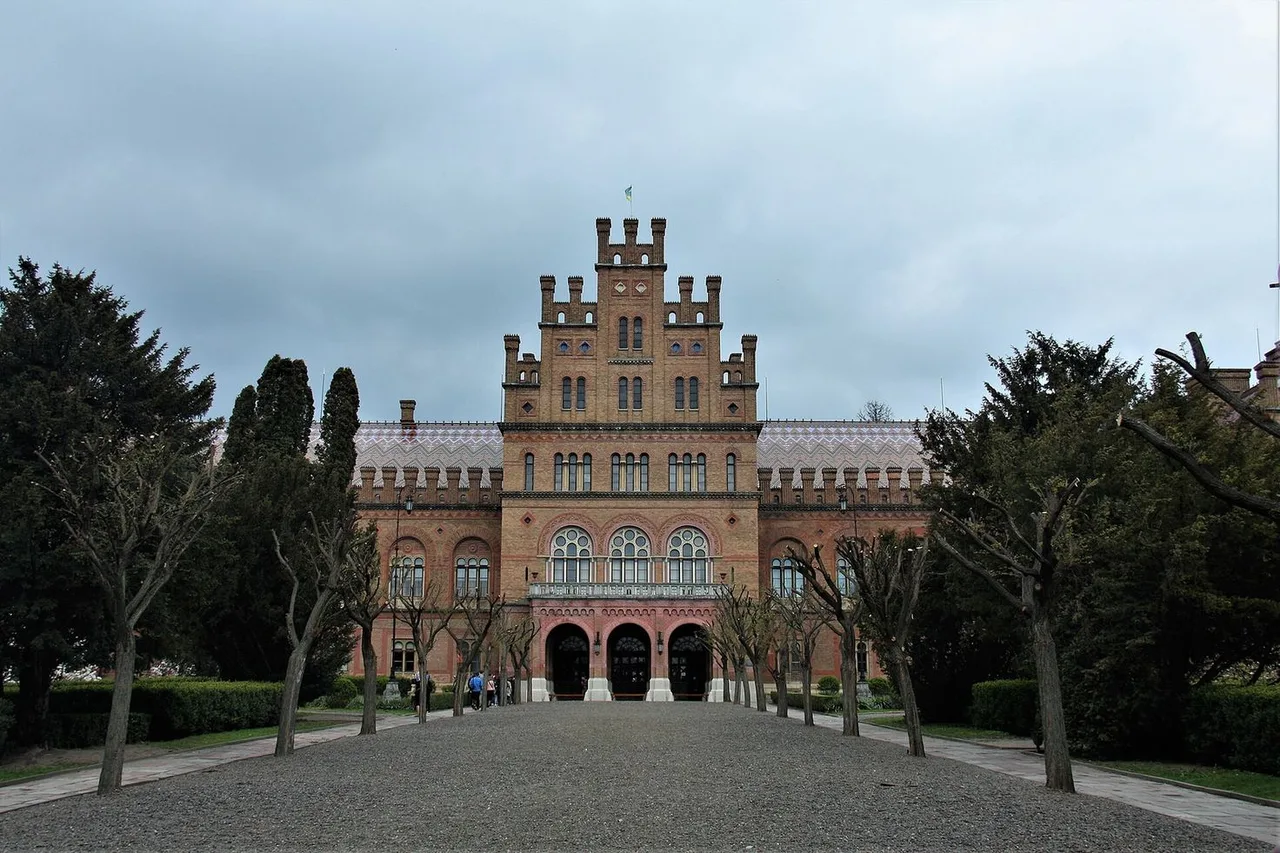
Begin at the Residence, which stands on a promontory above the river called Mount Dominic. UNESCO inscribed it in 2011 and lists three parts in a garden and landscaped park: the former Residence with its St Ivan of Suceava Chapel, the former seminary with the Seminary Church, and the former monastery with its clock tower. Hlavka built the ensemble between 1864 and 1882. It is regarded as an outstanding example of nineteenth-century historicist architecture, expressing the cultural identity of the Orthodox Church within Austria-Hungary during a period of religious toleration. The glazed roof tiles carry patterns drawn from folk culture, and the roof has been replaced gradually with tiles made to the original patterns and imported from Austria.
The ensemble passed to the university in 1955, and the city's nickname for it, the "Ukrainian Hogwarts", is used in the official Ukraine tourism material. Check the university's rules before entering any building, because access depends on the academic calendar and on security conditions. The grounds and exterior are the main reason to come.
Afternoon: Olha Kobylianska Street
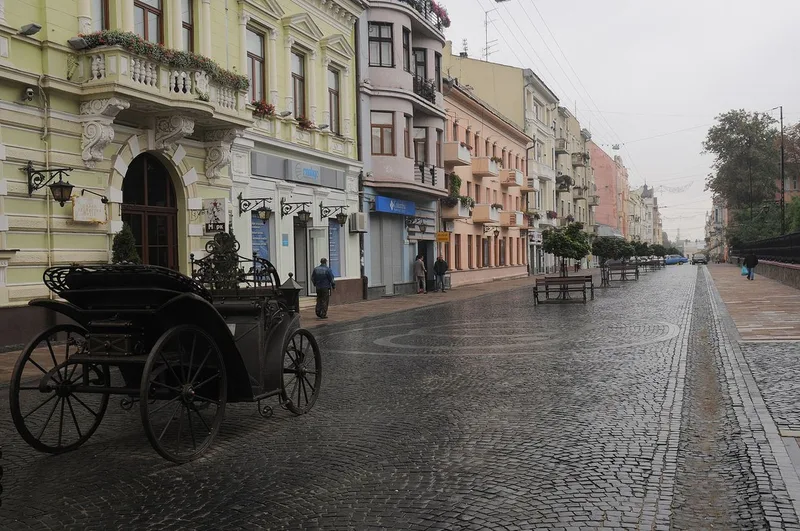
Walk back to the centre and on to Olha Kobylianska Street, the main pedestrian street, which the Ukraine brand portal calls a cosy and picturesque thoroughfare of restaurants, cafes and souvenir shops. A legend says its pavements were once swept with bouquets of roses. Its pastel-painted facades still show the Viennese manner that earned the city the nickname "Little Vienna".
Look for the "Ship House", a building whose shape recalls a ship; local legend says a rich merchant built it for a seafaring brother.
Evening: coffee and a quiet dinner
The Ukraine tourism portal recommends trying the local coffee. Have an early dinner in a café on the pedestrian street, then stroll to Central Square and the Town Hall. Plan your return before any curfew.
Day 2: Squares, the theatre and the Prut
Morning: Teatralna and Soborna Squares
Start at Teatralna Square, which anchors the Olha Kobylianska Drama Theatre. The Viennese firm Fellner and Helmer designed the neo-baroque house; it opened on 3 October 1905, and when the city could not pay for it in 1902 the firm reused the plans for a theatre in Fürth in Bavaria, so two cities have nearly identical buildings. The front carries a high relief of Apollo above the main entrance and a sculpture of the muse Melpomene at the portal, and the auditorium keeps its white and gold baroque decoration; the house seats about 740. Walk on to Soborna Square, once called Austria Square. The squares are close together, so allow about two hours with stops.
Afternoon: Turetska Square and the old streets
Continue to Turetska Square and the lanes between the squares, a quieter part of the centre. The Ukraine portal describes Chernivtsi as one of the most multinational cities in Ukraine, and the mix of styles in its churches and houses reflects that. Take your time with courtyards and doorways, and pause in a café. If the weather is fine, walk down toward the Prut to see how the old town climbs its hillside. Come back through Central Square and the Town Hall for a last coffee before dinner.
Evening: a performance or a river walk
If the theatre has a performance, book through its official channels; otherwise take a gentle walk along the river before dark. As always, keep an eye on alert apps and local instructions.
If it rains, on a budget, with kids
If it rains
The Art Museum, the Drama Theatre auditorium (if you book a performance) and the café culture of the pedestrian street give indoor options. A visit to the Residence is best on a dry day because most of its interest is in the exterior and the park.
On a budget
Most of Chernivtsi costs nothing: the university park and exterior, Kobylianska Street and the squares. Museums and performances carry modest fees, which you should confirm on the official sites.
With kids
Younger visitors will enjoy the Ship House, the squares and the long lawns of the university park. Plan short outings and note the nearest shelter first.
Day trip or a third day
- A slower third day in Chernivtsi: return to the Residence grounds in a different light, then spend the hours on Olha Kobylianska Street and the squares at a gentler pace.
- Lviv: a long rail ride to the western city, the subject of Lviv in 2 days; compare the Foreign Office wording for both regions.
Practical tips
Shelter locations, immediate shelter at an alert and obeying local instructions are the safety basics from the government page. Hours at the university grounds, museums and theatre change, and some buildings are shut for repair or protection, so rely on the official pages. Dress modestly for churches. Old cobbles and slopes are tough going for wheelchair users, and a power bank helps during outages.
Frequently asked questions
Why is a university campus a World Heritage site?
The campus occupies the former Residence of Bukovinian and Dalmatian Metropolitans, inscribed by UNESCO in 2011. The property is valued as an excellent example of nineteenth-century historicist architecture and as testimony to the Orthodox Church within Austria-Hungary. The metropolitanate itself ceased to exist in 1940, and the site became a university in 1955.
What do the Residence's roof tiles tell visitors?
UNESCO says the decorative patterns in the glazed roof tiles signify folk culture, while the domed cruciform church uses Byzantine forms. The roof has been replaced gradually with high-quality tiles made to the original patterns and imported from Austria, which is why the colours still look vivid.
Why do two cities have almost the same theatre?
In 1902 the city of Chernivtsi could not yet pay for the theatre, so the Fellner and Helmer bureau reused the project for Fürth in Bavaria. Chernivtsi opened its own house on 3 October 1905, so the two cities now have nearly identical buildings.
Why is the university called the "Ukrainian Hogwarts"?
The nickname is used in the official Ukraine tourism material for the university that occupies the Residence. The same material recommends walking the grounds, the murals, the halls and the landscape park, so allow time and check the university's access rules first.
More city guides
- Lviv in 2 days: the nearest large Ukrainian heritage city.
- Kyiv in 2 days: the capital's UNESCO monuments.
- Chernihiv in 2 days: the northern city of early churches.
- Krakow in 2 days: the nearest large Polish city.
- Warsaw in 2 days: the Polish capital; check the Ukrzaliznytsia timetable for international connections.
.jpg)
