
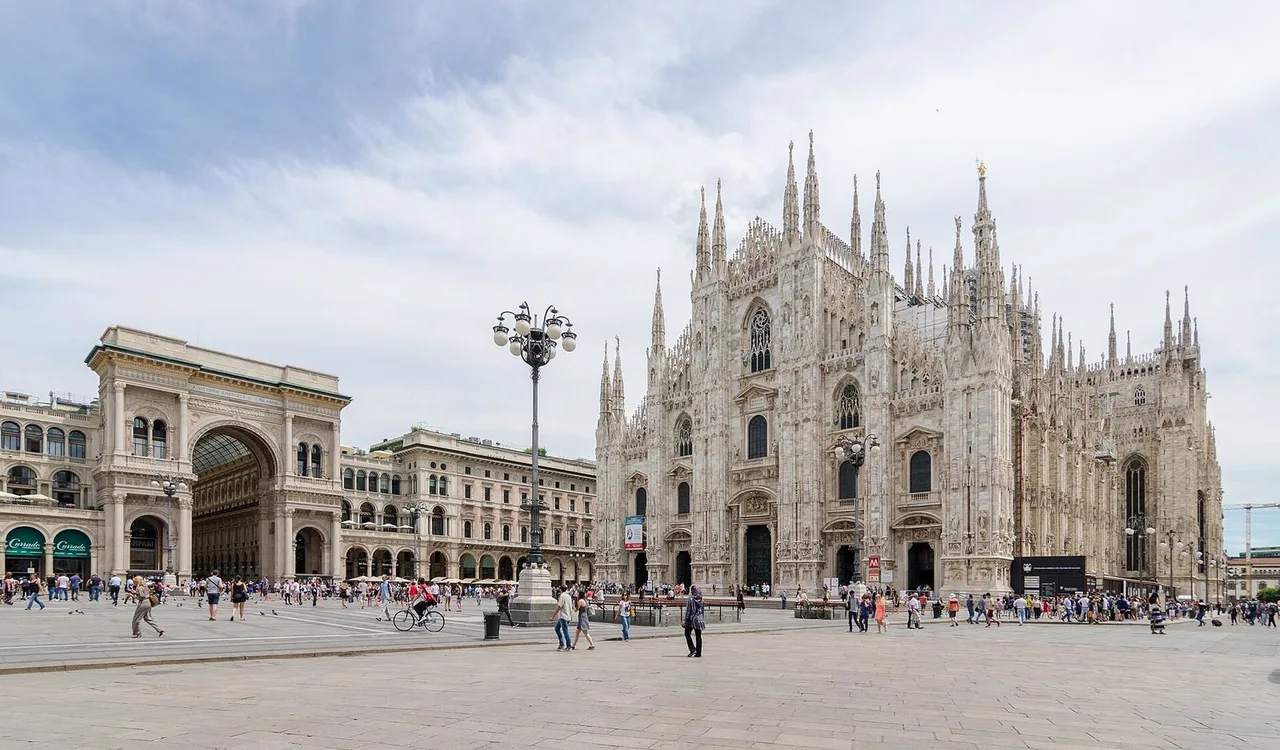
Milan in 2 days has more to offer than fashion, and this plan fits it into two walkable routes: the Duomo, the Galleria and Brera on day one, then The Last Supper, the Castello Sforzesco and the canals on day two. It suits first-time visitors who want art and architecture with an aperitivo at the end of each day. Milan (Milano in Italian) is a flat city with a compact centre, and a metro that reaches the main sights. The Last Supper is the one stop that needs planning ahead, because the site admits a limited number of visitors at a time.
Quick facts
- Country and region: Italy, in Lombardy.
- Main airport: Milan Malpensa (MXP); Linate (LIN) and Bergamo (BGY) are alternatives.
- Main station: Milano Centrale, for high-speed trains to the rest of Italy.
- Getting around: walk the centre; the ATM metro, trams and buses cover longer hops.
- Currency: euro (EUR).
- Language: Italian.
- Time zone: Central European Time, so UTC+1 in winter and UTC+2 in summer.
- Best months: April to June and September to October.
Best time to visit
April to June and September to October bring mild days for walking and clear air on the Duomo roof, when the spires are sharpest against the sky. Midsummer is hot. Winter is grey but quieter, and the museums and the Last Supper keep their regular hours.
Check the official YesMilano events page for exhibitions and seasonal events. Large fairs and fashion weeks fill hotels and raise prices, so look at the calendar before you book.
Getting there and around
The Malpensa Express connects Malpensa with Milano Cadorna and Milano Centrale. According to Malpensa Express, trains leave every 30 minutes, and Cadorna to Terminal 1 takes about 37 minutes; the official pages put Centrale to Terminal 1 at about 51 minutes. Linate has its own city links, and Bergamo has airport buses.
Milano Centrale is the hub for Trenitalia and Italo. Fast trains reach Bologna in roughly an hour, and Venice and Bologna are both easy extensions. Confirm the times in the operator's app.
Inside the city, ATM runs the metro, trams and buses, and its site lists contactless payment and service changes. The Duomo to La Scala is a five-minute walk, and La Scala to Brera about 10 minutes. The Castello Sforzesco is about 1 km from the Duomo, and the Navigli sit a few metro stops to the south-west.
Where to stay
The area around Brera is the best base for atmosphere. The streets are quiet at night, the Pinacoteca is close, and the Duomo is a short walk.
The area around Milano Centrale is practical for arrivals and rail trips, with easy metro links to the Duomo, but it is less attractive after dark. Choose a hotel a few blocks from the station.
The Navigli district, along the canals in the south-west, is the choice for evenings out. Bars and restaurants fill the banks, so ask for a room away from the water if you sleep lightly.
Day 1: The Duomo, the Galleria and Brera
Morning: Duomo and terraces
Book the cathedral on the official shop at ticket.duomomilano.it. Its tickets are valid for two days, with one access to each area, and the terraces can be reached by lift or on foot. Large bags are not allowed inside the cathedral, and the Duomo's own guided options combine the cathedral, the archaeological area, the terraces by lift and the Duomo Museum. Keep the museum for the afternoon if you run short of time. The roof is a walkable terrace among marble spires, and the best light is in the morning or at golden hour.
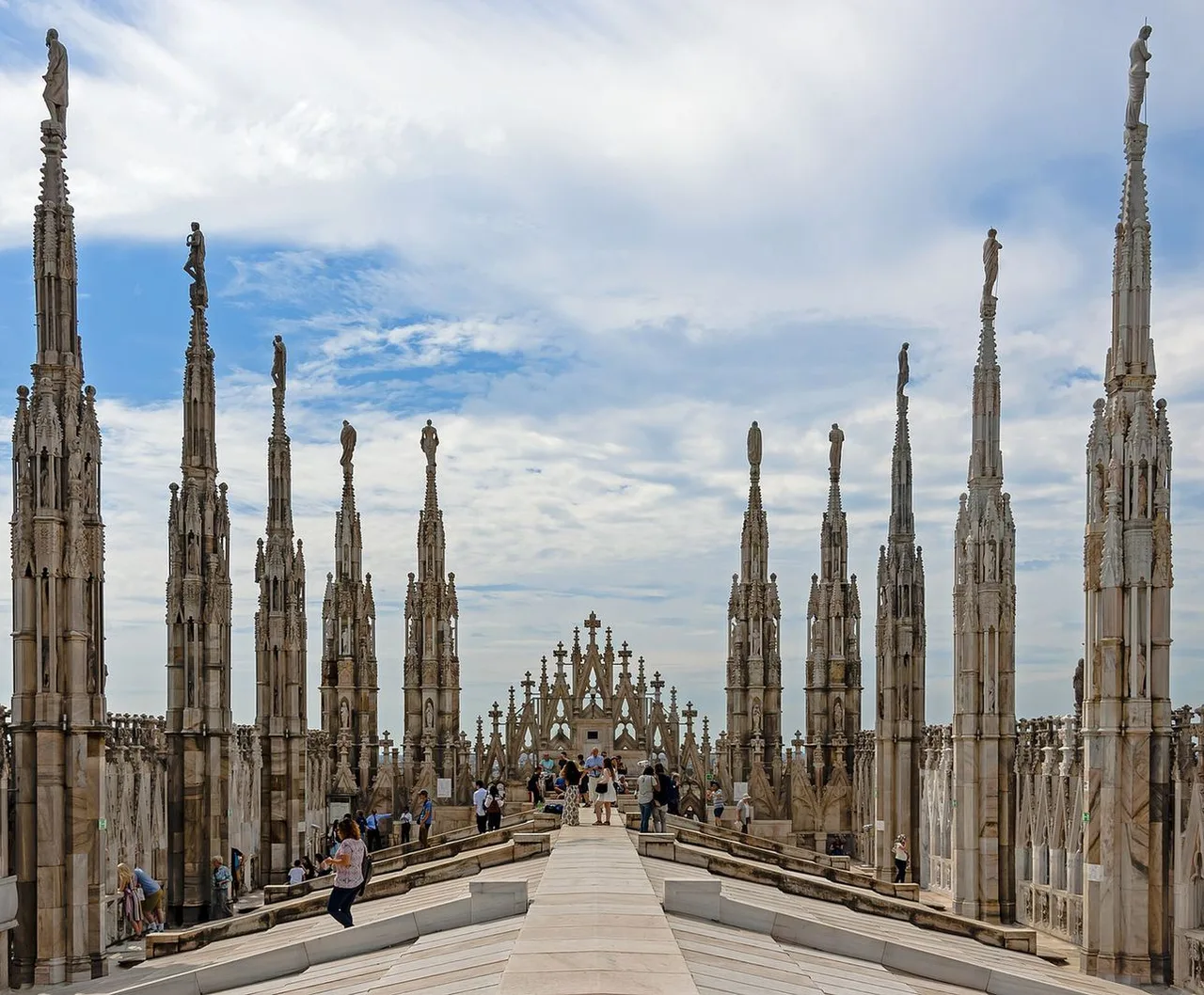
Afterwards, step through the arch into the Galleria Vittorio Emanuele II, the glass-roofed arcade on the north side of the square. Mosaics on the floor and the central dome make it a short stop even if you do not shop.
Afternoon: La Scala and Brera
Walk through the Galleria to Piazza della Scala, with the Teatro alla Scala on one side. Continue north into Brera, a neighbourhood of narrow streets and courtyards. The Pinacoteca di Brera, in a palazzo that also houses the Biblioteca Nazionale Braidense, holds paintings by Raphael and Mantegna; its site lists masterpieces and hours. The Grande Brera project also covers Palazzo Citterio, so check the museum's site for which entrance and hours apply to your date. Allow two hours, and use the audio guide if you want the main rooms in order.
Evening: aperitivo in Brera
Choose a bar on Via Fiori Chiari or in the nearby streets and order an aperitivo, the pre-dinner drink with snacks that Milan is known for. From Brera the Duomo is about 15 minutes on foot, so you can finish the evening back on the square. Dinner can be risotto alla milanese, the saffron rice, or a cotoletta, the breaded veal cutlet. Book a table in Brera or the Navigli, since weekends fill up.
Day 2: The Last Supper, the Castle and the canals
Morning: Santa Maria delle Grazie
Book The Last Supper first, ideally for the opening slot. Leonardo da Vinci painted it between 1495 and 1497 in the refectory of the Dominican convent of Santa Maria delle Grazie, according to UNESCO, and the complex was begun in 1463. The refectory admits a limited number of visitors at a time to protect the painting. The official site releases tickets in sales windows and explains how and when to book; for September to December 2026 it announced that tickets would go on sale at set dates.
After the museum, step into the church of Santa Maria delle Grazie, whose dome and apses UNESCO attributes to Bramante.
Afternoon: Castello Sforzesco and Parco Sempione
Take the metro or walk to the Castello Sforzesco. According to the Comune di Milano, one ticket covers all the castle museums, which are closed on Mondays, and the courtyards are open free of charge every day. The museums include Michelangelo's Pietà Rondanini. The Sala delle Asse, painted by Leonardo, is closed for restoration. Behind the castle, Parco Sempione is a good place to rest before the evening.
Evening: the Navigli
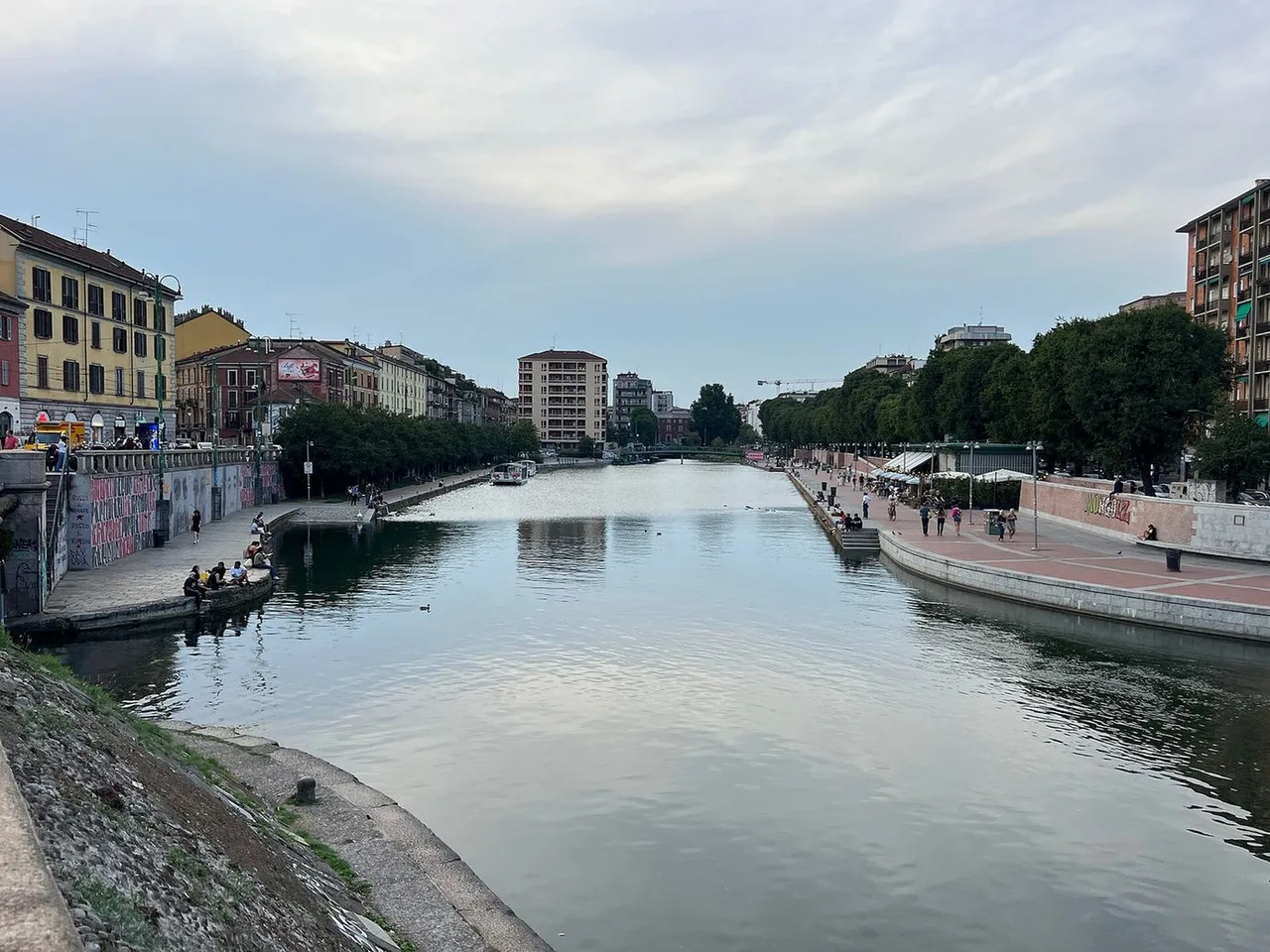
Take the metro to the canals. The Naviglio Grande was begun in 1179 and completed in 1257 as a water link to the Ticino River, and the Darsena was the city's port, as VisitMilano describes. Walk along the banks to the Vicolo dei Lavandai, which keeps its 19th-century washhouse. Have a late aperitivo on the canal and dinner at a trattoria away from the water.
If it rains, on a budget, with kids
If it rains
The Duomo interior, the Brera gallery, the castle museums and the Last Supper are all indoors. The Galleria offers a covered walk, and the terraces and the Navigli are best left for another day. Brera and the castle together make a full day.
On a budget
The castle courtyards are free every day, according to the castle's site. The Duomo square, the Galleria and the canal banks cost nothing. On the last Sunday of every month, the Naviglio Grande hosts an antiques market over more than two kilometres, per VisitMilano. The ATM site lists its current fares and passes.
With kids
Parco Sempione behind the castle gives space to run. The Duomo roof by lift suits children who like heights. The Navigli Darsena is a car-free waterside square where children can look at the boats.
Day trip or a third day
Lake Como, about 40 minutes by train
Regional trains run from Milan to Como; check the Trenord and Trenitalia timetables for the line. A lakeside walk and a ferry make a calm day away from the city.
Turin, about one hour by fast train
Turin pairs baroque boulevards with an Egyptian museum; high-speed trains run from Milano Centrale.
Verona, about 75 minutes by fast train
Verona adds a Roman arena and a river-bend old town, and the trains leave from Centrale.
Practical tips
- Reserve The Last Supper, the Duomo and the terraces on the official sites only.
- Large bags are not allowed in the cathedral, so travel light on Duomo day.
- Cover shoulders and knees in churches.
- The castle museums are closed on Mondays, and the Duomo Museum has its own weekly closing day. Check the page for the current day.
- Accessibility: the Castello Sforzesco has an accessibility page, and YesMilano publishes an accessible Milan guide.
Frequently asked questions
How early should The Last Supper be booked?
As soon as the next block of tickets is released. The museum admits only a limited number of people at a time, and the official site explains how and when sales open. For September to December 2026, the site announced that sales would open at set dates, so check it as soon as your dates are firm.
Which ticket covers the Duomo roof?
The official ticket shop sells passes valid for two days with one access to each area, including terraces reached by lift or stairs. Some options cannot be bought when the cathedral holds a celebration. Large bags are not allowed.
Is the Castello Sforzesco free?
Partly. The courtyards are open and free daily, according to the castle site, from early morning to evening. The museums need a ticket and are closed on Mondays; one ticket covers all of them, including Michelangelo's Pietà Rondanini.
How long is the train from Malpensa to the centre?
Malpensa Express trains leave every 30 minutes. From Cadorna to Terminal 1 takes about 37 minutes, and from Centrale about 51 minutes. Cadorna to Terminal 2 takes about 43 minutes.
What are the Navigli, and are they still used?
They are a canal system begun in the 12th century to bring water and goods to Milan. The Naviglio Grande dates from 1179 to 1257, and Leonardo improved the Martesana canal with locks. The inner ring was covered in the 1930s; the surviving canals now frame a bar and restaurant district.
More city guides
- Turin in 2 days: baroque boulevards and the Egyptian Museum, about an hour away.
- Verona in 2 days: a Roman arena and river-bend old town.
- Bologna in 2 days: arcades and Italy's richest kitchen.
- Venice in 2 days: lagoon canals on the same rail line.
- Zurich in 2 days: a lakeside Swiss city to the north.

_-_2022-09-02_-_4.jpg)