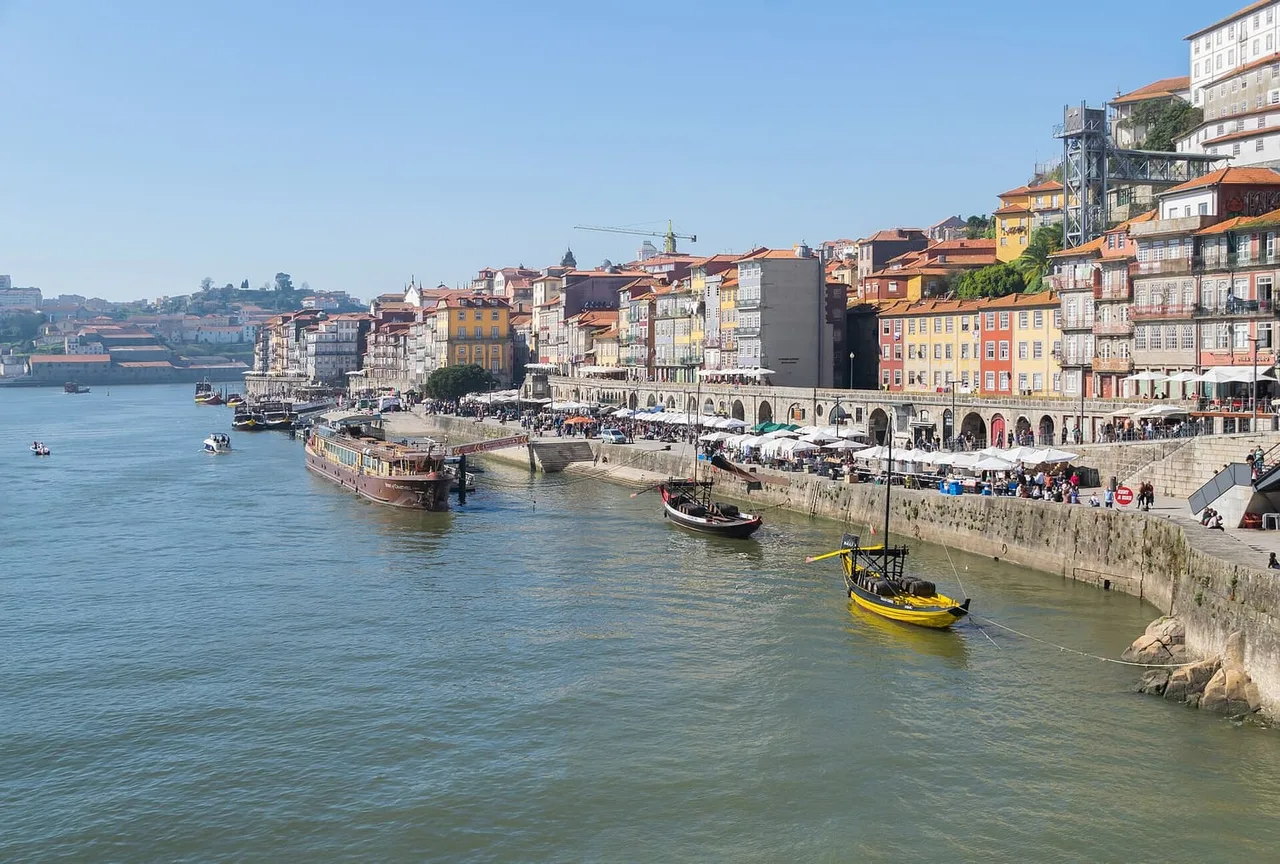
Porto in 2 days is a walk down to a river and back up again, with tile-covered walls, granite churches and iron bridges as the landmarks. The city climbs steeply from the Douro, so the plan below groups the lower riverfront and the bridge on the first day and the upper streets, the tower and the bookshop on the second. It suits travellers who enjoy hills, who want to cross to the port-wine lodges of Vila Nova de Gaia, and who would rather learn the city on foot than on a bus. Portugal's second city is smaller than its fame suggests, and the historic core is compact enough for two unhurried days.
Quick facts
- Country and region: Portugal, in the north on the Douro, close to the Atlantic.
- Main airport: Francisco Sá Carneiro (OPO), north-west of the centre, served by the metro.
- Main stations: Porto-Campanhã for most long-distance trains, and São Bento in the historic centre.
- Getting around: Metro do Porto, STCP buses and the Andante ticket system; the old core is walkable.
- Currency: euro (EUR).
- Language: Portuguese.
- Time zone: Western European Time, with summer time in season.
- Best months: April to June and September to October.
Best time to visit
Late spring and early autumn are the comfortable windows: the hills are manageable, terraces by the river are open, and the light is good for the long views from the bridge. July and August are warm and busy around Ribeira, so start early and keep the middle of the day for museums or a boat on the river. Winter brings rain from the Atlantic, but the covered stops, such as the station hall, the bookshop and the Stock Exchange, work well in that weather.
The city also presents itself as a place of camellias, according to Visit Porto, which names the Parque de São Roque and the Botanical Garden among the spots where more than 300 species grow. Look at the official events calendar for festivals that fall on your dates.
Getting there and around
From the airport, Metro do Porto's line E runs into the city. The metro sells tickets by zone, and the airport stands several zones from the centre, so check the destination list in the station before you buy. Beyond the metro, Porto's Andante ticket works across STCP buses, Metro do Porto and CP's urban trains, according to STCP, and the STCP fare page explains the card.
By rail, Campanhã is the main hub, and São Bento handles regional services in the middle of town. The link between the two takes only a few minutes on a local train. For the connection south, see Lisbon in 2 days or Coimbra in 2 days, both reached by CP trains.
On foot, São Bento to the cathedral and Ribeira is a steep descent of about 15 minutes, and the Clérigos area is a 10-minute walk up from Ribeira. The Metro do Porto fare page lists zones and a 24-hour ticket.
Where to stay
Baixa and the streets around Clérigos are the practical centre, with the metro at São Bento and Trindade, shops and a short walk to most sights. It suits first-time visitors, though some streets climb sharply with luggage.
Ribeira, down by the river, is the postcard district inside the UNESCO area, with riverside restaurants and a lively evening scene. The trade-off is crowds and many steps.
Vila Nova de Gaia, across the bridge, puts you beside the port lodges and gives views back across the water, with the metro line crossing the bridge's upper deck.
Day 1: Ribeira, the cathedral and the bridge
Morning: São Bento and the Sé
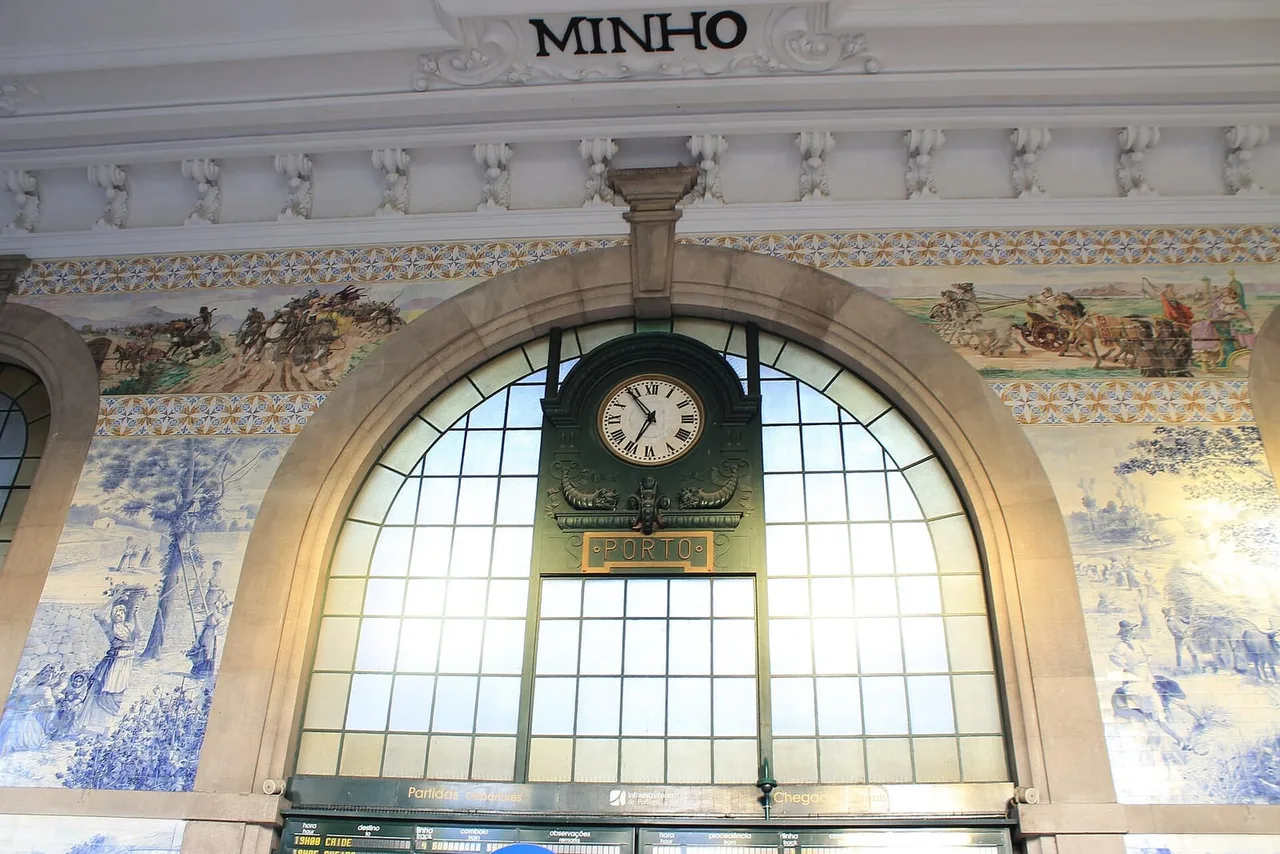
Begin at the São Bento railway station, which opened in 1916 on the site of a former convent. The entrance hall is covered in blue and white azulejo panels by Jorge Colaço, about 20,000 tiles installed between 1905 and 1916, showing scenes from Portuguese history and rural life. UNESCO includes the station among the notable buildings of the historic centre.
Climb to the cathedral, the Sé, whose Romanesque core dates to the 12th century according to UNESCO. From here, walk down the old lanes to the river and Ribeira.
Afternoon: Ribeira and the Dom Luís I Bridge
Eat near the Ribeira quay, then walk to the Dom Luís I Bridge. It is a double-deck iron arch built between 1881 and 1886, and the upper deck carries pedestrians and Metro line D while the lower deck is open to public transport, taxis, cyclists and pedestrians. Cross at the lower level to Vila Nova de Gaia, where the port wine lodges line the quay. The regional tourism board's Porto.CARD page names Port wine cellars among its discounted attractions, and it also warns that the card was temporarily unavailable for purchase during a product restructuring, so check whether it is on sale before planning around it.
Evening: The upper deck and a river dinner
Take the Gaia cable car or walk back across the upper deck for the long view of Ribeira at dusk. If you prefer, cross back to the Porto side and stroll to the Serra do Pilar monastery, part of the UNESCO property, for sunset.
Day 2: Baixa, Clérigos and the bookshop
Morning: Clérigos Tower
The Clérigos Church and Tower were designed by Nicolau Nasoni and finished in 1763. The tower rises 75 metres, and the official regional tourism page describes a climb of over 200 spiral steps to a viewpoint that takes in the cathedral, the Luís I Bridge and the Douro. The page says the monument is open every day of the year and that the church interior can be visited free. A short ground-floor display simulates the climb for people who prefer not to take the stairs.
Afternoon: Livraria Lello and the Stock Exchange
A short walk away, Livraria Lello is a neo-Gothic bookshop with a crimson staircase and a stained-glass window, spread over two floors. Its official site shows daily opening and sells tickets online, so book before you go. Afterwards, visit the Palácio da Bolsa, the neoclassical Stock Exchange that UNESCO dates to 1842-1910. The palace lists its accessibility features on its site, including a ramped side entrance and a lift. If you still have energy and a free late afternoon, the Serralves Museum and Park and the Casa da Música concert hall, both named on the city pass list, lie further west and suit a different day or a taxi ride; the Casa do Infante city museum is closer to Ribeira and works as a short stop on the way back down.
Evening: Aliados and a last view
Walk up Avenida dos Aliados to the City Hall square and the lively streets nearby, then choose a table for a last dinner. Trindade metro station is close, so the line back to the airport or to Campanhã is a short walk for an early departure the next morning, which is worth checking before you book the final night. A short ride on the metro takes you back to the hotel afterwards.
If it rains, on a budget, with kids
If it rains
Use the station hall, the Livraria Lello, the Clérigos church and the Palácio da Bolsa as indoor stops, and take the metro between them. A cellar tour in Gaia is also sheltered.
On a budget
Much of Porto is free to see: the São Bento tiles, the cathedral exterior, the Ribeira quay, the bridge and the river promenade. The Clérigos church interior is free, according to the official page. The Porto.CARD, the official city pass, offers free entry to some museums and discounts on Clérigos, the Palácio da Bolsa and cellars, but the official page says it was temporarily unavailable, so check first.
With kids
Children enjoy the bridge walk, the cable car at Gaia and the boat trips on the Douro. The Clérigos climb suits older children. Parque de São Roque and the Botanical Garden give space to run.
Day trip or a third day
Guimarães
UNESCO lists the historic centre of Guimarães, the first capital of Portugal in the 12th century, with its medieval layout and granite-and-timber houses. CP trains from Porto take about 70 minutes; check the timetable for the line from Campanhã.
Douro Valley
The Alto Douro Wine Region is a UNESCO landscape of terraced vineyards covering some 24,600 hectares, and Port wine has had a regulated quality since 1756. Trains toward Régua take roughly 2 hours, and further stations take longer, so a full day is the minimum.
A southern neighbour
For another city on the main rail line, Coimbra in 2 days is a half-way stop on the way to Lisbon.
Practical tips
Book Livraria Lello and any Gaia cellar visits ahead in busy months. Wear shoes with grip, because the stone lanes are steep and slippery after rain. The Clérigos monument and the Palácio da Bolsa publish their own hours, so confirm them on the day.
For accessibility, the Palácio da Bolsa site lists its ramps and lift, and the Clérigos tower offers the ground-floor experience for visitors who do not climb. Confirm lifts and ramps with the operator for your route.
Frequently asked questions
Who made the tiles at São Bento station?
Jorge Colaço designed and painted the panels, about 20,000 azulejos installed between 1905 and 1916. Construction of the station began in 1904 on the site of a convent that was demolished in 1892. An underground link joins the station to the São Bento stop on Metro line D.
Is it better to cross the bridge by the upper or lower deck?
The lower deck puts you at the quay level and links Ribeira with Gaia, while the upper deck carries Metro line D and pedestrians at a height above the river. Many visitors take one deck over and the other back. Both are open to walkers, but keep clear of the metro tracks.
Can I visit the port lodges without a booking?
Some cellars take walk-ins and others need reservations, and the options change with the season. The regional Porto.CARD page names Port wine cellars among its discounted attractions. Check each lodge's own site for tours, languages and tasting rules before you go.
How do I get to Guimarães and the Douro?
Both are served by CP trains from Porto. UNESCO describes the Guimarães historic centre and the Alto Douro terraces as World Heritage places. Use the CP timetable for the day you travel, and allow extra time for connections.
More city guides
- Coimbra in 2 days: a university town half-way to Lisbon.
- Santiago de Compostela in 2 days: the end of the Camino, to the north.
- Salamanca in 2 days: a sandstone university city across the border.
- Lisbon in 2 days: the capital, reached by rail.