Your feet decide how the day goes
You can finish a hike with a wet shirt, a sunburnt neck and a cold sandwich, and still call it a good day. You cannot do that with a blister on the second hour. Footwear is the one purchase where a wrong choice stops the walk, so it deserves the most care and the least hurry.
This guide is about how to choose, not about brands. We name no shops, quote no shop prices and rank no labels. Claims about materials and blisters were checked in open sources on 16 October 2026, and anything that is common practice or our own judgement is marked that way.
What matters most: fit and comfort
Fit comes before everything. Wikipedia notes that friction blisters are most common after walking long distances or in old or poorly fitting shoes, and that they can be prevented by comfortable, well-fitting shoes and clean socks. So the real test of a shoe is how your foot behaves inside it over hours, not how it looks in the shop.
- Length. Your toes should not touch the front when you walk downhill. On a descent the foot slides forward, so leave a thumb's width of room. Test it by walking on a slope or ramp in the shop if you can.
- Width. Not tight across the ball of the foot, and not so wide that the foot slides sideways.
- Heel. The heel should stay put when you walk uphill. A heel that lifts every step is where many blisters start.
- Time of day. Feet swell during the day and in heat, so try shoes in the afternoon, wearing the socks you will actually hike in.
- Season. Match the shoe to the weather. A heavy insulated boot is a bad choice for a hot summer day, and a light mesh shoe is a bad choice for cold wet ground.
The shape of your foot matters more than any rule. If a shoe pinches in the shop, it will not improve.
Trail shoes or boots
There is no single right answer, and the difference is more about the terrain and the load than the label.
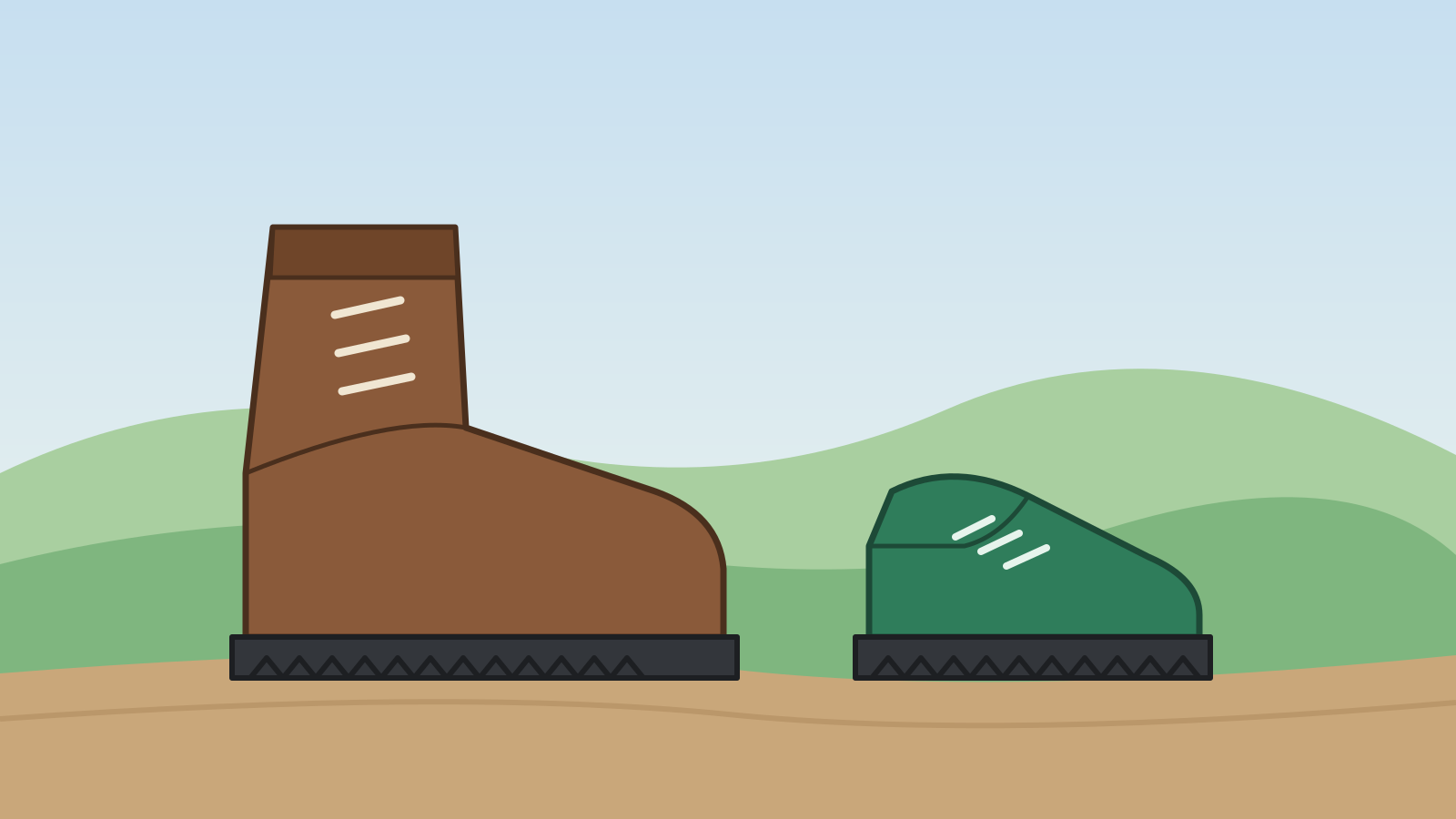
Boots. Wikipedia describes hiking boots as footwear designed to protect the feet and ankles, giving ankle support and being fairly stiff, with deep-lugged rubber soles for friction. A higher cut and a stiffer sole are useful on loose stones, steep rocky ground and long days with a heavy bag. The ankle support lowers the risk of a twisted ankle, though it does not remove it. The cost is weight and a longer break-in.
Trail shoes. Low shoes are lighter and often more comfortable on easy to moderate ground. Wikipedia says that trail-running shoes differ from road shoes mainly through thicker outsoles for traction, stiffer midsoles for support on uneven or rocky surfaces, and added heel and toe protection. Many walkers use them for hiking. Where the ground is rough or the pack is heavy, the lack of ankle support becomes a real consideration.
What the strong sole does. In both cases, the most important feature is a sole that grips and does not fold on stones. Press the shoe in the shop: it should flex at the ball of the foot, not in the middle.
A simple rule of thumb that is our own and not an official classification:
- Marked paths in forest and hills, light bag, dry weather: trail shoes or light hiking shoes are fine.
- Stony, steep or long routes, heavier bag, wet ground: boots give more support.
- If in doubt on your first mountain hikes, choose the sturdier option. The City of Vienna recommends proper walking boots and clothing for its hiking paths, which are not alpine but can be demanding.
Membranes: waterproof or breathable
A membrane is a thin layer inside the shoe that stops liquid water from coming in while letting water vapour pass out. Gore-Tex is the best-known name. Wikipedia describes it as a trade name for a waterproof, breathable fabric membrane made from expanded PTFE, invented in 1969. Gore's patents on the material expired in 1997 and other companies now make similar membranes, so "waterproof-breathable" is the useful general term. Wikipedia adds that a waterproof-breathable membrane became the industry standard in hiking boots, though the claim there lacks a citation, so we read it as a general trend and not a statistic.
The trade-off is simple.
- Waterproof. Good for rain, wet grass, mud and shallow puddles. Also useful for cold, damp days.
- Breathable only as far as the membrane goes. A membrane lets vapour out, but not as quickly as an open mesh. In warm weather, or on a fast climb, a membrane shoe can feel hot and the foot sweats.
- One-way problem. If water gets in over the top of the shoe, a membrane makes it harder for it to leave.
- Socks. A membrane works best with socks that also move moisture. A thick damp cotton sock works against it.
For summer walks in dry weather, a shoe without a membrane often feels better and dries faster after a stream crossing. For autumn, spring and wet forests, membrane shoes make more sense. That is our judgement, not a universal rule.
Socks and feet
Wikipedia lists the common sock materials as cotton, wool, nylon, acrylic, polyester and olefins, and notes that merino wool is a popular choice that offers warmth and comfort. Our advice is to avoid cotton socks for hiking and to use socks designed for it.
- Blisters are more likely on moist skin, according to Wikipedia, so socks that manage moisture and a spare pair on long days both help.
- Liner socks, worn under another sock, are intended to prevent blisters, and moisture-wicking liner socks are recommended for sustained use such as hiking.
- Wear the same socks you plan to hike in when you try shoes on.
- Check for folds and thick seams inside the sock. A fold is a hot spot in the making.
Lacing
Good lacing is free. For a heel that slips, tighten firmly across the instep and use the top eyelets to lock the heel. For toes that hit the front on descents, tighten the mid-foot more so the foot cannot slide forward. If your foot feels numb or cold, you have laced too tight. This is general practice, not a tested protocol.
Break-in
New shoes need time. Wikipedia says that before a long walk it is important to make sure shoes or hiking boots have been properly broken in. Wear them around the house, then on short walks, then on a longer outing, before you depend on them on a hard day. Stiff boots need the most time. If a spot starts to feel hot, stop and tape it before it becomes a blister. Wikipedia also notes that protecting the area before the blister forms is the better approach.
Care
These are common practices and not rules from a manufacturer, so always follow the care label of your own shoe.
- Brush off mud while it is wet or after it dries, and rinse with lukewarm water if needed.
- Dry shoes at room temperature, away from direct heat, and stuff them with paper if they are very wet.
- Check the sole, laces and seams from time to time, because worn lugs lose grip.
- Leather boots usually need regular conditioning, and membrane shoes can lose water repellency on the outer fabric over time. Follow the label.
- Store them in a dry, ventilated place.
Common mistakes
- Buying for looks or price, then discovering the heel lifts.
- Trying shoes in the morning in thin socks.
- Wearing brand-new boots on a long hike.
- Choosing the heaviest boot for an easy walk, or the lightest shoe for steep stony ground.
- Using cotton socks and wondering about blisters.
- Treating a waterproof membrane as a guarantee against wet feet.
Short summary
- Fit first: toe room, a heel that stays, the right width, tested in hiking socks.
- Boots: more support and protection, heavier, longer break-in.
- Trail shoes: lighter, often more comfortable, less ankle support.
- Membrane: waterproof against the outside, but warmer, and not a guarantee.
- Socks: wicking socks, spare pair on long days, liner socks if blisters are a problem.
- Break in new shoes before a hard day.
Verification
The material, membrane, blister and sock statements were checked on 16 October 2026 against the Wikipedia articles listed under sources, and the boot recommendation against the City of Vienna hiking tips. The lacing, care and sizing advice and the terrain rule of thumb are common practice or our own judgement.