Old advice, new rules
Search for how to climb Teide and you will still find pages saying the summit permit is free. The official booking pages tell a different story today. Tenerife's island council now charges a public fee to most visitors for the regulated trails, and depending on your route you may need two separate authorisations. This guide sorts out what the Tenerife ON pages say, as read on 16 October 2026, so that the permit does not become the hardest part of the climb.
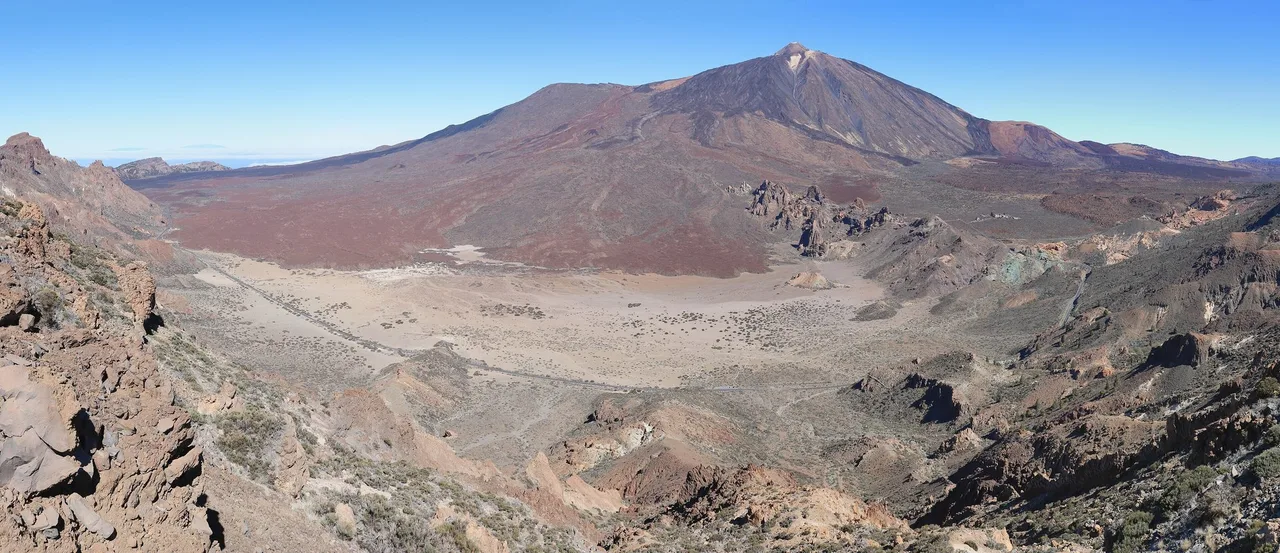
Teide stands on Tenerife as part of the Teide-Pico Viejo stratovolcano. UNESCO, which inscribed Teide National Park in 2007, gives its height as 3,718 m and calls it the highest peak on Spanish soil. The details below are drawn from official sources.
What you are climbing
UNESCO's description gives the numbers that make Teide unusual. The Teide-Pico Viejo stratovolcano rises 7,500 m above the ocean floor, which puts it among the tallest volcanic structures on Earth (the World Heritage text calls it the third tallest), and the inscribed property covers 18,990 hectares. That scale explains the climate on the way up. Tenerife ON describes a cold, windy, sun-struck environment where vegetation thins out and, above about 3,400 m on the Montaña Blanca route, almost disappears. Plan for several seasons in a single day.
Two ways to the top, two permits
There is no path to the summit that skips a booking. Under normal public opening conditions, five trails on the stratovolcano need prior authorisation. Two of them matter for most people:
- PNT-10 Telesforo Bravo is the final stretch from La Rambleta, the upper cable car station, to the summit.
- PNT-07 Montaña Blanca to La Rambleta is the long walk up from the road. It ends at the cable car station, so on foot you need this permit first and the PNT-10 permit afterwards.
If you ride the cable car to La Rambleta, you only need PNT-10. The cable car itself is a commercial service run by a private company, Teleférico del Pico de Teide, S.A., with its own tickets. Tenerife ON stresses that a cable car ticket does not include access to the regulated trails.
What the permits cost
The fee depends on where you live and, for PNT-07, on the day of the week. These amounts are quoted from the booking conditions on the trail pages and apply only to time slots that coincide with the cable car's operating hours, 9:00 to 17:00.
- PNT-10 Telesforo Bravo: 15 EUR for all other users, 6 EUR for residents of the rest of the Canary Islands, free for Tenerife residents and children under 14.
- PNT-07 Montaña Blanca on weekdays: 6 EUR for other users, 3 EUR for residents of the rest of the Canary Islands, free for Tenerife residents.
- PNT-07 on Saturdays, Sundays and public holidays: 10 EUR for other users, 5 EUR for residents of the rest of the Canary Islands, free for Tenerife residents.
Slots outside the 9:00 to 17:00 window are not covered by the fee table, so read the trail page for what applies to the time you want.
How the booking works
You must register on Tenerife ON first. Places for the following 56 days are released every Monday at 07:00 Canary time, so there is always a rolling window of eight weeks. Popular dates fill up, which is why the page shows days without availability in grey.
A few rules are easy to miss:
- Bring your ID document or passport. Staff compare it with the booking, and a mismatch means refused access.
- PNT-10 allows only one booking per person every 15 days, so the same person cannot book within 7 days before or after an existing date.
- Dates and times cannot be changed. You can cancel up to three days ahead to get a refund; an unused booking that you did not cancel can lock you out of new bookings for three months.
- The PNT-10 slot sets both entry and exit time, so your whole visit has to fit inside it. For PNT-07 the slot is the window in which you validate your booking at the checkpoint on the TF-21 road, around kilometre 40.7, and one permit covers both directions that day.
The cable car route: short, steep, thin air
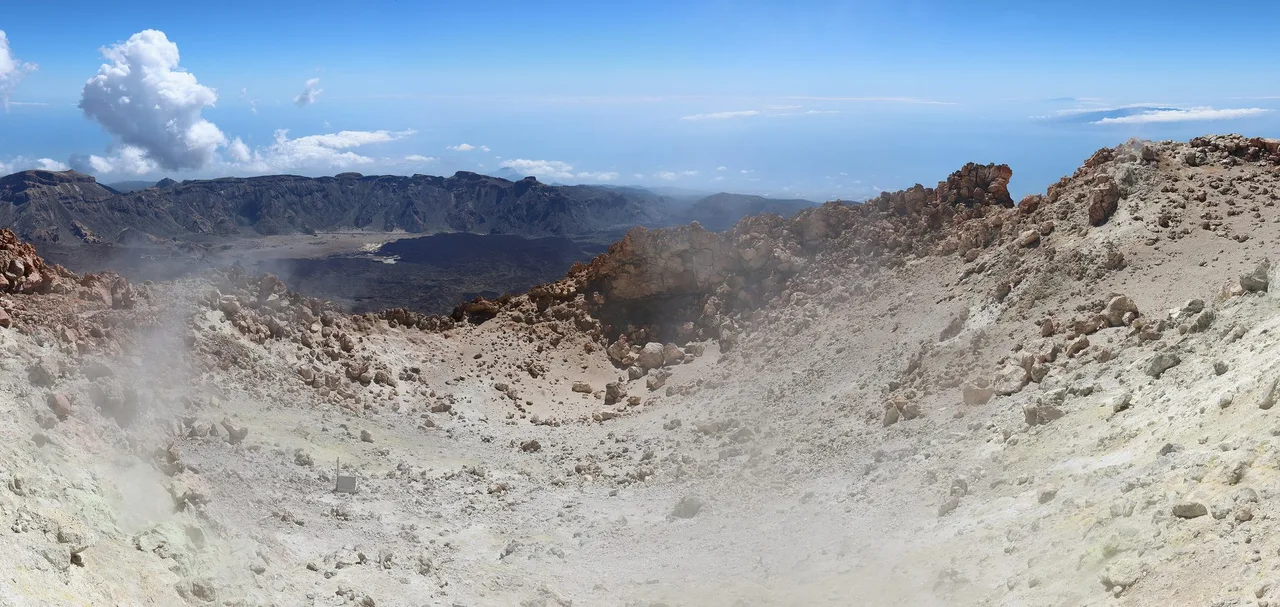
PNT-10 itself is short. Tenerife ON measures 0.66 km, about 55 minutes, a gain of 182.5 m between roughly 3,542 and 3,714 m, rated medium difficulty. The same page warns of gradients up to 60% and recommends stopping often. Near the crater there are fumaroles, a reminder that the volcano is still alive, and around them grows the very rare Teide edelweiss (Laphangium teydeum).
Rules on the summit trail: stay on the path, do not walk around or enter the crater, no pets except guide dogs, no amplified sound, no leaving litter, no picking plants or collecting rocks. Children under 3 are not allowed, and children under 16 need an adult.
The walking route: Montaña Blanca
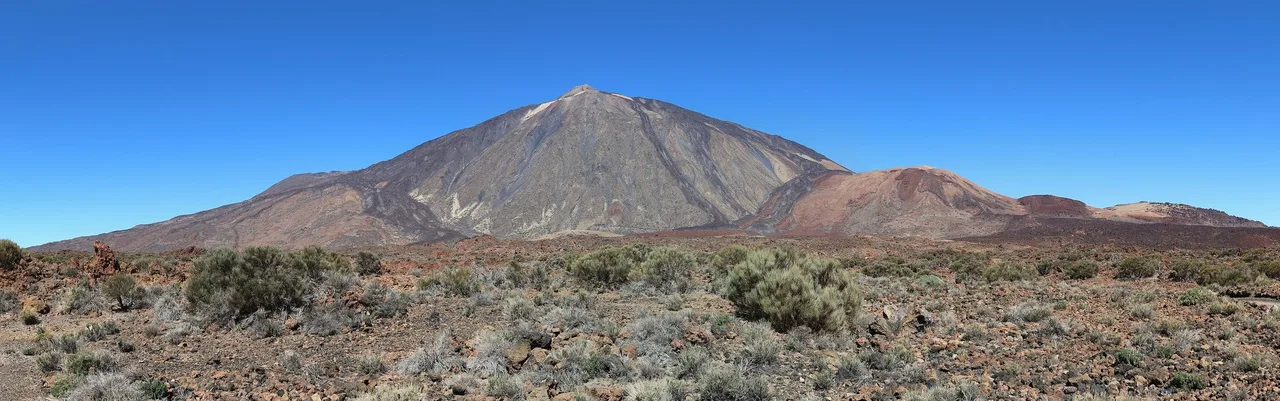
PNT-07 is a different undertaking. The trail page gives 8.29 km, a climb of about 1,309 m from 2,348 to 3,536 m, a computed time of about 5 h 55 min and a difficulty of "High". The path leaves the Montaña Blanca track, climbs steeply via Lomo Tieso (over 60% in places) to the Altavista Refuge, then continues over young black lava flows to end at La Rambleta beside the La Fortaleza viewpoint. Vegetation fades out around 3,400 m. Big round lava balls at the foot of the cone are among the sights.
Building the day around your slot
The permit and the cable car are separate systems, and that matters for timing. Tenerife ON says that the PNT-10 slots between 9:00 and 17:00 coincide with the cable car's operating hours, but the authorisation is valid only for the date and time printed on it, whether or not the cable car is running that day. If the trail is closed, or the cable car stops operating (the operator sends an email in that case), the booking conditions allow a refund. Otherwise, the amount is refunded only when you cancel at least three days ahead.
In practice that means leaving a buffer for the cable car queue and for the walk to the trail start, taking the entry and exit times seriously, and checking the trail status on Tenerife ON on the morning itself. If you walk up via PNT-07 you hold two documents with separate rules, so write both times in your phone.
Gear, snow and the forecast
Mountain footwear is mandatory on the regulated trails, and staff may stop you without it even if you hold a valid booking. The official minimum:
- Boots or trekking shoes with good grip and ankle support.
- Long trousers, worn or in the pack, and a fleece or equivalent, even in summer. Add a hat and gloves in winter.
- Enough water and some high-energy food.
- A charged phone, a head torch with spare batteries, and an emergency thermal blanket.
When there is ice or snow, the booking adds a liability declaration, everyone in the group must be over 18, and crampons and an ice axe become compulsory. Tenerife ON also warns that summit conditions can be extreme and differ from the municipal forecast, and points to AEMET's high mountain bulletin. The park advises people with heart, respiratory or mobility problems to avoid these high-altitude routes. In the summer fire season, check the alert level, and note that smoking, including vaping, is banned in open-air spaces throughout the park. Permits can be suspended in fire or weather alerts.
Getting there and staying overnight
Parking inside the park is very limited, and Tenerife ON recommends public transport whenever possible. TITSA, the island bus company, runs line 342 (Costa Adeje and Los Cristianos to Las Cañadas) and line 348 from Puerto de la Cruz to the Teide area. Check the current timetable on TITSA before planning a day around it, because services can change with the season.
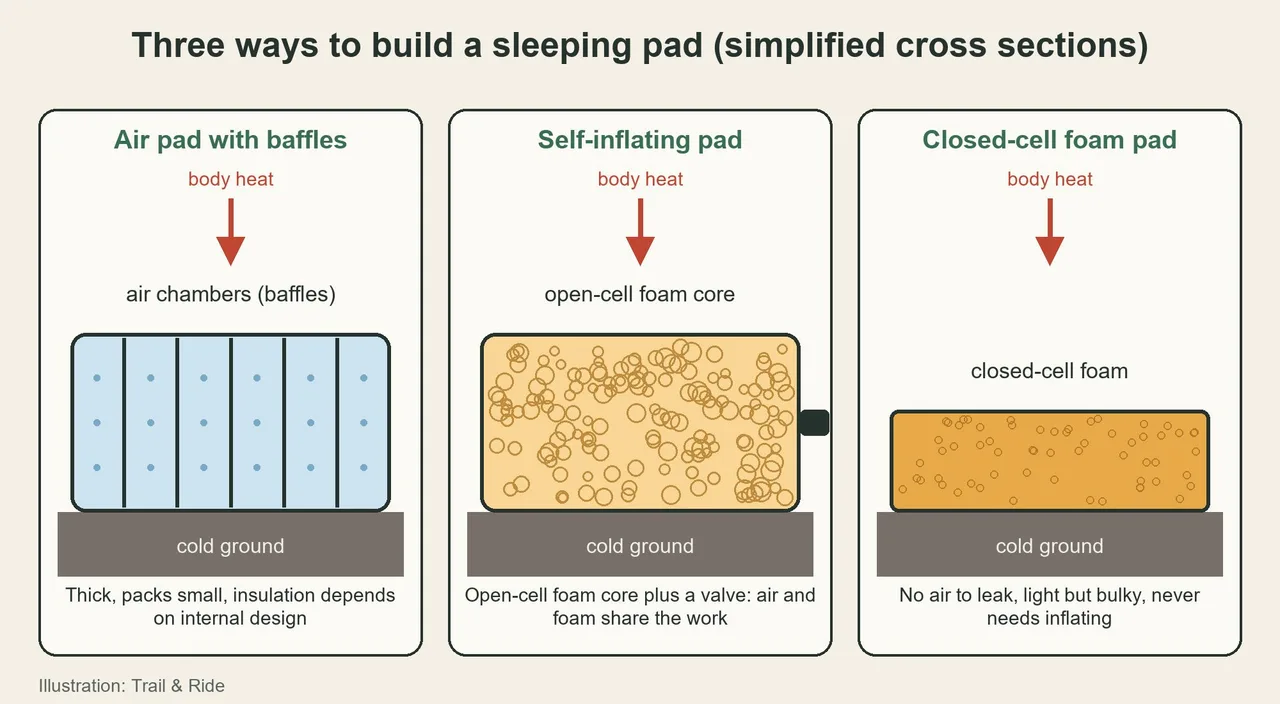
Camping in any form is prohibited in the park. Sleeping outdoors without a tent (bivouac) is allowed only in four designated zones, with prior authorisation through Tenerife ON. If you are weighing that up, our guide to Sleeping Pads for Trekking explains why cold volcanic ground needs more insulation than people expect.
Sources and verification date
All facts were checked on 16 October 2026 against the Tenerife ON pages for PNT-07 and PNT-10, its FAQ and news items, UNESCO's page for Teide National Park, and TITSA's line pages. Fees and procedures are set by the island council and can change. Read the trail page at the moment you book.
Related reading
Another island, another booking system: Walking Madeira's Levadas in 2026.