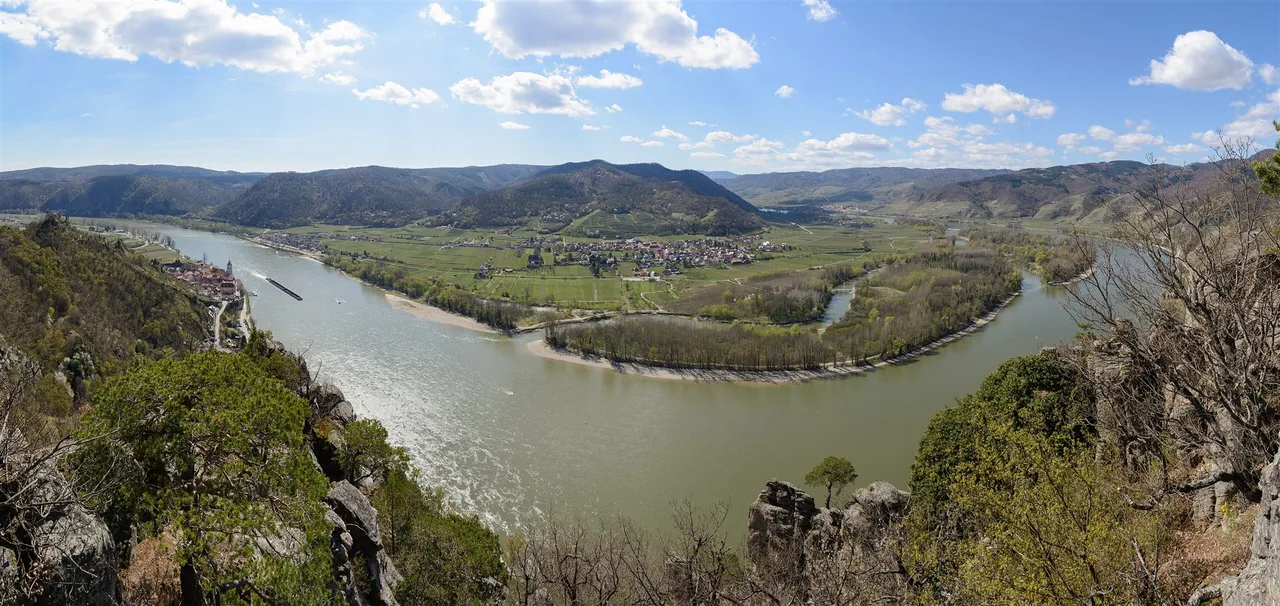
Why go: a short valley with a lot packed into it
The Wachau is the stretch of the Danube between Melk and Krems in Lower Austria. UNESCO inscribed it as a cultural landscape in 2000, and the reasons are visible from almost any viewpoint: a river bending between wooded hills, town layouts that go back to the 11th and 12th centuries, abbeys and castle ruins on the ridges, and slopes that have been worked as vineyards and apricot orchards for a very long time.
The Wachau is about 36 km long according to Wikipedia, and the regional tourism pages we checked quote figures between roughly 30 and 40 km, depending on where the ends are drawn. In practice that means you can cross the whole valley in about an hour by regional bus and still have the day left for stops.
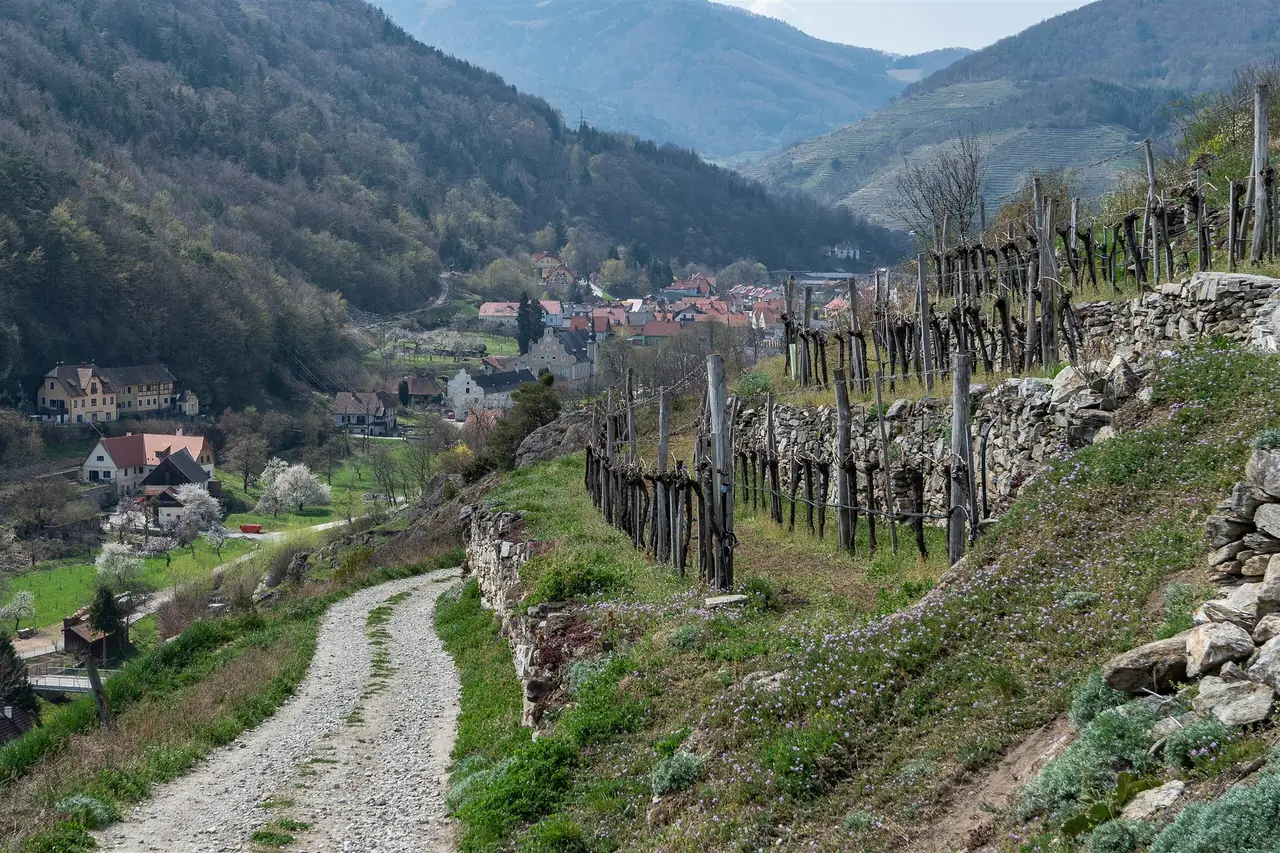
The terraces are medieval, not Roman. UNESCO's description says the Romans held the south bank with forts along the Danube frontier, but the slopes changed radically around the year 800, when Bavarian and Salzburg monasteries began cultivating them and created the present pattern of vine terraces. Wine growing in the region may have older roots, but the terraced landscape that earned the World Heritage listing is medieval.
The practical case for the Wachau is simple. The valley has a railway on the north bank, ferries instead of bridges, a long-distance walking trail on both banks, and enough villages that you are rarely more than an hour from a table with a glass of local wine on it.
When to go: four seasons, four different valleys
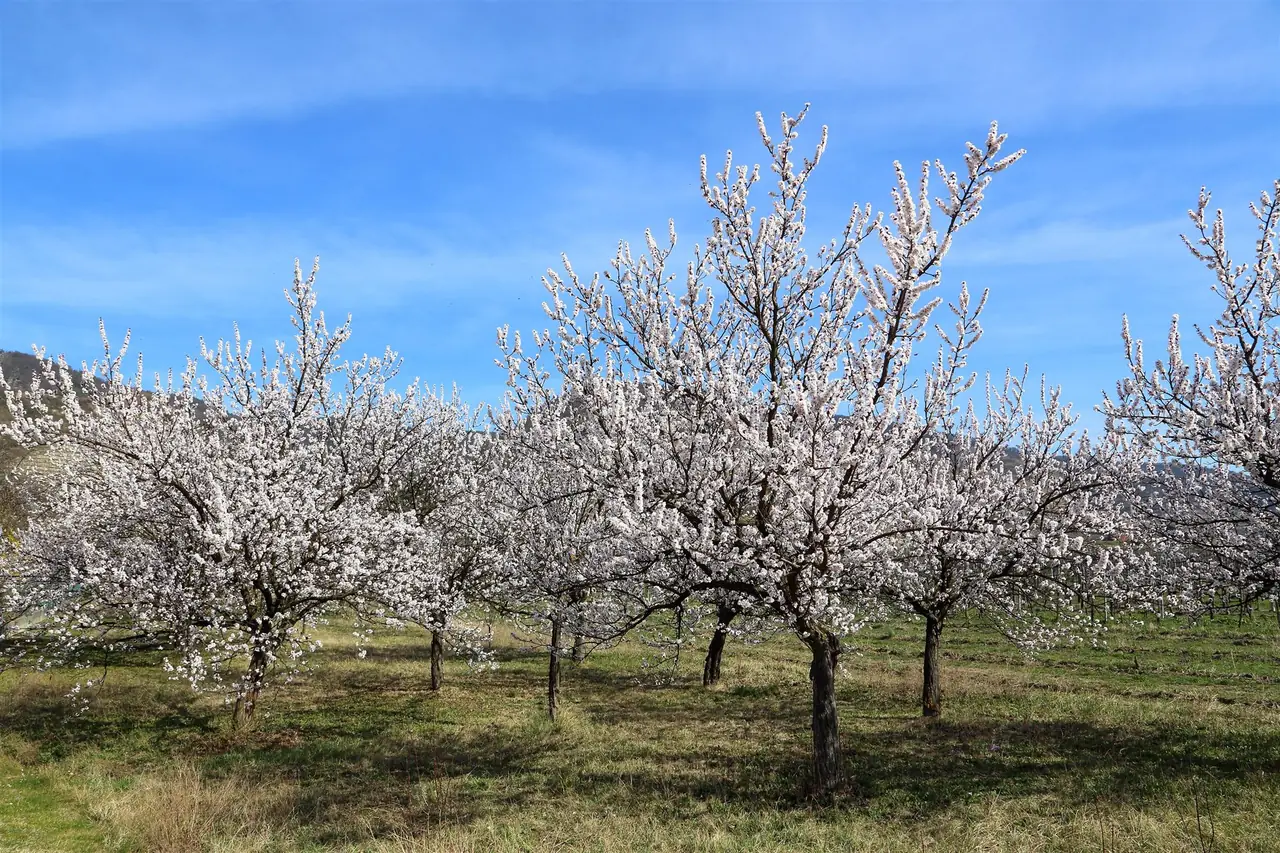
Spring: apricot blossom
Apricot trees are a signature crop here, and their blossom is the spring event. It usually falls somewhere between mid-March and mid-April and moves with the weather, so no date is safe to plan around. The photograph below was taken at Oberloiben on 21 March 2014. Check recent local reports before you travel for the blossom alone.
Summer: fruit, festivals and heat
The apricots ripen one after another over the summer. The protected name "Wachauer Marille g.U." is used by 227 growers, and the association advises ordering ahead because the fruit is sold almost entirely at the farm gate and only ripe fruit should be picked. In Spitz, the Marillenkirtag is the big apricot weekend. It has been held on the church square since 1951 around the second-to-last weekend of July, and in 2026 it ran from 17 to 19 July. Expect apricot dumplings, even from a vending machine, along with regional specialities and crowds.
Summer also means heat. The stony terraces store the day's warmth, which is part of why the grapes ripen so well and part of why a midday walk without shade is hard work. See the Spitz walk linked at the end for what that feels like on the trail.
Autumn: Sturm, Heurigen and colour
Vine leaves turn, the Heurigen (wine taverns run by the growers) are open, and the cloudy, partly fermented grape must called Sturm is on the table. Austrian wine law allows Sturm to be sold between 1 August and 31 December in the harvest year, though in practice it is an autumn drink. Spitz stages its Weinherbst, a long programme of wine events, from 4 September to 26 October in 2026. The Wachaubahn adds trains for it.
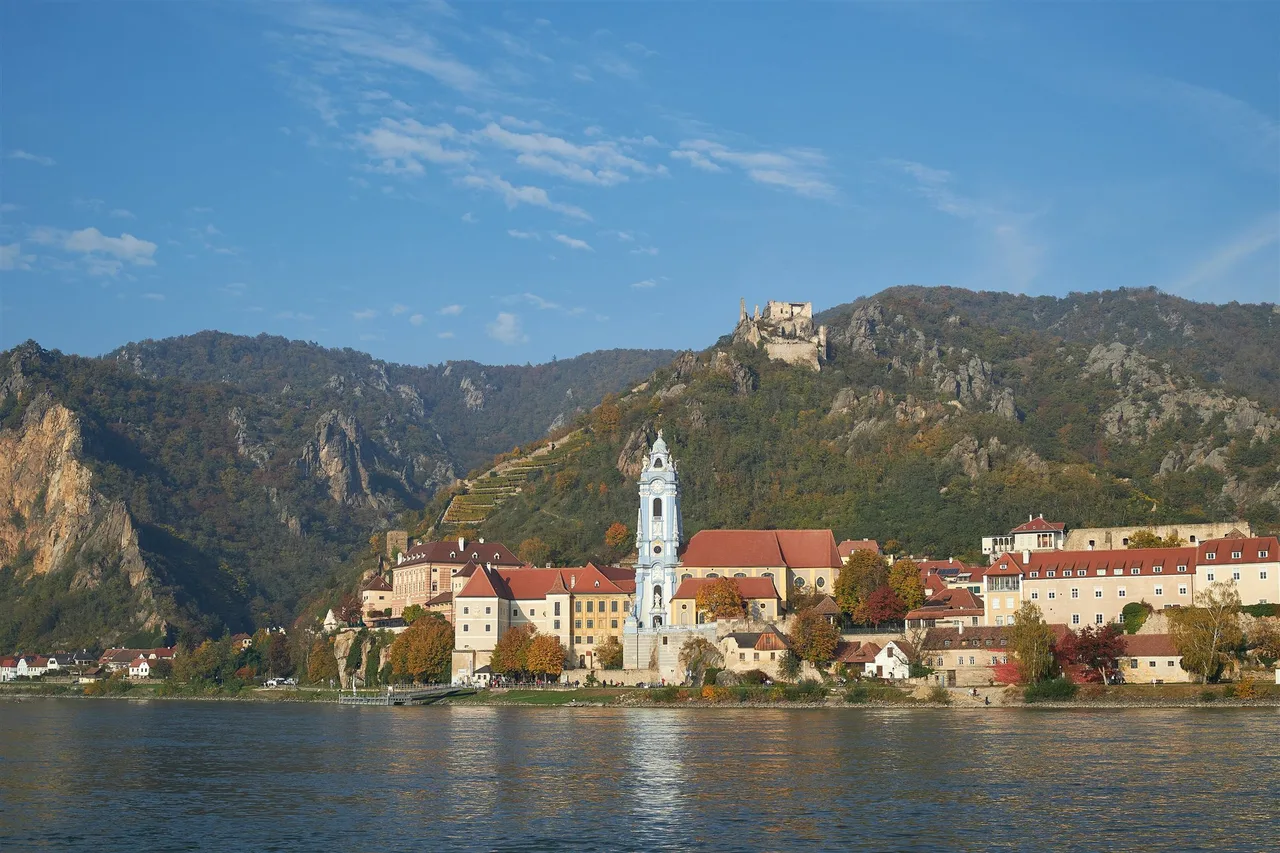
The photograph above shows Dürnstein on 16 October 2022, with foliage already turning. Reports of morning mist over the river in autumn are common, so treat it as likely rather than guaranteed.
Winter and Advent
The valley is quieter. The Wachaubahn runs Advent trains on Fridays, Saturdays, Sundays and holidays from 20 November to 13 December 2026 to the Christmas markets. Ferries thin out: the Weißenkirchen ferry stops for winter after 26 October 2026, and the Spitz to Arnsdorf ferry runs only on weekdays from November to February.
How to get there
By train and bus. The nearest main-line stations are Krems an der Donau, on the Franz-Josefs-Bahn (REX4) and the Kamptalbahn, and Melk, on the Westbahn. From either, regional buses on lines 715 and 720 run between Melk and Krems, one on each bank. For exact times, use the ÖBB and VOR timetables. As a rough planning figure, allow one to one and a half hours from Vienna door to door, which is a rough estimate, not a timetable. Check the ÖBB timetable for your connection.
By Wachaubahn. The Wachaubahn runs along the north bank from Krems to Emmersdorf, which faces Melk across the river. In 2026 it runs on Fridays, Saturdays, Sundays and holidays from 13 March to 15 November, and daily from 24 April to 1 November, with a few evening trains and Advent trains on top. Bicycles travel free.
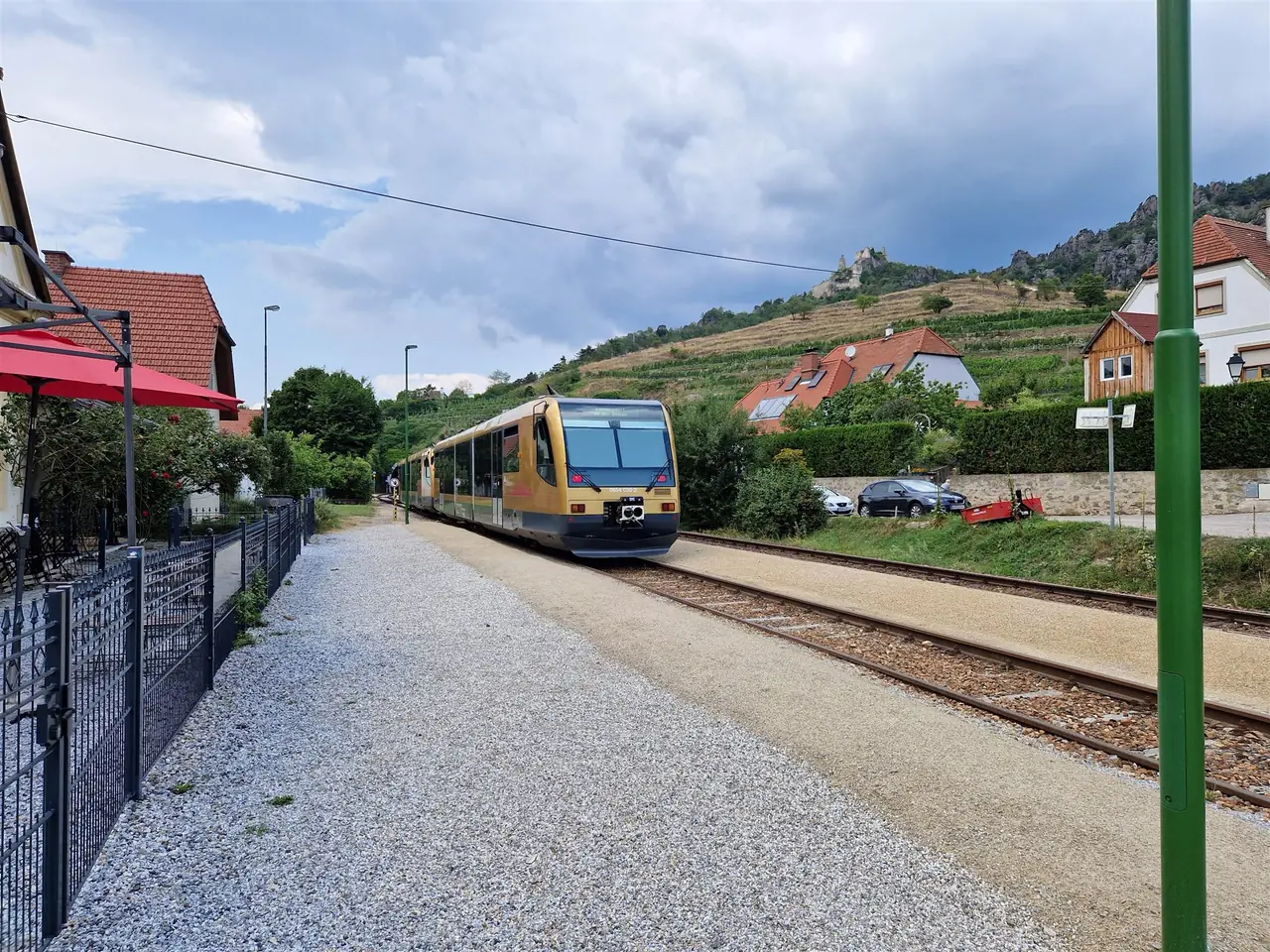
The line has thirteen stops, and six of them are request stops: Unterloiben, Wösendorf-Joching, Schwallenbach, Willendorf, Aggsbach Markt and Grimsing.
The line is standard gauge (1,435 mm) and opened in 1909, and the regular service uses modern railcars operated by the Lower Austrian provincial railways company NÖVOG. Check the operator's site for any steam runs in 2026 if that matters to you.
By boat. DDSG Blue Danube ships run mostly between Krems and Melk.
By ferry. There is no Danube bridge inside the valley, so ferries do the crossing. The ones we checked:
- Spitz to Arnsdorf: a cable ferry, crossing in five to seven minutes, cash only. March to October it runs on weekdays from 06:15 to 19:00 and on weekends from 08:15 to 19:30. November to February it runs on weekdays only, in two shorter windows.
- Weißenkirchen to St. Lorenz: in 2026 it runs from 6 April to 11 October on a daily schedule, then from Thursday to Sunday and holidays until 26 October. The municipality posted a low-water notice on 19 August 2026 saying people and bicycles are carried, cars only to a limited extent.
- Dürnstein to Rossatz: mentioned by the Weißenkirchen municipality, but its 2026 schedule is not listed in the sources.
What to see
Melk Abbey guards the western end. The Benedictine abbey was founded in 1089 and sits on a rock above the town.
Dürnstein is the postcard stop, with a blue and white abbey tower and a castle ruin on the ridge above. The ruin is tied to Richard the Lionheart. The dates matter here, because retellings get them wrong. According to the Wien Geschichte Wiki, he reached the Vienna area in December 1192 on his way home from the Third Crusade and was recognised at an inn in Erdberg. Duke Leopold V had him taken to Dürnstein, and on 28 March 1193 he was handed over to Emperor Henry VI. A ransom of 100,000 marks of silver was agreed in 1193. The singer Blondel is described there as "reportedly" present, which is how we would treat him too. No source dates his time inside the castle more precisely than the months between December 1192 and March 1193.
Weißenkirchen has a Gothic parish church with a fortified tower and one of the finest Renaissance courtyards in the valley, the Teisenhoferhof. With Joching, Wösendorf and St. Michael it forms the largest wine municipality in the Wachau.
Spitz sits around the Tausendeimerberg vineyard and has a shipping museum in the Erlahof and the Hinterhaus ruin above the village.
Willendorf is where a roughly 11 cm limestone figurine, the Venus of Willendorf, was found in 1908. The original is in Vienna's Natural History Museum, and a small museum in the village, the Venusium, tells the story.
The wine is the other reason people come. Riesling and Grüner Veltliner dominate, and the Vinea Wachau association, with more than 200 member businesses, groups the dry wines into the categories Steinfeder, Federspiel and Smaragd.
Where to walk
The backbone is the Welterbesteig Wachau, a 180 km trail in 14 stages on both banks of the Danube through 14 World Heritage municipalities. It uses the ferries to switch banks and carries the Austrian quality hiking seal since 2025. Stages 1 to 4 run from Krems through Dürnstein, Weißenkirchen and Spitz as far as Mühldorf. We cover stage 4 in a separate article.
Other options that need no long commitment:
- Ride and walk. Take the Wachaubahn one way and walk back on the trail, using the request stops to shorten the day.
- Grimsing to Emmersdorf. The last four kilometres to the end of the railway line can be walked along the Danube.
- Aggsbach Markt. The marked Gipfelrundenweg climbs to a 38 m viewing tower with a panorama over the region.
- Spitzer Graben. The Panoramaweg runs through the steep terraces of the side valley next to Spitz.
Practical notes
- Carry water. Terraces catch the sun and shade is patchy. A hat helps.
- Wear shoes with grip. Terrace paths are stone and gravel, and wet days make them slippery.
- Bring cash for the Spitz ferry.
- Stay on paths in the vineyards and leave the grapes and apricots alone. Both are someone's harvest.
- Timetables and opening days shift each year. The ones above are the published 2026 ones as of 16 October 2026.
- Step-free access on trains, ferries and sights varies, so check ahead if you need it.
Sources and verification
Checked on 16 October 2026 against UNESCO World Heritage listing 970, the Wachaubahn and Donau Niederösterreich pages, the municipal pages of Weißenkirchen and Spitz, the Vienna City history wiki, the Wachauer Marille association, Vinea Wachau, an Austrian food and wine magazine for the Sturm rules, and Wikipedia. Times, dates and ferry notices change, so confirm them with the operator before you travel.