One digit apart, very different watches
Garmin's running range is easy to misread. Forerunner 70, 170, 265, 570 and 970 sit next to each other on the shelf, a few clicks away from Venu, vívoactive and Instinct, and the names alone say very little. This guide sorts the current line-up into plain choices for runners and for people who simply want a watch that follows them through a normal sporty week.
Everything below comes from Garmin's own specification pages and press material, read on 2026-10-16 (Garmin.com, checked 2026-10-16). Where we give an opinion about who a model suits, it is a reading of those numbers, not a verdict from the trail or the track.
Quick picks
List prices are those shown on Garmin's US store (USD) and on its Irish store (EUR, en-IE) on 2026-10-16. Prices differ by country, include or exclude tax depending on the region, and change without notice, so treat the table as a snapshot and not as an offer. We link to no shops and compare no retailers.
| Best for | Model | USD | EUR |
|---|---|---|---|
| Lowest price, simple running | Forerunner 70 | 249.99 | 249.99 |
| Beginner who wants an altimeter and contactless pay | Forerunner 170 | 299.99 | 299.99 |
| Same, with music stored on the watch | Forerunner 170 Music | 349.99 | 349.99 |
| Multi-band GPS without the newest price | Forerunner 265 / 265S | 449.99 | 419.99 |
| Newer mid-range, two case sizes | Forerunner 570 | 549.99 | 499.99 |
| Maps, long GPS time, titanium bezel | Forerunner 970 | 749.99 | 749.99 |
| Everyday sport, bright round screen | Venu 4 | 549.99 | 499.99 |
| Everyday sport with maps on a 2-inch screen | Venu X1 | 699.99 | 699.99 |
| Light and wellness-led | vívoactive 6 | 299.99 | 299.99 |
| Rugged, battery first | Instinct E / Instinct 3 AMOLED | 249.99 / 349.99 | 249.99 / 349.99 |
Venu 4 is also listed with a leather-band bundle at 599.99 USD and 549.99 EUR. Instinct 3 is sold in 45 and 50 mm cases; the 50 mm AMOLED model lists at 399.99 in both currencies.
Which kind of runner are you?
Specs are easier to weigh once you picture the week they have to survive. These are examples, not case studies.
If you are starting from zero, you need a watch that tracks time, distance and pace, shows a clear screen and does not ask for a nightly charge. The Forerunner 70 does that and costs 249.99 USD. Spending more only makes sense if you already know you want music, payments or a barometric altimeter.
If you are training for a 10 km or a half marathon, the questions change. You probably want structured workouts, recovery guidance and a case size that does not slip on a sweaty wrist. The 170 and the 265S/265 pair both list these tools; the 265 family adds multi-band GPS and more storage, and the 570 adds newer sensors and the speaker and microphone.
If most of your running is on trails, a barometric altimeter and course guidance are worth checking for first. Every model from the 170 up lists an altimeter, and the 70 lists course guidance but no altimeter. A 970 adds maps, which matter when a trail forks and the signpost is missing.
If running is one sport among several, for example gym sessions, a bike commute and a weekend swim, the Venu and vívoactive lines look more natural on the wrist, and their screens suit notifications and wellness pages. They give up some of the running-specific depth that the Forerunners list.
If you have a small wrist, look at the 265S, the 570 in 42 mm and the Venu 4 in 41 mm, whose listed wrist ranges start at 115, 115 and 110 mm. If you have a large one, the 970, the 265 and the 45 mm Venu 4 are listed with wider ranges.
What each price step buys
Walking up the Forerunner ladder in list prices shows where the money goes. From the 70 to the 170 is 50 USD more, and Garmin's pages show a barometric altimeter, a compass, a gyroscope and Garmin Pay appearing. From the 170 to the 265 is 150 USD more, and multi-band GPS, 8 GB of storage and a longer list of training metrics appear. From the 265 to the 570 is 100 USD more, with a speaker and microphone, skin temperature and sleep alignment. From the 570 to the 970 is 200 USD more, and built-in maps, a flashlight, 32 GB of storage, a sapphire lens and a titanium bezel appear.
Outside the Forerunner line, the Venu 4 is listed at the same 549.99 USD as the 570, so the choice there is about design and smartwatch features rather than price. The vívoactive 6 costs the same as the Forerunner 170, 299.99 USD, and the Instinct E costs the same as the Forerunner 70.
Who each family is for
Forerunner 70 and 170
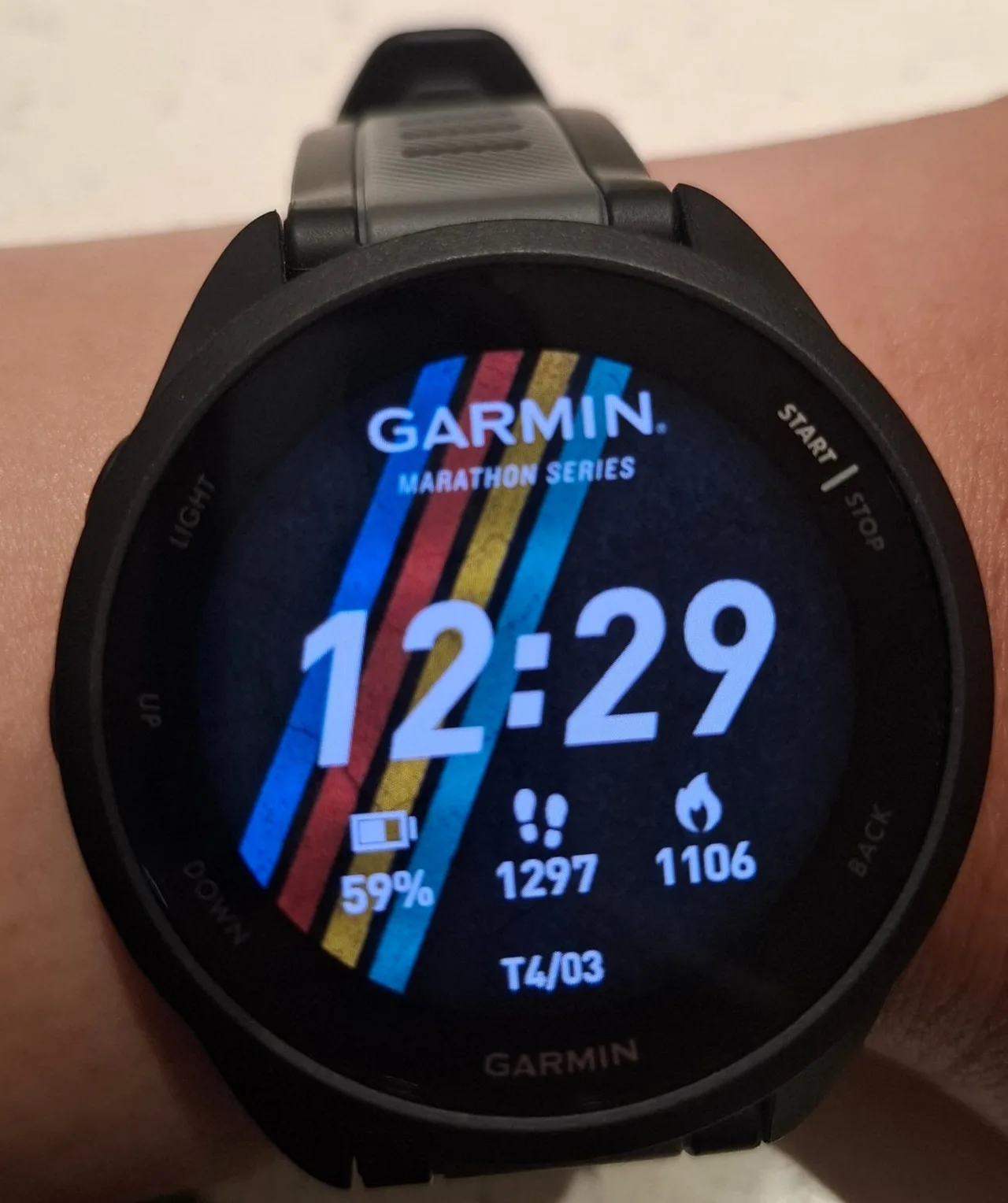
These are Garmin's entry running watches, announced in May 2026. Both have a 1.2-inch AMOLED screen with a touchscreen and the traditional five buttons, and Garmin's spec pages list training readiness, training status, running power and course guidance even on the cheapest one. The 70 weighs 40 g and lists up to 13 days in smartwatch mode and up to 23 hours in GPS-only mode.
What the 70 leaves out is also clear from the spec page: no barometric altimeter, no compass, no Garmin Pay and only 512 MB of storage. The 170 adds those sensors and Garmin Pay, lists 10 days in smartwatch mode and 20 hours in GPS-only mode, and weighs 41 g. The 170 Music adds on-watch music storage and Wi-Fi; Garmin lists up to 7.5 hours of GPS with music. Neither has multi-band GPS or maps.
Forerunner 265 and 265S
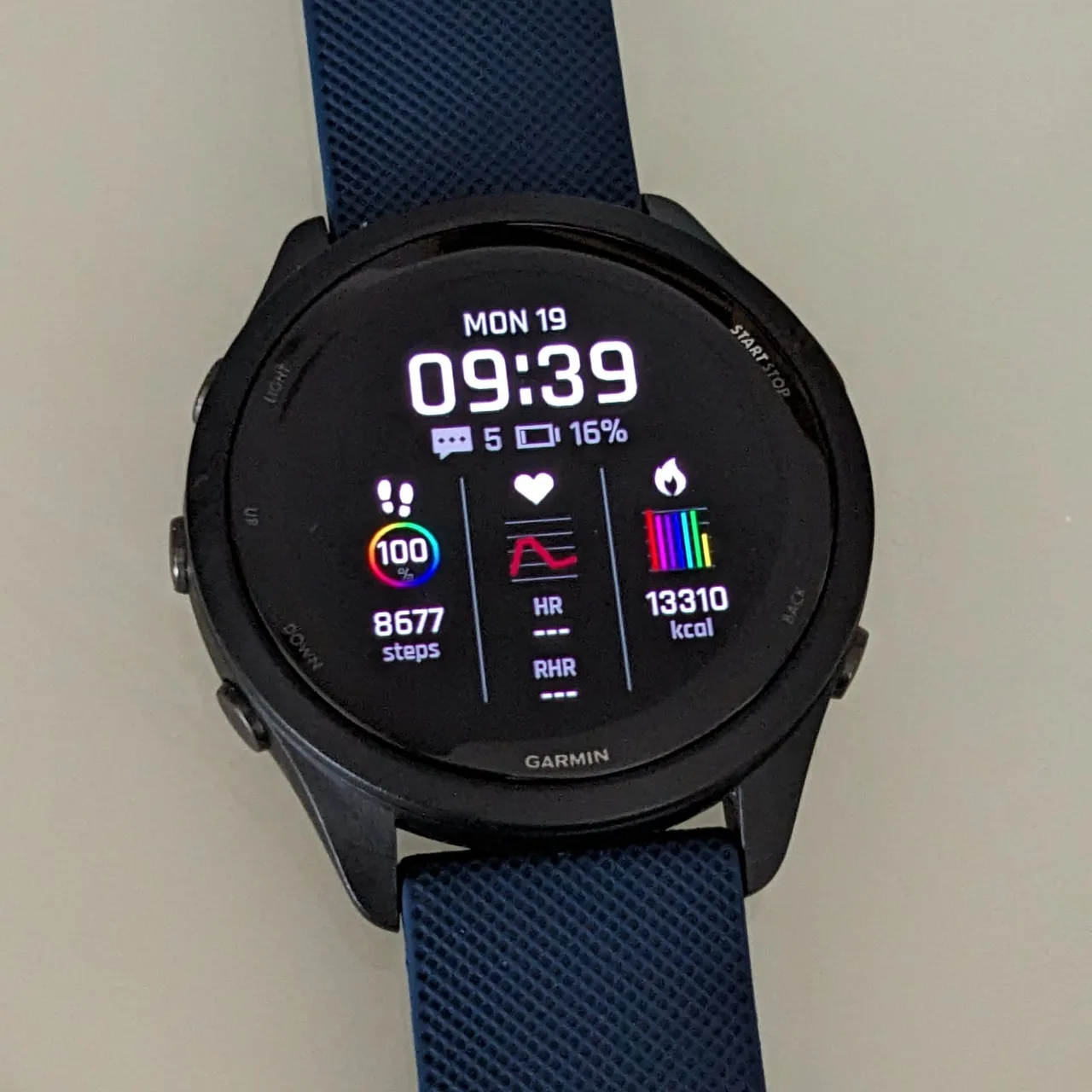
Garmin still lists the 265 family on both stores alongside the newer 570. It has multi-band GPS, 8 GB of storage for music, Garmin Pay and a touchscreen. The 265 has a 1.3-inch screen and weighs 47 g; the 265S has a 1.1-inch screen and weighs 39 g, which matters on a small wrist. In GPS-only mode Garmin lists 20 and 24 hours; with all systems plus multi-band it lists 14 and 15 hours.
Forerunner 570
The 570 comes in 42 mm (1.2-inch screen, 42 g) and 47 mm (1.4-inch screen, 50 g). It keeps multi-band GPS and music, and adds a speaker and microphone for taking calls from a paired phone, skin temperature and a heat and altitude acclimation feature. It has no built-in maps. Garmin lists up to 10 days (42 mm) and 11 days (47 mm) in smartwatch mode, and 18 hours of GPS-only tracking on both.
Forerunner 970
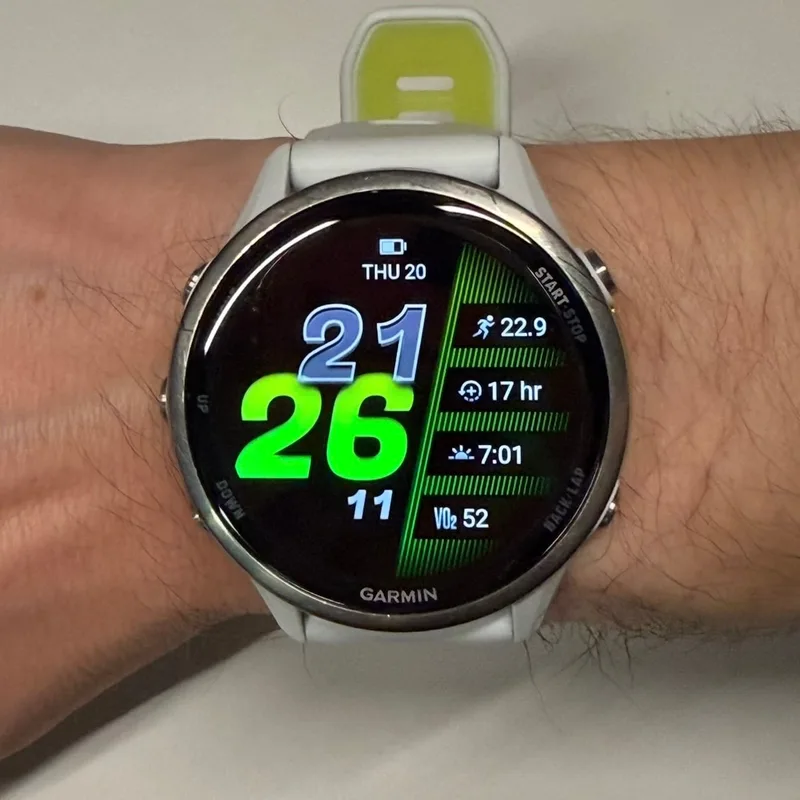
The 970 is Garmin's top running watch. It has a 1.4-inch AMOLED screen, a sapphire lens, a titanium bezel, 32 GB of storage and built-in maps with preloaded road and trail data. It also lists an LED flashlight, the ECG app and a longer list of training metrics, such as endurance score, hill score and running tolerance. It weighs 56 g. Garmin lists up to 15 days in smartwatch mode, 26 hours in GPS-only mode and 21 hours with all systems and multi-band.
Venu 4 and Venu X1
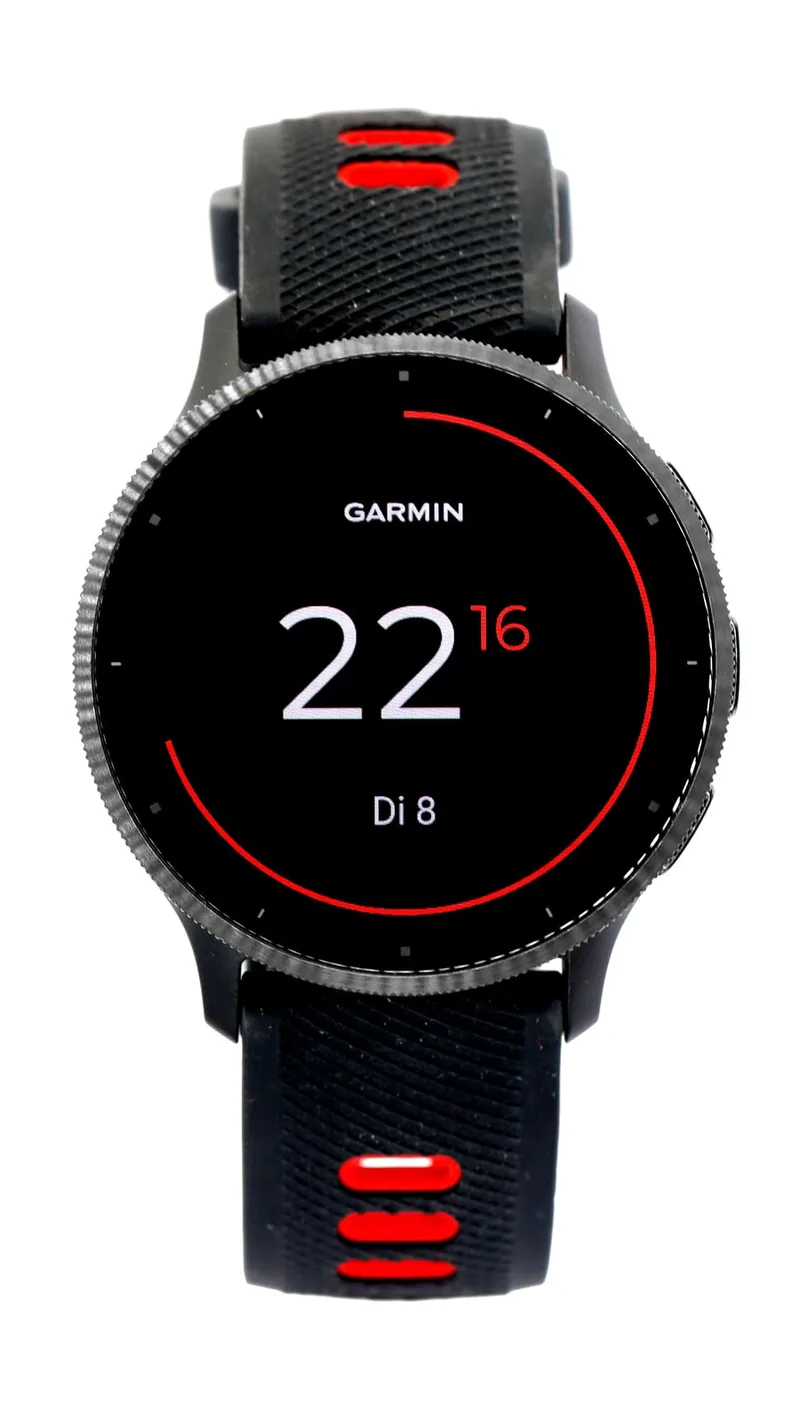
Venu is the lifestyle side of Garmin's sport range. Venu 4 comes in 41 mm and 45 mm cases with stainless-steel bezels, AMOLED screens, multi-band GPS, music, a speaker and microphone. The 45 mm page also lists an LED flashlight and fall detection. Smartwatch battery is up to 10 days (41 mm) and up to 12 days (45 mm). Venu X1 is a different shape: a 2-inch screen in a 7.9 mm thick case, 34 g (40 g with the ComfortFit band), a sapphire lens and built-in maps. It trades some endurance and multi-band GPS for that screen, with up to 8 days in smartwatch mode and 16 hours of GPS-only tracking.
vívoactive 6
The vívoactive 6 is the light, wellness-led choice at 23 g for the watch itself (36 g with the included band). It has a 1.2-inch AMOLED screen, music storage and up to 11 days in smartwatch mode. The spec page does not list training readiness, training status, a barometric altimeter or multi-band GPS. For daily steps, sleep and a few runs per week that may be enough; for structured running it is the thinnest option here.
Instinct E and Instinct 3
Instinct watches have a rugged build, 10 ATM water resistance and buttons only. Instinct E uses a monochrome display and starts at 249.99 in both currencies; its page lists 14 days (40 mm) and 16 days (45 mm) in smartwatch mode. Instinct 3 with an AMOLED screen adds multi-band GPS, an LED flashlight and training readiness, and the 45 mm model lists 18 days in smartwatch mode. Solar versions list far longer figures and are covered in our hiking comparison.
Beyond the running range
Runners who want mountain maps and multi-day battery usually end up on fēnix or Enduro, which start at 799.99 USD (fēnix E) and go up from there. We compare those in a separate article, linked at the end.
The differences that matter, in plain language
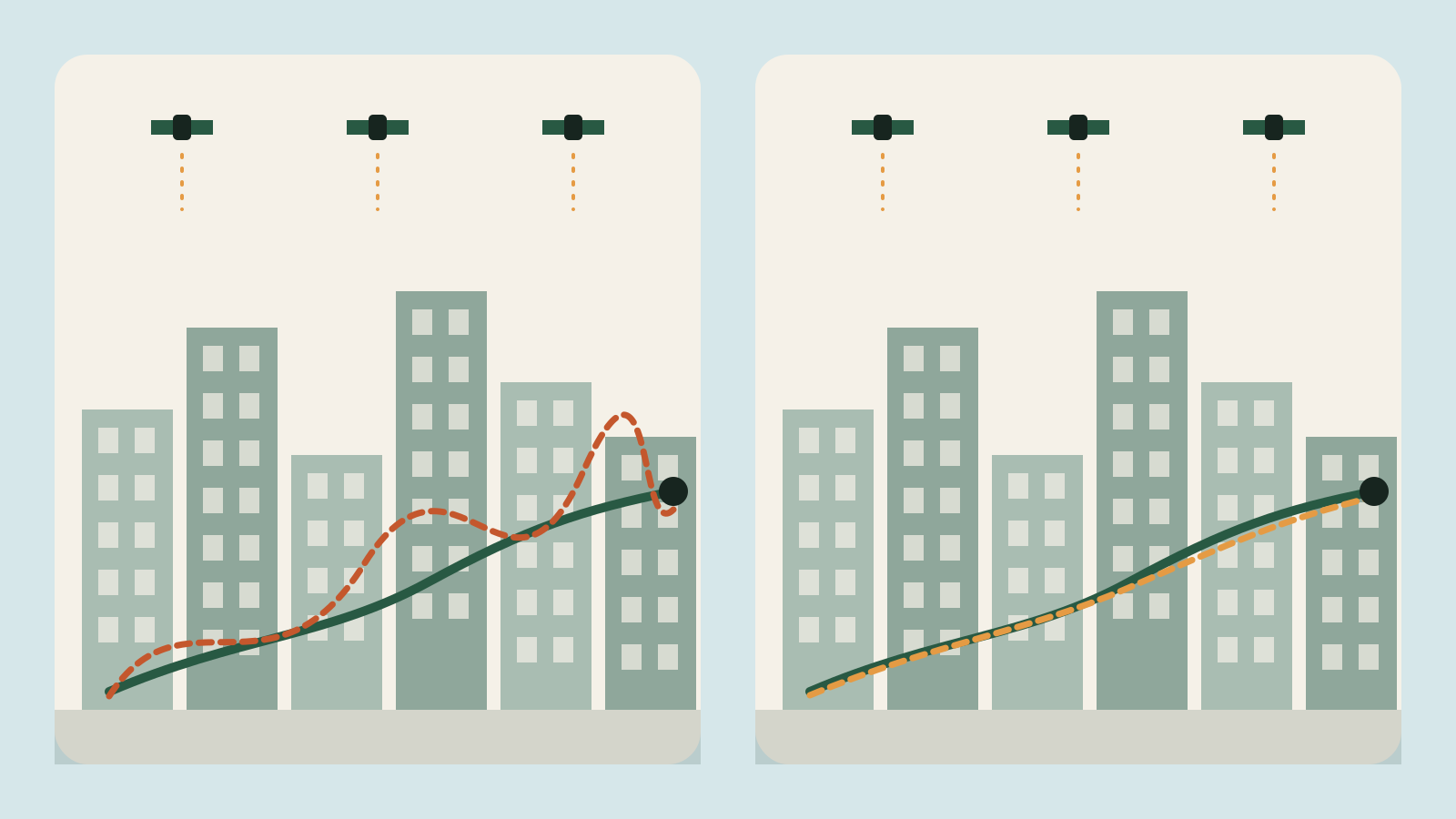
Multi-band GPS. The 265, 570, 970, Venu 4 and Instinct 3 AMOLED list it; the 70, 170, vívoactive 6 and Venu X1 do not. Multi-band receivers listen on more than one satellite frequency, which is intended to help in places where signals bounce, such as narrow streets and thick forest. How much it helps on a given route varies and is hard to quantify. If your runs are in open parks, a single-band watch may be fine.
Screen and battery. Every AMOLED watch here offers an optional always-on mode, and Garmin's own numbers show what it costs: the Forerunner 70 lists 13 days normally and 5 days with the display always on, the Venu 4 45 mm lists 12 and 4. The Instinct E and the solar Instinct models use a monochrome sunlight-readable display, which is the reason for their longer battery figures.
Sensors for hills. A barometric altimeter measures height from air pressure. The 70 and vívoactive 6 do not list one, so climbing numbers on those watches rely on GPS alone.
Maps. Only the 970 and Venu X1 in this group list built-in maps. On the others you follow a line or breadcrumb trail, which is fine for a known route and thin for exploring.
Music and payments. Music needs storage: the 170 Music, 265, 570, 970, Venu and vívoactive 6 list it, while the plain 70 and 170 do not. Garmin Pay appears on every model here except the 70 and the Instinct E, with the caveat that a supported bank is required.
Training features. The spec pages show a clear step between the 170 and the 265, where lactate threshold, performance condition, virtual partner and a power curve appear. Above the 570, the 970 adds endurance score, hill score, running economy with a compatible accessory, and maps. Feature lists are not the same as coaching quality, so use them as a guide to depth only.
Reading the battery numbers
Garmin lists several battery figures for each watch, and they answer different questions. Smartwatch mode tells you how long the watch lasts as a watch with notifications and sleep tracking but no GPS sessions. GPS-only mode says how many hours of satellite tracking you get on a full charge. Add multi-band, music or an always-on display and the hours drop.
A rough conversion helps. If a watch lists 20 hours of GPS-only tracking, that is about twenty one-hour runs, if you do nothing else with it. Real life takes some of that: daily wear drains the battery between runs, and if you use music, multi-band GPS or a bright always-on screen, the number shrinks. For a marathon or a long trail race, look at the all-systems and multi-band hours rather than the best-case GPS-only figure. The Forerunner 970's 21 hours with multi-band leaves a wide margin even for slow marathon finishes, while the 170's 14 hours with all systems covers a typical half marathon with margin to spare.
Size and fit
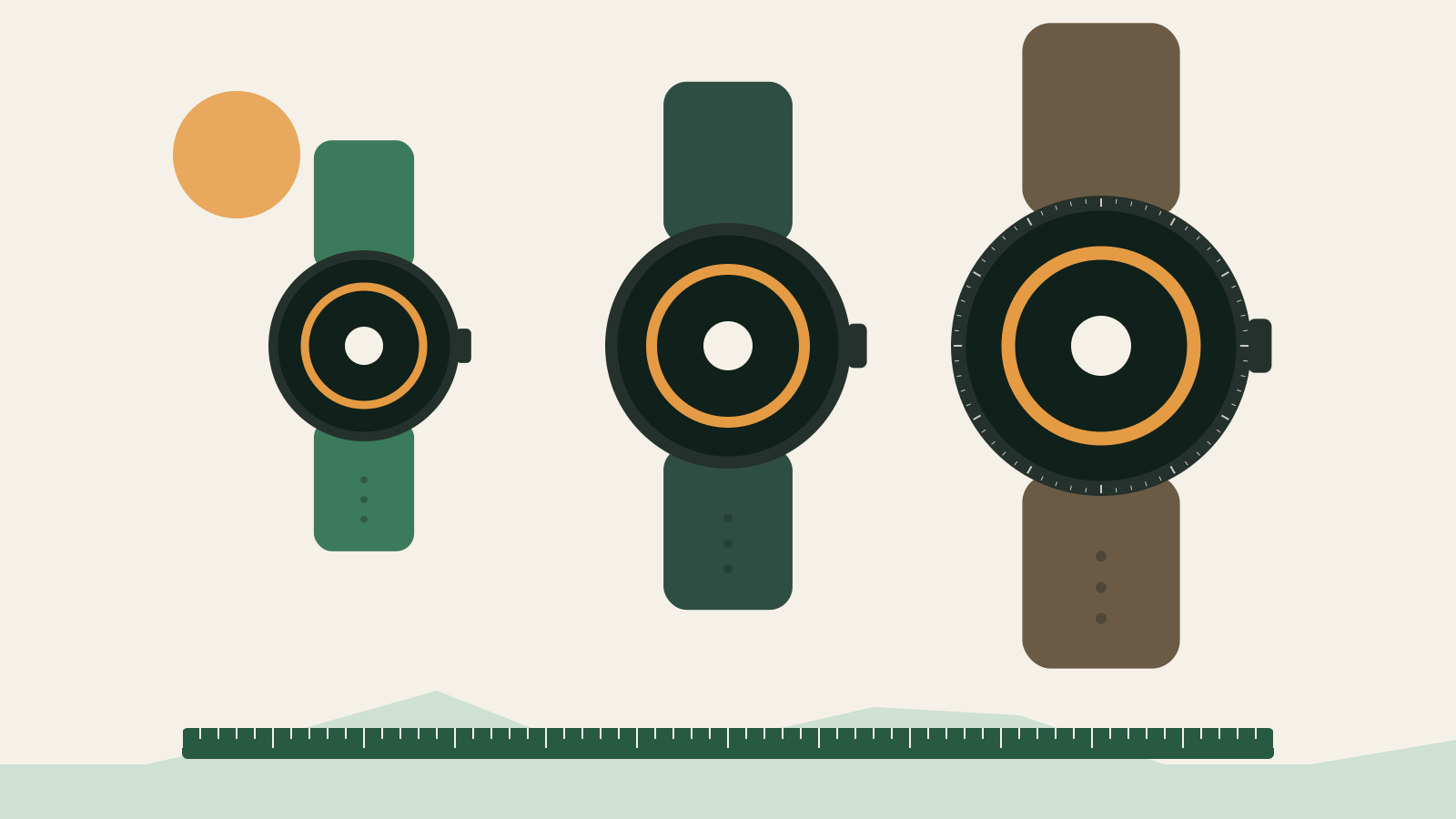
Case sizes in this group run from 40 mm to 47 mm, and Garmin gives a wrist circumference range for each. The 570 42 mm lists 115 to 178 mm, the 265S 115 to 178 mm and the 970 135 to 205 mm. If a watch sits between two sizes for you, the smaller case is usually the safer choice for running because it moves less. Weights in the spec pages are given with or without the band depending on the model, so compare them as a rough guide only.
Honest limits
- None of these are medical devices. Garmin's own release notes say its health features are not intended for diagnosis or monitoring of any medical condition, and Garmin notes that breathing variations and Pulse Ox are not available in all countries. Check the same for the ECG app before you rely on it. Treat heart rate, sleep and recovery figures as trends.
- Wrist heart rate can lag during sprints and intervals, and a chest strap is still the steadier option for hard interval work.
- GPS accuracy depends on sky view, buildings, trees and the satellite mode you choose. Battery life numbers are Garmin's "up to" figures and change with brightness, music, notifications and always-on display.
- VO2 max, race predictions and training load are estimates built from your data. They are useful for direction, not for exact pacing.
- Long-term wear, strap reliability and the speed of Garmin support are not covered by specification pages.
How we chose
We used only models shown on Garmin's running and smartwatch pages on the US store and on the Irish store on 2026-10-16. Older models that are no longer listed were left out, even if they are still easy to find elsewhere. We took battery, display, weight, sensors and GPS details from each model's own specification page, and list prices from the same stores, in USD and EUR. We did not use retailer prices, reviews or affiliate programmes. We did not use Garmin's own press photographs. The photographs come from Wikimedia Commons under free licences, and each caption names the exact model shown. Where only an earlier model has a free photo, the caption says so. Illustrations are our own drawings. Where one family has several variants, we show the lowest listed price for that case size.
Also left out: tactix 8 (tactical use), MARQ (luxury collection), Approach (golf), and the CIRQA Smart Band, which has no screen.
Common questions
Do I need multi-band GPS to run? No. It is a convenience for demanding surroundings, and within the Forerunner range it starts at 449.99 USD with the 265, against 299.99 USD for the 170.
Which has the best battery for running? Among the Forerunners, the 970 lists the longest GPS-only time at 26 hours. Instinct 3 Solar and Enduro 4 list far more but are outdoor watches, not running-first designs.
Forerunner or Venu for running? The spec pages list a deeper running toolset on the Forerunners. Venu 4 lists many of the same training metrics, plus a speaker, microphone and flashlight, so it suits people who also want a smartwatch.
Why do EUR and USD prices not match? Garmin sets prices per store. Germany's store listed the Forerunner 970 at 669.99 EUR, the 570 at 489.99 EUR and the vívoactive 6 at 279.99 EUR on the same date, while the Irish store showed 749.99, 499.99 and 299.99.
Sources and verification
Garmin.com, checked 2026-10-16: product specification pages on the US store (en-US) and the Irish store (en-IE), spot checks on the German store (de-DE), and Garmin newsroom releases for Forerunner 70 and 170 (12 May 2026). Specifications and prices can change after this date. We link to no shops.
Related reading
If your plans lean toward trails, mountains and multi-day trips, see Which Garmin watch for hiking, mountains and long trips.