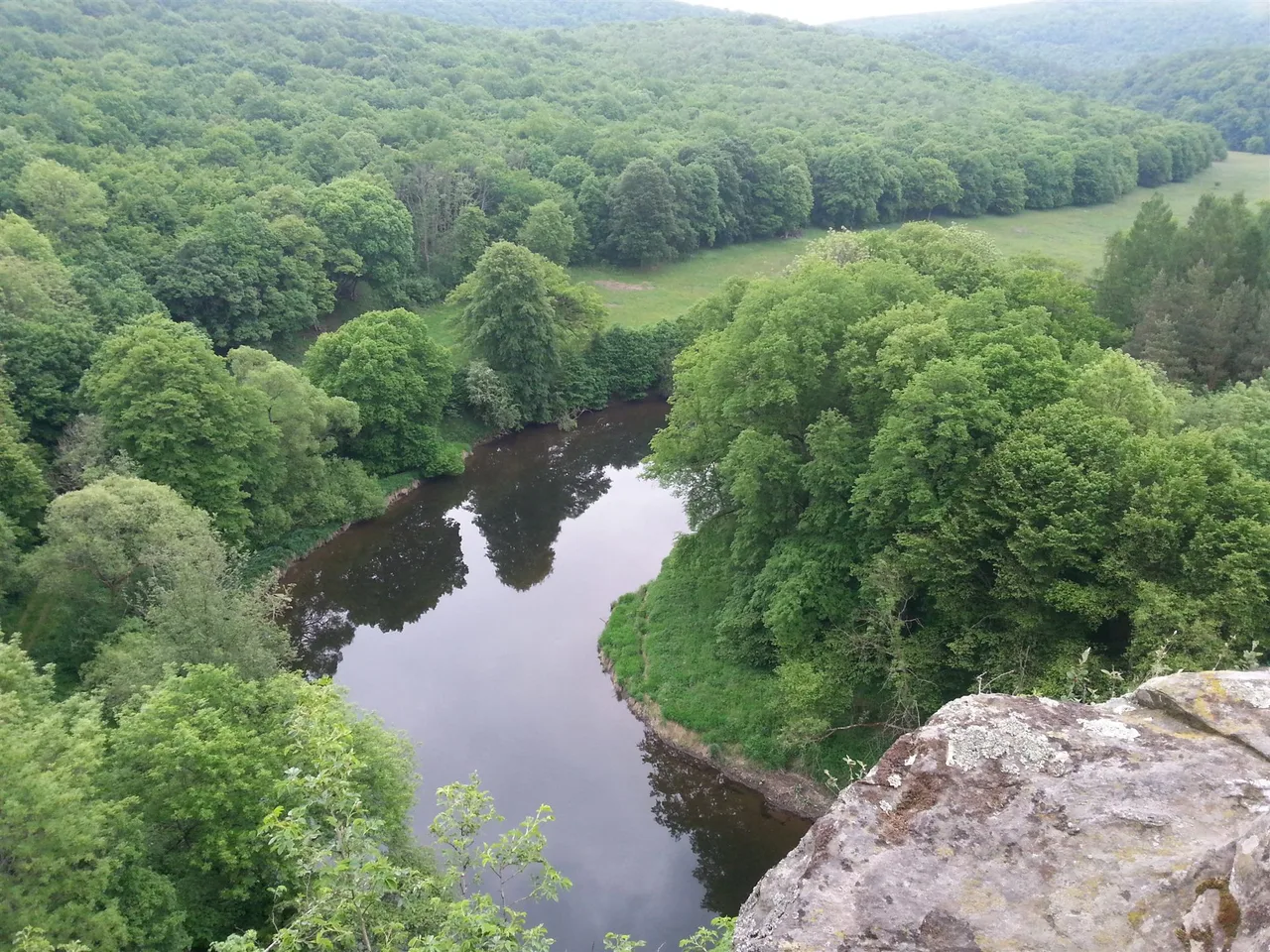
A power plant that was never built, a border fence that came down and a small wild cat that quietly came back: those three events explain why the Thaya valley in the far north of Lower Austria is a national park today. It is the smallest national park in Austria, and the numbers behind it are better than its size suggests.
Where it is and how big it is
The Nationalpark Thayatal lies in the Waldviertel, at the northern edge of Lower Austria, where the river Thaya forms the border with the Czech Republic. Its Austrian part covers 1,360 hectares, which is 13.6 km². Together with the neighbouring Czech Národní park Podyjí, about 7,700 hectares are protected. (Some encyclopedias still give 13.3 km², an older figure. We use the park's current number.)
The park was founded in 2000 and recognised by the IUCN as a category II protected area in 2001. About 92 percent of it is forest, 4 percent meadows, 3 percent water and 1 percent dry grassland and rock. The only town inside the park is Hardegg, often called the smallest town in Austria. According to Wikipedia, Hardegg proper has only about 78 inhabitants.
The valley that holds so many plants
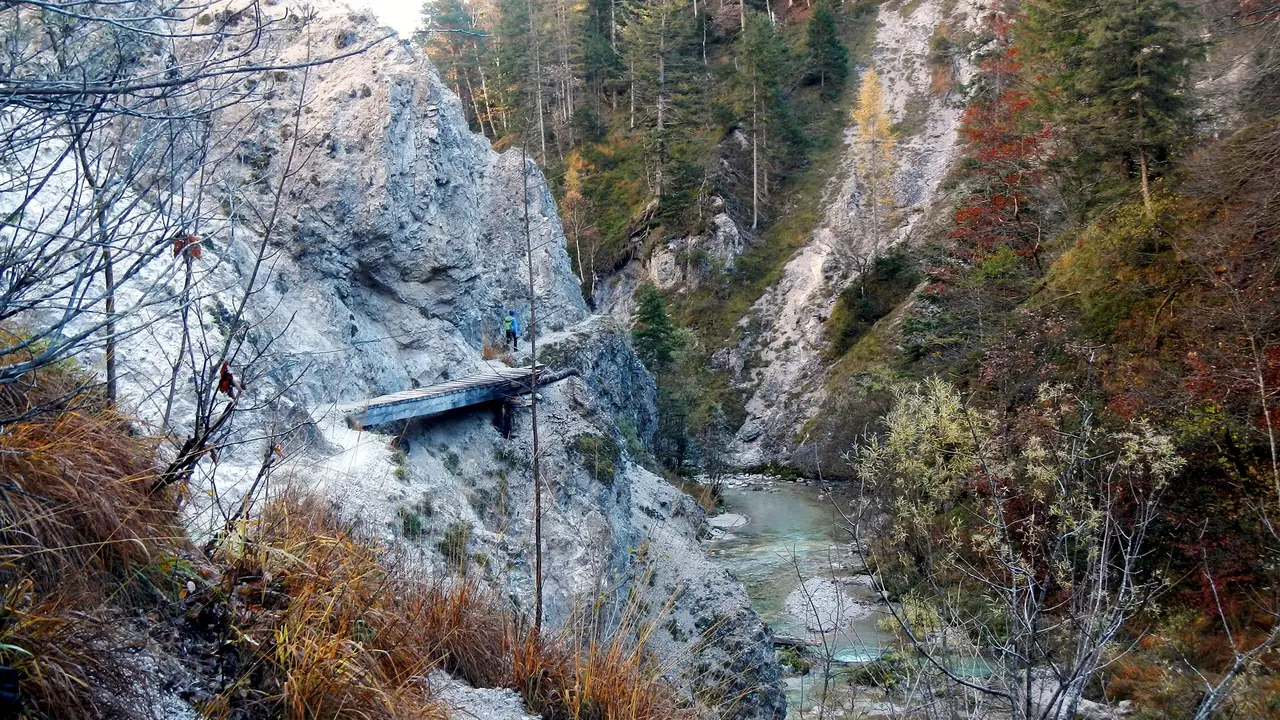
The Thaya has cut a winding valley into the hard crystalline rock of the Bohemian Massif, and the long river loops keep changing which way the slopes face. In addition, the park sits on a climate boundary. The humid, Atlantic-influenced climate of the Waldviertel plateau meets the dry Pannonian climate from the east. Beech and sycamore dominate on the shady slopes, and oak and hornbeam on the sunny ones, with dry grassland and rock patches in between.
The result is a plant list that is long for such a small area. The park reports 1,290 plant species in the two national parks together, compared with about 2,950 in all of Austria. That is roughly 44 percent of the country's flora, in an area of 0.016 percent of its territory. Some sources round this up to "half". Official pages give 40 percent or 44 percent, so we say "about two in five".
Some of the plants the park itself highlights:
- The Hungarian iris (Iris variegata), a golden-yellow flower that the park describes as particularly rare and threatened here.
- The Siberian melic grass (Melica altissima), up to two metres tall. In Austria it is known from one dry rock site in the Thayatal only.
- The yellow lady's slipper (Cypripedium calceolus), the largest native orchid.
- The martagon or Turk's cap lily in the cool Kajabach valley.
- The cornelian cherry (Cornus mas, called Dirndl locally), whose early yellow flowers cover the Überstieg slope at the Umlaufberg in a strong colour in early spring.
Animals worth looking for
The black stork comes back from East Africa from mid-March and is often seen fishing in the Thaya between Hardegg and the Überstieg viewpoint, mostly in the morning. In early May the emerald lizards perform their courtship display at the Überstieg and the Maxplateau. The Kajabach valley shelters nocturnal noble crayfish, which are rare in Austrian streams, as well as fire salamanders. Stag beetle larvae live in the dead oak wood, and the sea eagle, a winter visitor since the 1990s, was reported breeding in the cross-border park for the first time in 2023.
The wildcat comes back
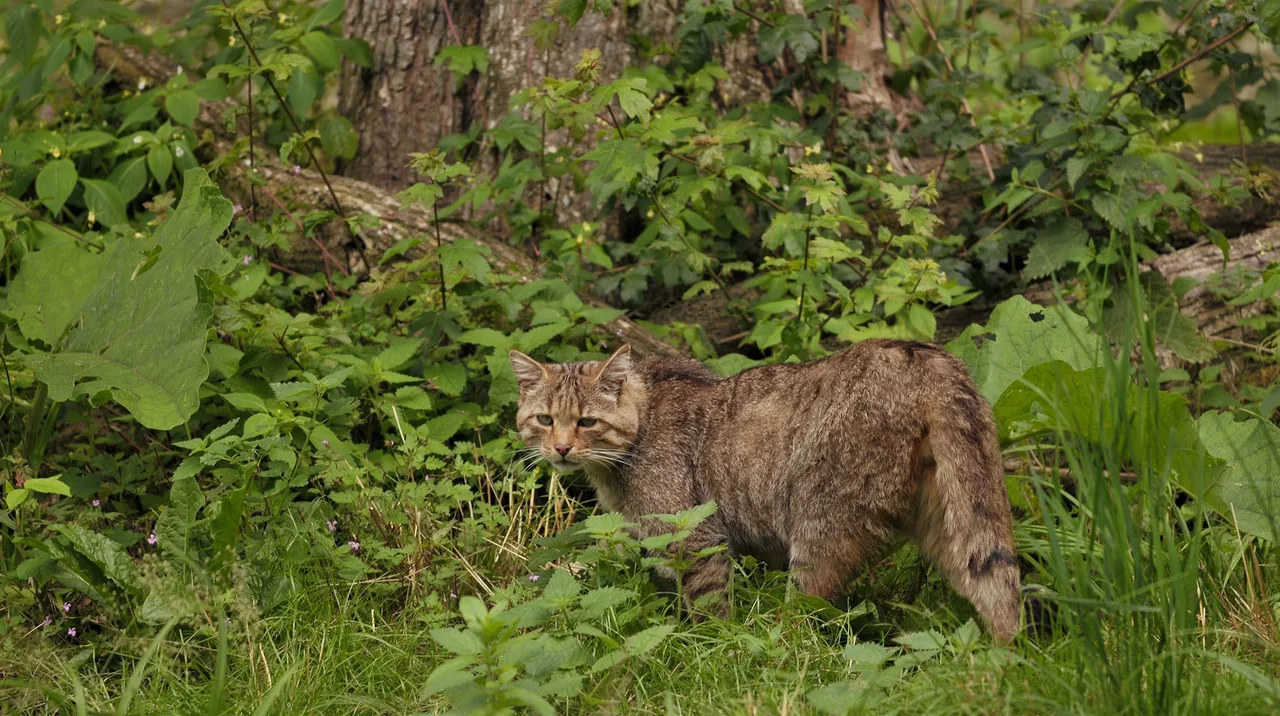
The European wildcat was considered extinct or missing in Austria from the mid-1950s. In 2007 the Thayatal national park started a research project with lure sticks and hair samples, and the first genetic proof for Austria followed quite quickly. Confirmations came in the following years, with gaps. In 2021 and the spring of 2022 camera traps recorded wildcats 13 times in the park, and the pictures showed two different animals, which a genetic analysis in Germany confirmed. Researchers have also found wildcats in the Wachau, where seven individuals were identified genetically.
You will almost never see a wildcat in the wild. The park has a way around that. Next to the Nationalparkhaus lives the largest wildcat enclosure in Austria, 450 m² in size, with an observation platform and two animals, Frieda and Carlo. There is a public feeding show of about 30 minutes at 15:30 on Saturdays, Sundays and public holidays from 21 March to 2 November, and daily in July, August and September and during the Easter and autumn holidays. It has a small fee and needs no booking, according to the park.
For a walk with a cat theme, the Wildkatzenwanderweg runs 2.3 km from the Nationalparkhaus to the Einsiedlerwiese on the river. The walk takes about 1.5 hours. It is free and open all year, although winter or stormy weather can limit it. Eleven hidden wildcat silhouettes along the way turn it into a game for children, and the park says it also suits all-terrain prams.
A border valley and what it did for nature
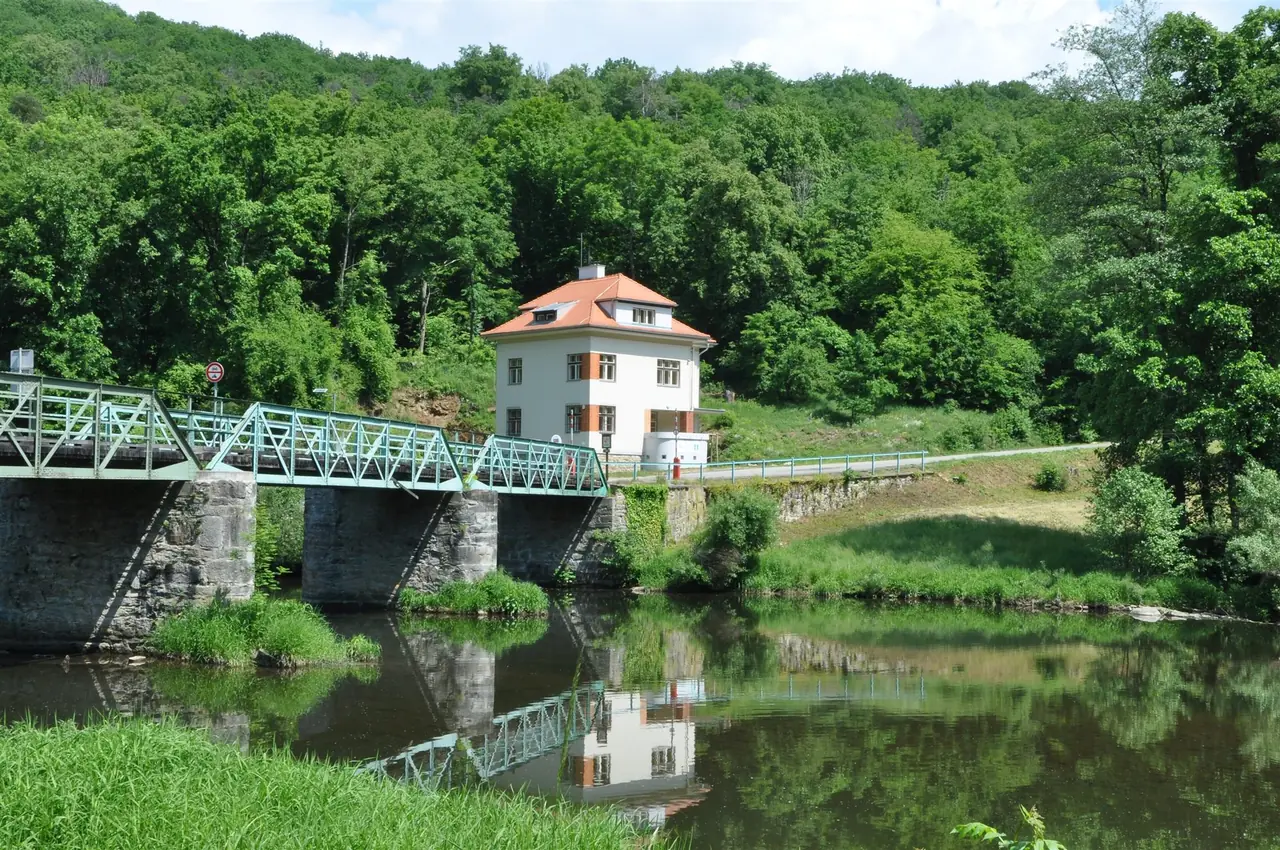
After the Second World War the Thaya valley became a border zone on the Iron Curtain. Hardegg was cut off. The only link to the Czech side was the bridge over the Thaya, built in 1874, and a border crossing on it opened seasonally in April 1990. After the border opened, the river landscape became a cross-border national park, and the park says nature has been allowed to develop freely there ever since.
The park pages and Wikipedia describe the sequence that followed:
- 1984: it became known that a power plant was planned on the Thaya on the Czech side. Citizens' initiatives and the town of Hardegg worked against it, and it was not built.
- 1988 and 1991: two areas along the Thaya in Austria were protected by regional ordinance. They are the forerunners of today's park.
- 1991: the Czech national park Podyjí was created.
- 1992 to 1997: Austria decided to follow, and in 1997 the republic and the province signed the treaty establishing a national park.
- 2000: the Nationalpark Thayatal began.
Since then the two parks have worked as a pair. The cooperation covers research, monitoring, ranger activities and education, and runs under a joint management plan for 2021 to 2030 and a cooperation agreement.
Places to see
- The Überstieg viewpoint shows the river meanders and the Umlaufberg, a gneiss hill that the Thaya flows around. The park calls it a highlight of the Thayatalweg, which it describes as the most beautiful route in the park.
- The Einsiedlerweg is a circular walk of 5 km, named after a hermit who is said to have lived in a rock wall at the time of the crusades. Its first stage is the Wildkatzenweg. A suspension bridge at the Einsiedlerwiese, about 2 km below Hardegg and opened in April 2023, carries a cross-border loop over the Thaya and back to Hardegg on the Czech side. The park's news release puts that loop at just under 4 km, and it is for pedestrians only.
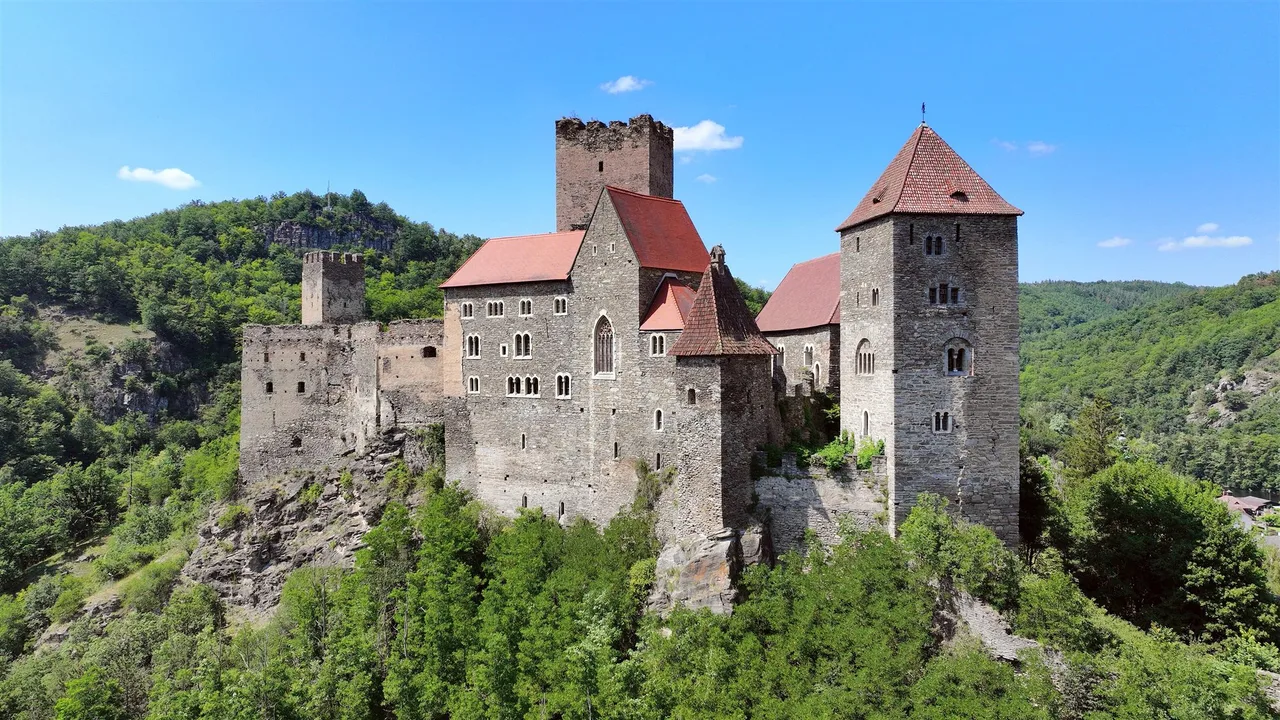
- Hardegg Castle stands above the town. The place is first mentioned in 1145, and the castle was rebuilt in the nineteenth century. Check opening times before you go.
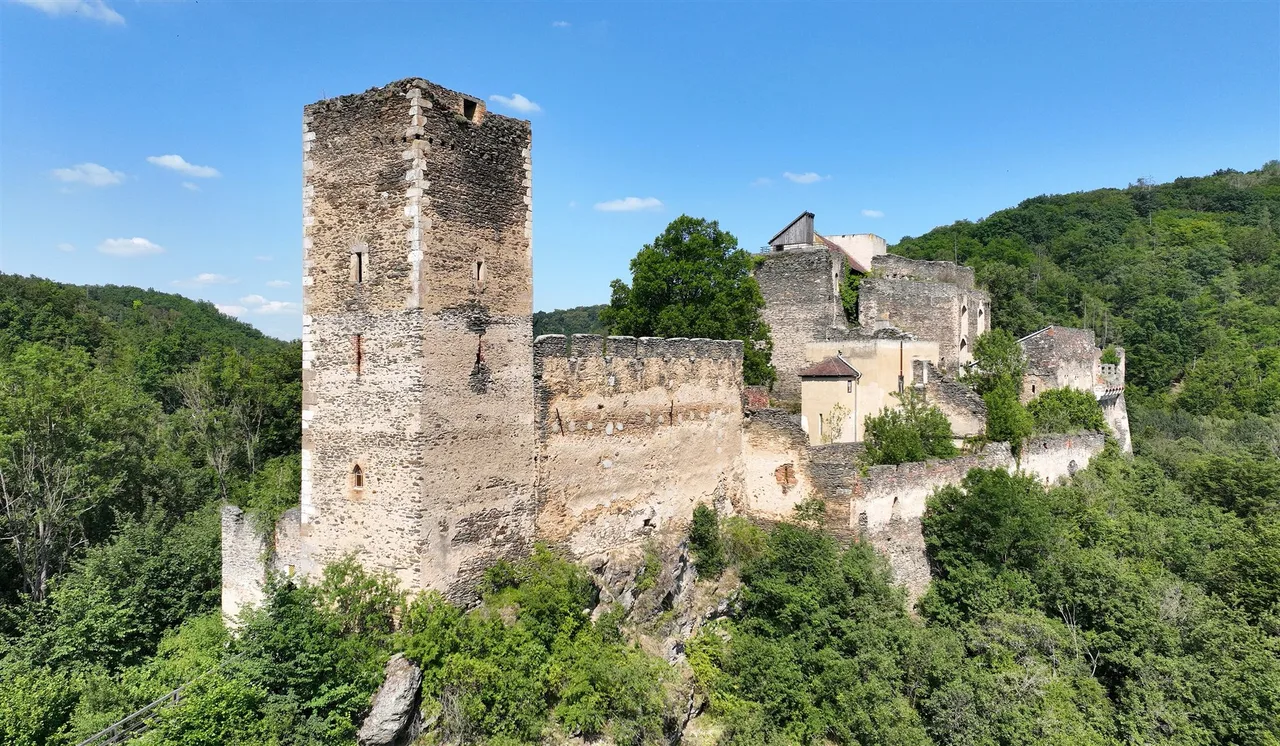
- The Kaja castle ruin near Merkersdorf is documented in 1196, so it is more than 800 years old. It stands on a ridge above the Kajabach.
- The Nationalpark Thayatal Radweg is a cycling loop of 40 km through both countries, following the former line of the Iron Curtain, with about 884 m of climbing.
Crossing the border on foot
The Thaya bridge in Hardegg is open for pedestrians and cyclists only, and the park reminds visitors to carry a valid travel document. The Czech side has its own visitor centre in Čížov, with a surviving piece of the Iron Curtain next to it as a memorial. This guide covers the Austrian side. If you walk on the Czech side, check the Podyjí park's rules for paths and opening hours first.
Visiting
- Nationalparkhaus: about 1.5 km outside Hardegg towards Retz, between Hardegg and Merkersdorf. It is open daily from 21 March to 30 September from 9:00 to 18:00, and from 1 October to 2 November from 10:00 to 17:00. It has an exhibition, an adventure playground, a café-restaurant and parking for 50 cars and four coaches.
- Public transport: the nearest railway station is Retz, and the bus stop is Hardegg Nationalparkhaus. The park publishes a public transport leaflet valid until 12 December 2026. Timetables are at oebb.at and vor.at, and the ÖBB hotline is 05/1717.
- Best times: spring for flowers, black storks and the yellow cornelian cherry. May for emerald lizards. Autumn walks work too, because the house is open until 2 November. These come from the park's own seasonal notes.
- Dogs and rules: check the park's visitor rules before you bring a dog or leave the paths.
Sources and verification date
We checked the facts on 16 October 2026 against the Nationalpark Thayatal, the umbrella site Nationalparks Austria, the Austrian ministry's pages on educational trails, EUROPARC, the Wikipedia articles on the park, on Hardegg, on Hardegg Castle and on Kaja Castle, and OpenStreetMap. Where sources differed, for example on the area or the share of plant species, we explain our choice in the text.
Related content
- The Ötschergräben: Austria's Grand Canyon in Lower Austria: another protected river landscape in Lower Austria.
- Wienerbruck to Mitterbach: A Gorge Walk Past the Lassingfall: a one-way gorge walk in the same province.